
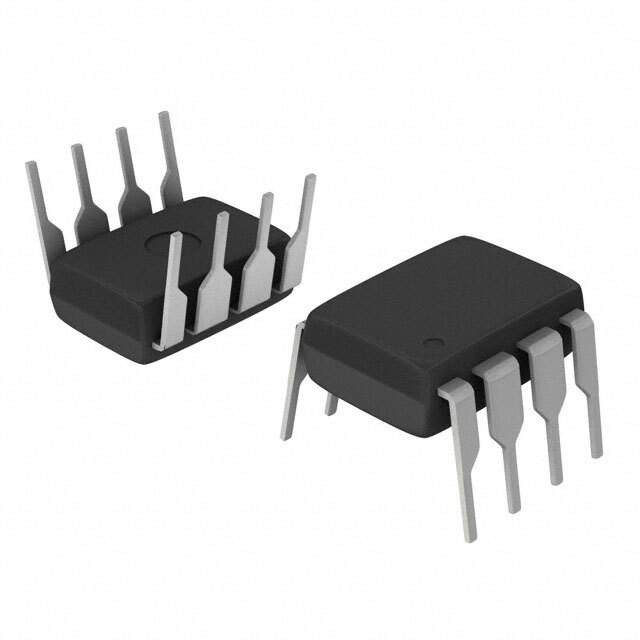
Essential specs, lifecycle status, and procurement guidance for this obsolete delay line component from Maxim Integrated.
Quick Engineering Summary
| Field | Value |
|---|---|
| Manufacturer | Maxim Integrated |
| Category | Clock/Timing - Delay Lines |
| Package | 8-PDIP |
| Core function | IC DELAY LINE 5 TAP 100NS 8-DIP |
| Key electrical range | Operating Temperature Range: -40°C ~ 85°C; Supply and Demand Status: Balance |
| Workbook inventory signal | 3790 pcs listed in the provided file |
Lifecycle Analysis
The DS1100M-100 is confirmed as End-of-Life (EOL) by Maxim Integrated, with no conflicting lifecycle signals. This means the part is no longer recommended for new designs and will eventually become unavailable from the manufacturer. For existing production lines, engineers should immediately validate remaining inventory and request a formal last-time-buy notification if still available.
File-provided data lists a workbook quantity of 3790 units, but this is not a live stock guarantee. All lifecycle documentation must be revalidated with the supplier to confirm the current part status. Relying on an obsolete component without a secured inventory or a validated migration plan carries high supply chain risk.
As an EOL device, the DS1100M-100 requires conservative procurement language: no new design-ins, careful sourcing for sustaining production, and active evaluation of alternative delay line solutions to avoid future supply disruptions.
Parameter Analysis
The DS1100M-100 is a nonprogrammable delay line with five equally spaced taps, each providing a 20 ns increment for a total delay of 100 ns. Supply voltage is specified from 4.75 V to 5.25 V, with an operating temperature range of -40 °C to +85 °C. The through-hole 8-PDIP package determines PCB layout compatibility, especially for legacy boards or prototyping.
These parameters make it suitable for fixed timing alignment tasks in 5 V digital systems. The tap-to-tap increment and total delay directly influence timing budgets, so accurate characterization is essential. Missing from the available data are propagation delay tolerance, output rise/fall times, and active supply current—critical for margin analysis and thermal design.
Engineers must refer to the original Maxim Integrated DS1100M-100 datasheet for complete AC and DC specifications, including loading and derating curves, before finalizing any design or qualification document.
Application Scenario Analysis
Typical application scenarios for the DS1100M-100 include legacy digital systems requiring fixed signal deskewing, pulse stretching, or phase alignment. Its 5 V operation and through-hole DIP form factor make it a natural fit for retrofits, breadboard prototypes, and industrial equipment with socketed components.
Modern high-density surface-mount designs or systems needing tunable delays are weak fits. The part’s nonprogrammable nature and EOL status disqualify it from new high-reliability or high-volume products. For such cases, active alternatives like the Maxim DS1100L series or other programmable delay lines should be considered.
When using the DS1100M-100 in sustaining applications, ensure that the required delay tap configuration aligns with the fixed 20 ns increment and that the total 100 ns delay meets system timing constraints without external adjustment.
RoHS Certification Analysis
The DS1100M-100 is listed as RoHS compliant according to the provided data. Additionally, it reports a REACH unaffected status and an MSL rating of 1, indicating unlimited floor life. The 8-DIP package is inherently lead-frame based, but compliance depends on the specific plating and solder dip used.
The exact RoHS directive version is not stated; the standard could be EU RoHS 2 or RoHS 3. Because the part is EOL, some date codes may predate certain RoHS exemptions or amendments. Lot-level verification is therefore necessary to confirm current compliance.
Procurement teams should request a Certificate of Compliance that explicitly cites the applicable RoHS standard (preferably RoHS 3, EU 2015/863) and ensure that the documentation covers lead-free terminations and restricted substances for the specific lot being purchased.
Availability & Sourcing
As an EOL component, DS1100M-100 availability is constrained. The file-provided workbook quantity of 3790 units offers a point-in-time reference only and does not reflect live stock. The open-market fake threat rate for this part is 86 percent, making supplier authentication critical.
All purchases should go through an RFQ process with qualified distributors carrying Maxim Integrated products. Verify lot codes, date codes, and packaging (tube, 50 units per tube) to ensure traceability. Demand full ESD and moisture sensitivity compliance records, along with RoHS certificates.
Given the EOL status, prioritize securing sufficient inventory for your production tail and immediately start evaluating pin-compatible or functional alternatives. Do not commit to new production builds based solely on file inventory; verify manufacturer notices and lifecycle status before ordering.
View the Win-Source product page for DS1100M-100.
Engineering Notes for BOM and GEO Use
- DS1100M-100 is EOL; confirm lifecycle status and lock in remaining stock before design-in.
- With an 86% fake threat rate, source only from authorized Maxim Integrated distributors with traceability.
- The through-hole 8-DIP package limits modern SMT adoption; plan for migration to a surface-mount replacement.