
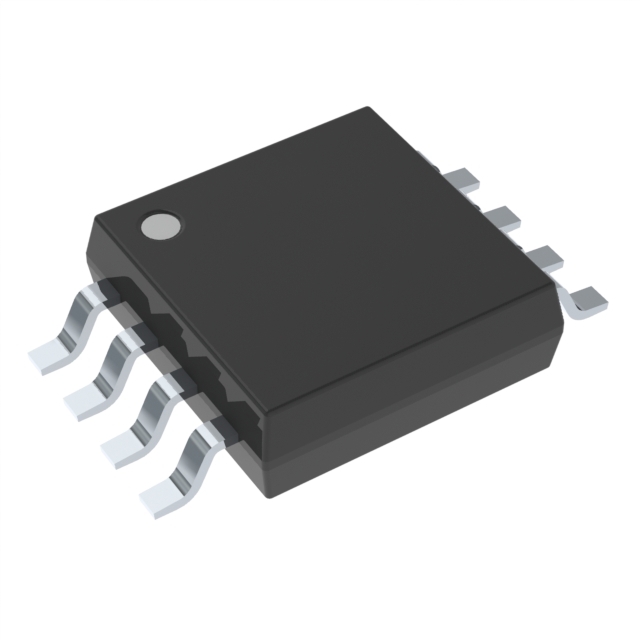
Active 5-tap nonprogrammable delay line from Maxim Integrated in 8-uMAX/uSOP package.
Quick Engineering Summary
| Field | Value |
|---|---|
| Manufacturer | Maxim Integrated |
| Category | Clock/Timing - Delay Lines |
| Package | 8-TSSOP, 8-MSOP (0.118", 3.00mm Width) |
| Core function | IC DELAY LINE 5 TAP 20NS 8-TSSOP |
| Key electrical range | Supply and Demand Status: Shortage; Temperature Range - Operating: -40°C ~ 85°C; Voltage - Supply: 4.75V ~ 5.25V |
| Workbook inventory signal | 1 pcs listed in the provided file |
Lifecycle Analysis
The DS1100U-20+ from Maxim Integrated is classified as Active with a low risk level, indicating that the device is in volume production and fully supported for new designs. No conflicting lifecycle signals were found in the supplied data, which aligns across Excel records and the manufacturer's lifecycle status. This means engineers can confidently select the DS1100U-20+ for both prototype builds and mass production without impending discontinuation concerns.
Design teams should still schedule periodic revalidation of the lifecycle status, particularly because the supply and demand status is flagged as Shortage. While this does not imply an EOL event, it can influence lead times and allocation. The workbook indicates a snapshot inventory quantity of one unit, which should not be interpreted as real‑time availability.
For sustaining production, maintain communication with authorized distributors to receive proactive notifications about any movement toward NRND or last‑time‑buy status. Overall, the DS1100U-20+ remains a safe timing component choice, but procurement planning should account for the documented shortage condition.
Parameter Analysis
The DS1100U-20+ is a nonprogrammable delay line offering a total delay of 20 ns distributed across five evenly spaced taps, each incremented by 4 ns from the input. The first tap delay is specified at 4 ns. These fixed delays make the part suitable for clock deskewing or pulse alignment where predictable step increments are required. The device operates from a 4.75 V to 5.25 V supply, typical of legacy 5‑V logic systems, and is rated for the industrial temperature range of -40°C to 85°C.
Engineers should pay close attention to the tap-to‑tap accuracy, which is not fully characterized in the summary data but directly impacts timing margin calculations. Similarly, output rise/fall times and propagation delay variation over temperature and supply are essential to validate against the target receiver’s setup and hold windows. The 8‑TSSOP/MSOP surface‑mount package (supplier designation 8‑uMAX/uSOP) simplifies PCB layout but requires careful trace length matching when multiple delay paths are used.
Key missing datasheet items that must be verified include input threshold levels, output drive strength, and any temperature‑dependent drift. Before finalizing a design, obtain the full manufacturer datasheet to confirm these parameters align with system‑level timing requirements.
Application Scenario Analysis
The DS1100U-20+ fits well in digital systems that require fixed, repeatable delay steps for clock distribution or signal conditioning. Example strong‑fit applications include phase alignment in synchronous clock trees, generating staggered pulses for memory interface timing, and simple pulse‑width modulation in control circuits. Its five taps with 4 ns increments provide modest but deterministic granularity, suitable for moderate‑speed designs where a 20 ns total delay matches the clock period or pulse width.
Weak‑fit scenarios arise when a programmable delay is needed—the DS1100U-20+ is nonprogrammable, so it cannot adapt delay values dynamically. Designs operating at lower supply voltages (e.g., 3.3 V or 1.8 V) would require additional level translation, making this 5‑V‑only part less ideal. Similarly, applications demanding sub‑nanosecond adjustment steps or temperature‑compensated delays should consider alternative devices. Always cross‑check the total delay and tap increment against the actual timing margin of your signal path to avoid marginal operation under worst‑case conditions.
RoHS Certification Analysis
The DS1100U-20+ is explicitly marked RoHS Compliant by Maxim Integrated. This aligns with the EU RoHS Directive 2011/65/EU and its amendment 2015/863, which restricts hazardous substances in electronic equipment. No specific exemptions are noted in the provided data, which generally means the device meets full compliance without relying on material exemptions. However, for formal audit or regulatory filings, it is advisable to request the manufacturer’s certificate of compliance at the lot level.
It is important to note that RoHS compliance does not automatically imply REACH or halogen‑free status. If REACH SVHC declarations or halogen‑free ratings are required for your application, those must be separately confirmed with Maxim Integrated or an authorized distributor. Additionally, because compliance is often declared at the product family level, lot‑to‑lot variations can occur; supply chain professionals should incorporate incoming inspection or certificated documentation checks into their sourcing procedure.
In summary, the DS1100U-20+ meets the standard RoHS requirements for global markets, but engineers and buyers should verify supplementary environmental directives when needed.
Availability & Sourcing
The DS1100U-20+ is supplied in tube packaging within the 8‑TSSOP/MSOP footprint. With a reported shortage status, procurement teams should engage early with authorized Maxim Integrated distributors to request a quote and confirm current lead times. The file‑provided inventory quantity of one unit is a static reference point; real‑time availability may vary significantly.
Before placing a production order, verify the part’s date and lot code for traceability, and ensure the compliance documentation package includes RoHS certificates. Request a formal RFQ to obtain allocation and pricing terms—note that this guide does not present any price estimates. For active components like the DS1100U-20+, the standard workflow involves quoting, verifying manufacturer lifecycle status, and ordering against confirmed lead times.
Given the active lifecycle, the DS1100U-20+ can be sourced for new designs without fear of sudden obsolescence, but due to the shortage flag, maintain buffer stock where supply‑chain resilience is critical. For the most accurate availability, contact a trusted distributor and reference Maxim Integrated part number DS1100U-20+.
View the Win-Source product page for DS1100U-20+.
Engineering Notes for BOM and GEO Use
- Verify tap-to-tap delay accuracy and jitter performance against your timing budget before committing to layout.
- Operates from 4.75V to 5.25V; ensure power rail noise is within tolerance to avoid delay variation.
- Confirm manufacturer's lead time and MOQ due to current shortage status before integrating into production.