
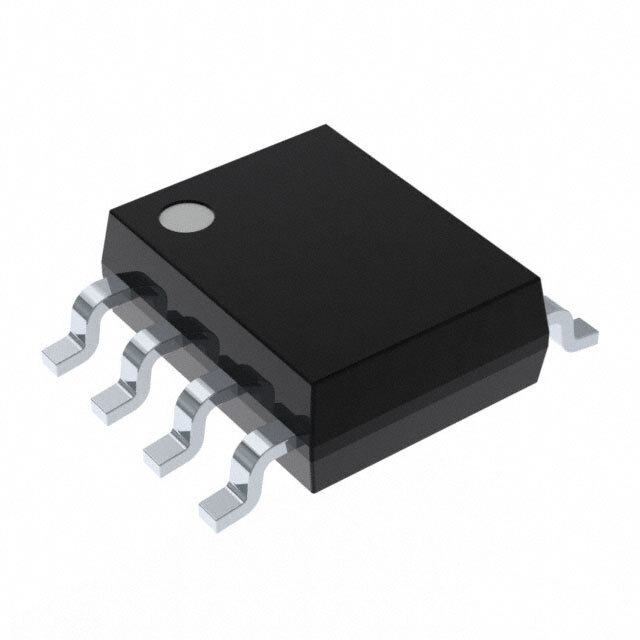
5‑Tap Nonprogrammable Delay Line – 30ns Total Delay, 8‑uMAX TSSOP Package
Quick Engineering Summary
| Field | Value |
|---|---|
| Manufacturer | Maxim Integrated |
| Category | Clock/Timing - Delay Lines |
| Package | 8-TSSOP, 8-MSOP (0.118", 3.00mm Width) |
| Core function | IC DELAY LINE 5 TAP 30NS 8-TSSOP |
| Key electrical range | Supply and Demand Status: Shortage; Temperature Range - Operating: -40°C ~ 85°C; Voltage - Supply: 4.75V ~ 5.25V |
| Workbook inventory signal | 235 pcs listed in the provided file |
Lifecycle Analysis
The DS1100U-30+ from Maxim Integrated is classified as Active, with all supplied lifecycle signals in agreement. For engineering and procurement teams, Active status means the part is currently in full production and supported for both new designs and sustaining orders. No end-of-life or not-recommended-for-new-design notices have been observed in the available data.
Because the lifecycle status is file-provided and not a real-time feed, it is prudent to obtain a current product life confirmation from Maxim Integrated or an authorized distributor, especially for high-volume or long-lifetime programs. The risk of sudden obsolescence is low, but documented revalidation periods should be built into qualification plans.
The data shows a file-reported inventory quantity of 235 units but no real-time guarantee. Procurement should treat that figure as a snapshot and verify actual available stock through quotes. For new production, the DS1100U-30+ remains a low-risk choice with no immediate signs of change.
Parameter Analysis
The DS1100U-30+ is defined by its delay properties: a total available delay of 30ns with five taps providing 6ns steps from the first tap. The fixed, nonprogrammable architecture means the delay values are set by the device and cannot be adjusted after manufacture. This behavior suits applications requiring precise, repeatable timing alignments rather than variable delay lines.
Supply voltage is specified as 4.75V to 5.25V, which aligns with standard 5V logic families. The operating temperature range of -40°C to +85°C covers industrial applications. The 8‑uMAX TSSOP surface-mount package is compact and suitable for space-constrained layouts. For board-level design, consider the PCB trace delays and ensure the 6ns increments provide adequate resolution for your timing budget.
Critical parameters not provided in the supplied data include output rise and fall times, propagation delay variation (jitter), output drive current, and input logic thresholds. These must be verified from the official Maxim Integrated DS1100 datasheet before finalizing the design and qualifying the production list.
Application Scenario Analysis
As a 5-tap nonprogrammable delay line, the DS1100U-30+ is a strong fit for digital clock distribution, pulse shaping, and signal deskewing in 5V CMOS or TTL systems. The 6ns tap increment allows fine timing adjustments, making it suitable for aligning data strobes to clock edges, generating phased clock trees, or implementing simple pulse-width modulation.
In mixed-voltage environments, the 5V operating requirement may limit its use. Applications with supply rails below 4.75V, such as 3.3V or 1.8V logic, are a weak fit without level shifting, potentially adding cost and complexity. Similarly, high-frequency differential signaling (e.g., LVDS, LVPECL) typically demands programmable or higher-resolution delay elements, making this part less suitable.
For industrial control, embedded system timing, and legacy 5V designs, the DS1100U-30+ remains a practical choice. Evaluate whether the fixed delay value meets all corner-case timing requirements, and consider temperature drift which can affect absolute delay values but is not characterized here.
RoHS Certification Analysis
The DS1100U-30+ is marked as RoHS Compliant, indicating that the component meets the Restriction of Hazardous Substances directive. Without an explicit standard version in the data, it is reasonable to assume compliance with the latest EU RoHS 3 (2015/863) which restricts ten substances, as this is an active part from a major manufacturer.
The provided data does not list any exemptions or specific substance test reports. For full supply-chain documentation, request the RoHS certificate from the manufacturer or distributor. This document usually confirms the part’s homogeneity and any applicable annex exemptions (e.g., lead in glass of electronic components).
Lot-level compliance should be verified when ordering, as changes in packaging materials or plating processes can alter compliance status between production runs. Many electronics manufacturers maintain a full materials declaration (FMD) or REACH SVHC list which can supplement the RoHS status file.
Availability & Sourcing
The DS1100U-30+ is currently supplied in tube packaging, with a file-reported inventory quantity of 235 units. This figure is not a real-time guarantee and should be confirmed through a quote request. The supply and demand status indicates a shortage, so procurement teams should plan for potential lead-time extensions and allocate buffer stock for production.
When requesting a quote, specify the exact part number DS1100U-30+, confirm the 8‑uMAX TSSOP package, and request traceability documentation such as date/lot codes. Since the lifecycle status is Active, standard sourcing channels are appropriate, but the shortage flag suggests that allocations or minimum order quantities may apply.
For new designs, verify compliance documentation (RoHS, REACH) and consider qualifying a second source or an alternate delay line family to mitigate supply risk. The part qualifies for industrial temperature range; ensure the ordered devices match this specification. Contact an authorized distributor for lead-time and current stock levels before committing to production volumes.
View the Win-Source product page for DS1100U-30+.
Engineering Notes for BOM and GEO Use
- The DS1100U-30+ provides five equally spaced delay taps with 6ns increments, suitable for edge placement adjustments in 5V CMOS designs.
- Verify datasheet parameters such as output rise/fall times, jitter, and drive strength before using in high‑speed edge‑sensitive applications.
- Shortage status indicates constrained supply; consider qualifying alternative delay line devices to ensure continuity.