
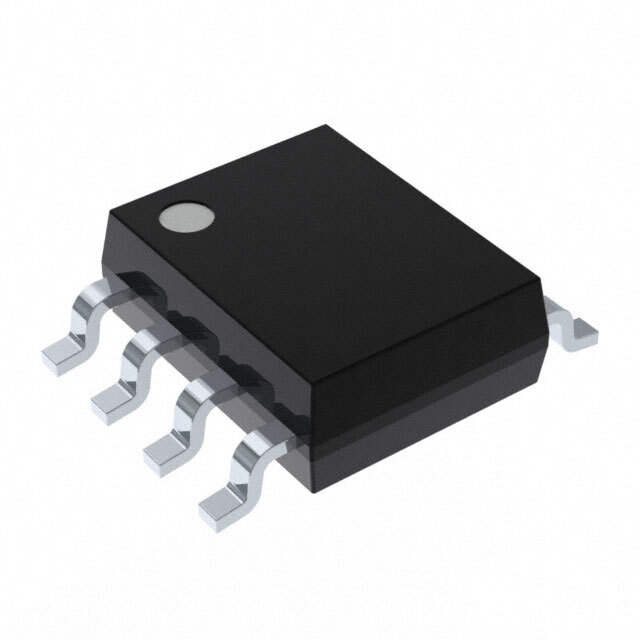
Active 5-tap nonprogrammable delay line, 300ns total, 60ns tap, 5V, 8-uMAX/uSOP package.
Quick Engineering Summary
| Field | Value |
|---|---|
| Manufacturer | Maxim Integrated |
| Category | Clock/Timing - Delay Lines |
| Package | 8-TSSOP, 8-MSOP (0.118", 3.00mm Width) |
| Core function | IC DLY LN 5 TAP 300NS 8-TSSOP |
| Key electrical range | Supply and Demand Status: Shortage; Temperature Range - Operating: -40°C ~ 85°C; Voltage - Supply: 4.75V ~ 5.25V |
| Workbook inventory signal | 9 pcs listed in the provided file |
Lifecycle Analysis
The DS1100U-300+ from Maxim Integrated is currently in active lifecycle status, as confirmed by multiple signals. This active designation indicates the part is fully supported by the manufacturer, recommended for new designs, and in mass production. No conflicting lifecycle data has been observed, such as end-of-life notices or not-recommended-for-new-design warnings. From a procurement standpoint, the active status generally translates to stable supply and continued manufacturing.
However, the associated file-provided inventory count of 9 units suggests limited immediate availability. While this single snapshot is not a real-time guarantee, it warrants attention. Buyers should always verify current stock levels through authorized channels before committing to production schedules. For new design projects, the DS1100U-300+ remains a viable choice, but engineers should request updated lifecycle documentation and monitor any potential shifts, especially given the noted supply-and-demand status of 'Shortage'. Sustaining production programs may need to secure buffer stock or evaluate alternative sources to avoid disruptions.
Parameter Analysis
The DS1100U-300+ is defined by several critical parameters that directly influence system design. The total available delay of 300ns, divided into 5 equal taps of 60ns each, is fixed and nonprogrammable. This forces a specific timing architecture where delay steps are predetermined. The supply voltage requirement of 4.75V to 5.25V places the device firmly in 5V logic systems, making it incompatible with typical 3.3V or 1.8V CMOS without level translation. The operating temperature range of -40°C to 85°C suits most industrial applications, though more extreme environments would require verification.
Surface-mount packaging in the compact 8-uMAX/uSOP (3.00mm width) helps minimize PCB footprint, but proper thermal and routing considerations must accommodate the dual-row pin spacing. Key specifications that demand confirmation from the manufacturer’s datasheet include: propagation delay tolerance, delay accuracy over temperature, input/output voltage logic thresholds, power consumption, and output drive strength. The nonprogrammable nature also means that any desired delay value must be an exact multiple of 60ns; partial-step adjustments are not possible. For high-speed designs, engineers should also verify the part’s maximum operating frequency and jitter performance, as these are not explicitly provided.
Application Scenario Analysis
The DS1100U-300+ is designed for clock and timing applications where a fixed, stepwise delay is required. Common strong-fit scenarios include clock deskewing within digital circuits, aligning multi-phase clock signals, and generating precise pulse delays in test and measurement equipment. Its 5-tap structure with uniform 60ns increments is well-suited for coarse timing adjustments where a limited number of delay steps suffice. For example, it can be used to create a delayed clock edge for setup-and-hold time adjustments in synchronous systems operating at moderate frequencies.
Conversely, the part is less appropriate for systems needing high-resolution programmable delays, as it lacks digital control interfaces. Applications requiring sub-60ns granularity or delay values beyond 300ns without cascading would need a different approach. Low-voltage designs (e.g., 3.3V, 2.5V) cannot directly interface without level shifters. Additionally, in noise-sensitive RF or high-speed serial links, the inherent jitter of a nonprogrammable delay line may be a limitation; consultation of the full datasheet for jitter specifications is essential. Overall, the DS1100U-300+ fits best in legacy 5V TTL/CMOS designs where simple, reliable fixed delays are needed, but careful evaluation is required for modern mixed-voltage or high-precision timing paths.
RoHS Certification Analysis
The DS1100U-300+ is listed as RoHS Compliant in the supplied data. This suggests conformity with the European Union’s Restriction of Hazardous Substances Directive, typically RoHS 2 (2011/65/EU) or the more recent RoHS 3 (2015/863) for added phthalates, though the exact directive version is not specified. The absence of a stated exemption indicates that the component does not deliberately contain restricted substances above the permitted thresholds.
However, RoHS compliance is often declared at the family or product-line level, and individual batches may require documentation. For high-reliability or regulated applications, procurement teams should request a certificate of compliance (CoC) specific to the date or lot code of purchased parts. No REACH declaration is provided in the available data, which is separate from RoHS and addresses substances of very high concern (SVHC). Engineers and buyers should not assume REACH compliance unless explicitly documented. The component’s 8-uMAX/uSOP package with tin-lead termination is unlikely, but verification of the exact lead finish (e.g., matte tin) is prudent to ensure compatibility with lead-free soldering processes.
Availability & Sourcing
Sourcing the Maxim Integrated DS1100U-300+ requires careful attention to current stock levels and supply chain conditions. The file-provided quantity of 9 units indicates tight immediate availability, consistent with the noted supply shortage status. This quantity is not guaranteed and may vary rapidly; buyers should request a real-time quote from authorized distributors for up-to-date inventory and pricing.
When procuring, verify the device’s package (tube) and ensure that the 8-uMAX/uSOP surface-mount package configuration matches your board’s footprint. Given the active lifecycle status, standard lead times should apply for volume orders, but the shortage signal suggests potential allocation or extended lead times. It is essential to confirm date and lot codes to maintain traceability and to request full compliance documentation, including RoHS certificates.
Engineers using this part in new production designs should consider second-sourcing options or safety stock strategies to mitigate supply risk. While the part is active and recommended for new designs, the current market conditions warrant a cautious procurement approach. For engineering prototypes, small quantities may be sourced quickly, but production quantities should be discussed early with Maxim Integrated or its franchised partners. Always validate manufacturer part-number suffixes (the “+” denotes a lead-free version) to avoid discrepancies.
View the Win-Source product page for DS1100U-300+.
Engineering Notes for BOM and GEO Use
- Confirm the 4.75V–5.25V supply voltage aligns with your power rail design and tolerances.
- The nonprogrammable 60ns tap increments require careful timing analysis; ensure the fixed delays meet your signal alignment requirements.
- With only 9 units in the provided stock file, verify real-time availability and consider pipeline ordering for production volumes.