
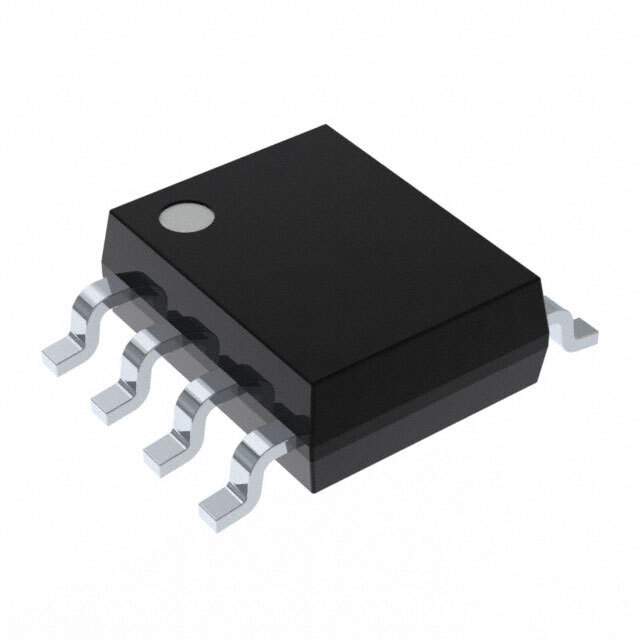
Clock/Timing Delay Line from Maxim Integrated - Active, RoHS Compliant, 5-Tap Nonprogrammable, 150ns Total Delay
Quick Engineering Summary
| Field | Value |
|---|---|
| Manufacturer | Maxim Integrated |
| Category | Clock/Timing - Delay Lines |
| Package | 8-SOIC |
| Core function | IC DELAY LINE 5 TAP 150NS 8-SOIC |
| Key electrical range | Operating Supply Voltage: 4.75 V ~ 5.25 V; Operating Temperature Range: -40°C ~ 85°C; Supply and Demand Status: Limited |
| Workbook inventory signal | 1 pcs listed in the provided file |
Lifecycle Analysis
The Maxim Integrated DS1100Z-150+T is currently listed as Active, but an estimated EOL date of 2024 signals that a transition may be imminent. This dual signal requires careful interpretation: while the part remains orderable, design teams should treat it with caution for new projects. Confirm the official lifecycle stage directly with Analog Devices, which now manages legacy Maxim products. For sustaining production, it is prudent to secure a buffer stock and initiate a qualification plan for a potential alternative if the EOL timeline is confirmed.
Given the part's introduction in 2001, its longevity suggests strong embedded market presence. However, the combination of limited inventory (1 unit shown in the file) and the EOL estimate raises supply risk. Engineers are advised to request a last-time buy schedule from the manufacturer and review any PCN documents that may clarify the transition path. Migrating to an alternative delay line module or a programmable solution may be required in the future.
Parameter Analysis
The DS1100Z-150+T provides a fixed nonprogrammable delay line with five taps, each incrementing by 30ns, yielding a total delay of 150ns. The first tap delay is also 30ns, offering uniform timing resolution across the chain. This configuration is useful for generating precise staged delays in clock distribution or signal alignment applications. The operating voltage range of 4.75V to 5.25V indicates a 5V logic environment, and the -40°C to 85°C temperature range supports industrial operating conditions.
Critical parameters not specified in the limited data include the output logic family (e.g., CMOS, TTL), input-to-output propagation delay uncertainty, and the maximum input frequency the line can handle without distortion. Designers must consult the full Maxim Integrated datasheet to verify the output drive strength, rise/fall times, and input voltage thresholds. Additionally, the SMD package (8-SOIC) is standard but requires attention to PCB layout for signal integrity if delays are noise-sensitive.
Application Scenario Analysis
This delay line is ideally suited for fixed-timing applications such as clock phase adjustment, digital signal deskewing, and pulse-width manipulation in industrial control, test equipment, and telecommunications. The nonprogrammable nature makes it a reliable choice where a one-time configured delay is sufficient and simplicity is preferred over microcontroller-based delay generation. The 30ns tap increment provides coarse timing steps, fitting systems that require nanosecond-scale alignment without high precision.
It is less appropriate for applications needing dynamic delay adjustment or sub-30ns resolution. For instance, in high-speed data recovery circuits, tighter timing control may be required. Additionally, if the supply voltage cannot reliably stay within the 4.75V–5.25V window or if a 3.3V interface is needed, external level shifting would be necessary. The part’s industrial temperature range, however, broadens its use in harsh environments.
RoHS Certification Analysis
The DS1100Z-150+T is classified as RoHS Compliant under EU RoHS directives, and the manufacturer also indicates Halogen Free compliance. This means the component is free from restricted substances such as lead, mercury, and certain flame retardants, meeting environmental and regulatory requirements for electronics sold in many global markets. The RoHS status is typically self-declared by Maxim Integrated; for high-assurance applications, a certificate of compliance (CoC) should be requested per production lot.
No specific RoHS exemption is listed, implying the part meets the standard without exceptions. While the data does not explicitly confirm REACH compliance, REACH obligations are often addressed separately by Analog Devices and can be obtained through their documentation. Buyers should verify that the supplied units are from RoHS-compliant production batches, especially when sourcing from non-authorized channels, given the moderate counterfeit risk.
Availability & Sourcing
Current file-provided inventory indicates one unit on hand, but live availability may differ. The part is supplied in reel packaging for surface-mount assembly, and the storage condition is dry with humidity protection, which is important for moisture-sensitive SMD components. The supply and demand status is noted as Limited, reinforcing the need to confirm stock and lead times with authorized distributors like DigiKey, Mouser, or directly through Analog Devices.
With a fake threat level of 40% in the open market, procurement teams should avoid gray-market sources. Request date/lot codes and compliance documentation with each shipment. Given the ambiguous lifecycle, for Active-status parts, request a quote for current pricing and availability; if transitioning to EOL, secure inventory and plan a migration path. Always verify the EOL status before committing to production volumes to avoid supply disruptions.
View the Win-Source product page for DS1100Z-150+T.
Engineering Notes for BOM and GEO Use
- Verify operating voltage margins (4.75V–5.25V) and temperature range (-40°C to 85°C) against system requirements to ensure reliable delay accuracy.
- The 40% open-market fake threat rating underscores the need to source only from authorized distributors; insist on traceability documentation and lot codes.
- Tap increment is fixed at 30ns; confirm that the total available delay of 150ns and the 5-tap architecture meet your timing budget without requiring programmability.