
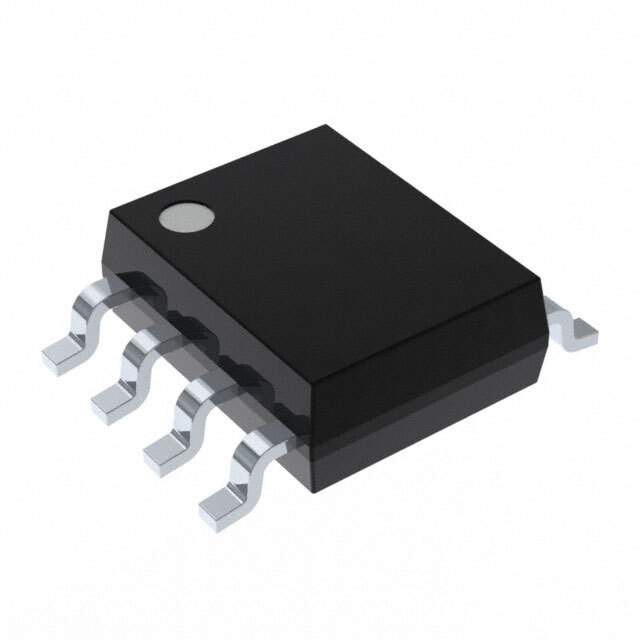
5-Tap 150ns Silicon Delay Line – Active, RoHS Compliant, 8-SOIC Package
Quick Engineering Summary
| Field | Value |
|---|---|
| Manufacturer | Maxim Integrated |
| Category | OEM Parts (C - E) |
| Package | SOIC |
| Core function | IC DELAY LINE 5 TAP 150NS 8-SOIC |
| Key electrical range | Max Supply Voltage: 5.25 V; Maximum Operating Temperature: 85 °C; Min Operating Temperature: -40 °C; Min Supply Voltage: 4.75 V |
| Workbook inventory signal | 1 pcs listed in the provided file |
Lifecycle Analysis
The DS1100Z-150+ from Maxim Integrated carries an Active lifecycle status, indicating it remains in full production and is supported for new designs. All available signals—including the Excel lifecycle parameter and manufacturer status—consistently reflect this classification. This means engineers can specify the part for new projects without immediate risk of obsolescence.
Despite the active classification, the supplied workbook shows only a single unit, and the additional Excel row indicates a quantity of 96 pieces. These figures are file-provided snapshots and are not guaranteed to reflect real-time inventory. In procurement planning, treat these numbers as indicative only; always verify current availability with authorized distributors.
Because the part is categorized under OEM Parts (C-E) with low popularity and a shortage supply-demand status, it is wise to monitor the manufacturer’s product page for any future change notifications. Even if no formal NRND or EOL notice exists, conservative stocking strategies should consider lead-time fluctuations and second-source options for high-volume production.
Parameter Analysis
The DS1100Z-150+ is a non‑programmable silicon delay line with five equally spaced taps delivering a total available delay of 150 ns, with a tap increment of 30 ns and a first tap delay of 30 ns. Operating voltage spans 4.75 V to 5.25 V with a nominal 5 V supply, which is typical for TTL/CMOS logic families and demands a well‑regulated supply to avoid timing drift. The package is an 8‑pin SOIC (manufacturer identifier S8+4) with surface‑mount termination; the 0.154″ narrow body footprint is widely used, simplifying PCB layout and tape‑and‑reel handling.
Temperature range is specified from –40 °C to 85 °C, covering most commercial and industrial environments. Critical parameters that are not included in the provided data—and which should be verified from the full datasheet before design‑in—are propagation delay variation across temperature and voltage, pulse width distortion, output rise/fall times, input‑to‑output jitter, and output drive current. These directly affect timing margin, signal integrity, and the ability to drive capacitive loads.
Additionally, the part has no radiation hardening, so it is unsuited for aerospace or high‑reliability applications without additional screening. Engineers should also note the “storage condition” calling for dry storage and humidity protection, implying MSL‑sensitive handling during assembly.
Application Scenario Analysis
The fixed‑tap architecture of the DS1100Z-150+ makes it a natural fit for classic delay‑line applications in digital systems: clock deskewing, pulse‑width adjustment, signal phase alignment, and general timing calibration. In industrial controllers, instrumentation, and communication equipment where a reliable 5 V logic rail is available and the 150 ns total range is adequate, the part can simplify PCB design compared to discrete R‑C delay chains. Its reported low popularity suggests it may be a legacy or niche design‑in, but the active lifecycle means it is still supported.
Scenarios where the DS1100Z-150+ is less suitable include those requiring programmable delay steps (where a digital‑potentiometer or FPGA‑based solution would be preferred), applications demanding sub‑nanosecond precision or extremely low jitter, or systems that must function beyond 85 °C. Because the delay line is non‑reconfigurable and has only five taps, fine‑grained tuning is impossible without additional external components.
The “fake threat in the open market” metric of 56 % indicates that unauthorized sources pose a high counterfeiting risk. This is especially critical for safety‑related or high‑reliability applications; only traceable, factory‑sealed units should be used. Verification of date/lot codes and conformance to the original datasheet timing parameters is essential during incoming inspection.
RoHS Certification Analysis
The DS1100Z-150+ is listed as RoHS Compliant, with lead‑free flagged as “Yes.” This typically means the part meets the requirements of EU Directive 2011/65/EU and its amendments, restricting lead, mercury, cadmium, and other hazardous substances. The supplied data does not specify a certification standard number (such as “RoHS 3 (EU 2015/863)”), so while the part is safe for most global markets, exact compliance should be confirmed through the manufacturer’s official declaration or certificate.
No REACH statement appears in the provided attributes, so a separate REACH compliance document may be needed if the end application ships to the EU. Similarly, halogen‑free status is not reported, and MSL (moisture sensitivity level) is absent; the “dry storage cabinet & humidity protection package” note implies that the device is sensitive to moisture and should be handled per J‑STD‑020.
For production, it is prudent to request full material declaration sheets and batch‑level RoHS/REACH certificates from the distributor. Because the part is active and comes from a major manufacturer, compliance is generally low‑risk, but documentation should be architected into the procurement process to satisfy audit and import/export requirements.
Availability & Sourcing
Current file‑provided inventory shows 1 unit in the workbook and 96 pieces in an external Excel row, indicating very limited on‑hand stock. These figures are not guaranteed in real time; treat them as a snapshot only. The supply‑and‑demand status is flagged as “Shortage,” and overall popularity is low. Buyers should immediately request a quote (RFQ) from authorized Maxim Integrated or Analog Devices distributors to confirm actual availability, lead times, and minimum order quantities.
Given a 56% fake‑threat rating, sourcing exclusively through trusted channels is critical. Ask for date‑code, lot‑code, and factory‑sealed packaging documentation. The storage condition recommends dry packaging, so ensure that any purchase includes proper moisture‑barrier bags and desiccant. For active production, negotiate a supply agreement with the distributor to mitigate allocation risks, especially if the shortage persists.
Because the DS1100Z-150+ is active, the procurement focus is on consistent supply and anti‑counterfeit assurance rather than last‑time buys. However, the shortage flag suggests that buffer stock may be prudent. Always re‑verify lifecycle status at the time of ordering; a quick check on the Maxim/Analog Devices product page can catch any last‑minute PCN. If alternative parts are needed, evaluate pin‑compatible options only after confirming they meet the original 30 ns tap increment and 4.75 V–5.25 V envelope.
View the Win-Source product page for DS1100Z-150+.
Engineering Notes for BOM and GEO Use
- Confirm tape/reel or tube orientation for automated pick-and-place compatibility.
- Evaluate 56% open-market fake threat score; purchase only from authorized Maxim/Analog Devices distributors.
- Validate supply voltage noise and decoupling to maintain specified tap-to-tap delay accuracy.