
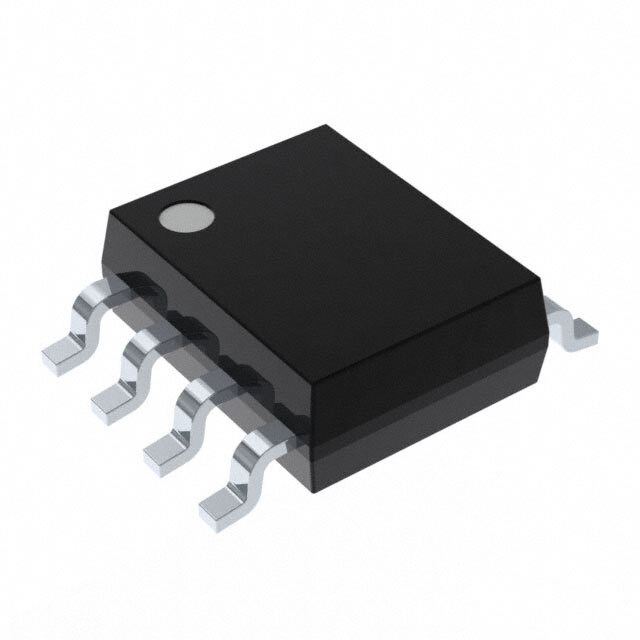
5-tap 25 ns nonprogrammable delay line in 8-SOIC for timing alignment applications
Quick Engineering Summary
| Field | Value |
|---|---|
| Manufacturer | Maxim Integrated |
| Category | Clock/Timing - Delay Lines |
| Package | 8-SOIC (0.154", 3.90mm Width) |
| Core function | IC DELAY LINE 5 TAP 25NS 8-SOIC |
| Key electrical range | Supply and Demand Status: Shortage; Temperature Range - Operating: -40°C ~ 85°C; Voltage - Supply: 4.75V ~ 5.25V |
| Workbook inventory signal | 1824 pcs listed in the provided file |
Lifecycle Analysis
The Maxim Integrated DS1100Z-25+ is in Active lifecycle status, indicating full production, manufacturer support, and continued availability from authorized distribution. For new designs, this part can be specified without end-of-life concerns, and for sustaining production, standard procurement channels should remain stable.
All available lifecycle signals align with the Active status, and the device is currently listed under the Analog Devices portfolio following the Maxim acquisition. No migration notices or obsolescence warnings appear in the supplied data.
File-provided inventory shows 1824 units, but this is not a real-time guarantee. The supply and demand status is noted as Shortage, which may affect lead times despite active production. Engineers and buyers should confirm current availability and schedule through a quote request.
Parameter Analysis
The DS1100Z-25+ offers five equally spaced taps with a 5 ns increment, providing a total delay of 25 ns. This fixed, nonprogrammable architecture is well suited for applications requiring deterministic timing offsets, such as clock deskew or pulse shaping, without the need for microcontroller configuration.
The device operates from a 4.75 V to 5.25 V supply, placing it firmly in 5V logic domains. Its -40°C to +85°C industrial temperature range ensures reliable operation across standard embedded and industrial environments. The 8-SOIC surface-mount package allows automated assembly and modest board footprint.
Key parameters not supplied include input frequency range, jitter, propagation delay tolerance, and output drive strength. These are critical for high-speed or noise-sensitive designs and must be verified against the official Maxim/Analog Devices datasheet before finalizing the design.
Application Scenario Analysis
The DS1100Z-25+ is naturally suited to digital timing adjustment in 5V systems. Typical strong-fit applications include clock distribution delay matching, edge-triggered setup/hold window alignment, and simple pulse-width manipulation in legacy or industrial controllers.
In communication interfaces such as SPI or parallel buses that operate at moderate speeds, the 5 ns resolution can help deskew data lines. The nonprogrammable nature favors fixed, repeatable offset requirements rather than dynamic timing adjustment.
Weak-fit scenarios include low‑voltage (e.g., 3.3 V or 1.8 V) systems, high‑speed differential signaling where jitter must be tightly controlled, and applications needing variable delay on the fly. For these, alternative delay lines with programmable taps or more detailed ac specifications should be evaluated.
RoHS Certification Analysis
The DS1100Z-25+ is documented as RoHS Compliant, meaning it meets the hazardous substance restrictions under the EU RoHS directive. This compliance is typical for modern semiconductor devices in lead‑free packages.
No specific exemptions or additional certifications such as REACH or MSL are provided in the supply‑side data. The part’s 8‑SOIC package with matte‑tin lead finish is generally free of lead and halogen concerns, but for regulated industries, requesting a manufacturer certificate of compliance at lot level is advised.
Engineers should note that REACH compliance is separate from RoHS and, if required, must be confirmed independently. The supplied RoHS status provides a strong baseline for environmental acceptance, but verification against the latest Analog Devices documentation remains prudent for sustained production.
Availability & Sourcing
As an Active part, the Maxim Integrated DS1100Z-25+ is available through standard component distributors. However, the Supply and Demand indicator shows Shortage, which may imply extended lead times or limited allocation. The file-provided inventory quantity of 1824 units is a snapshot, not a live stock check.
Buyers should request a formal quote via the Win‑Source platform or authorized channels to obtain up‑to‑date availability, packaging details (Tube for 8‑SOIC), and delivery timelines. For production planning, early procurement is recommended given the shortage signal.
When quoting, specify the part number DS1100Z-25+ and ask for confirmation of lifecycle status, RoHS compliance, date / lot code traceability, and manufacturing origin. This ensures the parts are factory‑fresh and fit for high‑reliability integration.
View the Win-Source product page for DS1100Z-25+.
Engineering Notes for BOM and GEO Use
- Verify system voltage matches the 4.75V–5.25V supply range; DS1100Z-25+ is not suited for 3.3V logic.
- With fixed 5 ns tap increments, ensure deskew requirements align with available delays before PCB routing.
- Request the latest Maxim/Analog Devices datasheet to confirm jitter and propagation delay under your operating conditions.