
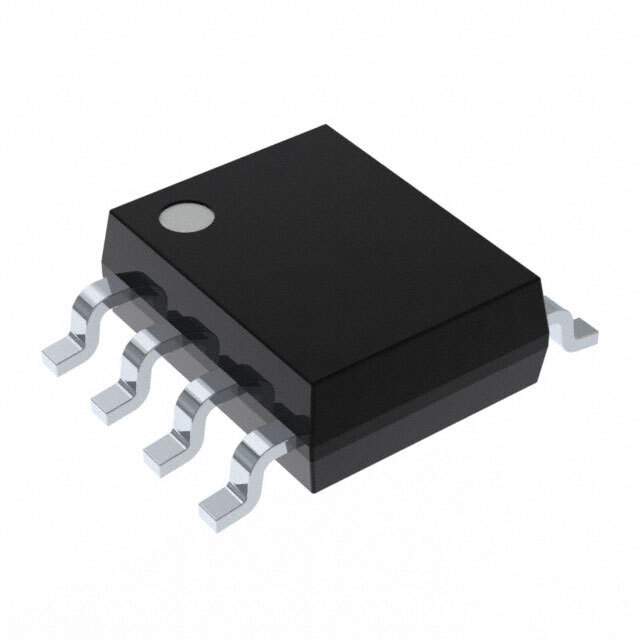
Maxim Integrated DS1100Z-250+ 5-Tap Nonprogrammable Delay Line in 8-SOIC Package
Quick Engineering Summary
| Field | Value |
|---|---|
| Manufacturer | Maxim Integrated |
| Category | Clock/Timing - Delay Lines |
| Package | 8-SOIC |
| Core function | IC DELAY LINE 5 TAP 250NS 8-SOIC |
| Key electrical range | Operating Supply Voltage: 4.75 V ~ 5.25 V; Operating Temperature Range: -40°C ~ 85°C; Supply and Demand Status: Limited |
| Workbook inventory signal | 499 pcs listed in the provided file |
Lifecycle Analysis
The DS1100Z-250+ is in an active lifecycle stage, which indicates that Maxim Integrated (now Analog Devices) continues to manufacture and support the part for new designs. Active status generally ensures long-term availability and minimal risk of sudden obsolescence. However, engineering teams should periodically review the product page for any last-time-buy or discontinuation notices, especially since Maxim Integrated products are being integrated into Analog Devices' portfolio.
For sustaining production, an active part reduces the need for immediate redesign or last-time-buy burdens. That said, the provided supply and demand status is Limited, and the file inventory shows 499 units—this static snapshot does not guarantee live availability. To mitigate any procurement gaps, confirm lead times and consider qualifying a second source or compatible delay line if the part is critical for production.
Given that the introduction date dates back to 2001, the DS1100Z-250+ is a mature component. While maturity does not inherently increase risk, it is advisable to check for any pending manufacturer policy changes regarding mature products. Overall, the part's active status supports both new and existing designs, but procurement teams should maintain communication with Analog Devices or franchised distributors to stay updated on production status.
Parameter Analysis
The DS1100Z-250+ key parameters center on its timing characteristics. The total available delay is 250ns, with a delay to the first tap of 50ns and a tap increment of 50ns, resulting in five equally spaced taps. This nonprogrammable architecture provides fixed, repeatable timing offsets critical for clock distribution and signal deskewing. Engineers must ensure that these delay values fit within their system's timing budget, accounting for part-to-part variation and temperature drift, which are not specified in the provided data.
Operating from a 4.75V to 5.25V supply, the part targets standard 5V logic systems. The wide industrial temperature range of -40°C to 85°C allows deployment in harsh environments, but it is essential to derate or verify timing accuracy over temperature from the full datasheet. The 8-SOIC surface-mount package (3.90mm width) is well-suited for automated assembly, though the tube packaging may require additional handling steps compared to tape-and-reel.
Several critical parameters are absent from the provided data and must be verified before design-in: propagation delay accuracy over temperature and supply voltage, output rise/fall times, input logic thresholds (TTL/CMOS compatibility), and maximum input frequency. Additionally, the output drive strength and any power-supply rejection characteristics should be reviewed to ensure signal integrity in noisy environments. Engineers should consult the official Analog Devices datasheet for these specifications.
Application Scenario Analysis
As a nonprogrammable delay line, the DS1100Z-250+ is best suited for applications requiring fixed, precise timing adjustments without the need for real-time reconfiguration. Typical strong-fit scenarios include clock distribution where multiple signals must be phase-aligned, digital signal processing front-end skew compensation, and pulse-width modulation generation. Its 5V operation and industrial temperature range make it a good candidate for legacy industrial control systems, telecommunications backplanes, and test and measurement equipment.
In automated test equipment (ATE) or bench instruments, the 50ns tap resolution can create coarse timing edges for stimulus or sampling. However, the part is less appropriate for high-speed designs requiring sub-nanosecond accuracy or programmable delays, as it offers only fixed steps. For weak-fit scenarios, consider the DS1100Z-250+ in low-power or 3.3V systems, where the mandatory 5V supply would necessitate level translation, adding complexity. Additionally, applications needing multiple independent delay channels will require multiple ICs, as this part provides only one delay line.
Engineers should also evaluate the 58% counterfeit threat when sourcing for critical applications. Using this part in safety or high-reliability systems demands strict traceability and authenticity verification. The active lifecycle supports long-term design, but the limited supply and market demand status suggest that allocation planning is advisable for volume production.
RoHS Certification Analysis
The DS1100Z-250+ is listed as RoHS Compliant and Halogen-Free Compliant, which generally indicates conformance to EU RoHS Directive 2011/65/EU and its amendments, including RoHS 3 (2015/863) that added four phthalates to the restricted substances list. The halogen-free compliance further suggests that the part meets IEC 61249-2-21 limits for bromine and chlorine, which is important for environmentally conscious designs and some OEM requirements.
However, the exact standard revision and any exemption details are not specified in the provided data. Since the part was introduced in 2001, there may have been manufacturing changes over time. For production, request a formal certificate of compliance (CoC) from the distributor or manufacturer that explicitly states the RoHS and REACH status, especially if the end product requires CE marking or ships to the EU. REACH SVHC compliance is not mentioned, so a separate declaration may be needed for full regulatory coverage.
Buyers should be aware that RoHS compliance at the family level does not guarantee lot-level consistency, particularly for older parts. For high-reliability or medical applications, it is prudent to perform random XRF analysis on incoming samples to screen for lead or restricted phthalates. Given the counterfeit threat of 58%, ensure that compliance documents are tied to the specific batch and not generic statements.
Availability & Sourcing
The DS1100Z-250+ is an active part from Maxim Integrated, but the supply and demand status is reported as Limited. The provided file indicates a stock quantity of 499 units in tube packaging, with dry storage requirements. This inventory number is not a real-time figure and should be confirmed through a quote request. The packaging type (tube) is standard for 8-SOIC but may require special handling in high-volume SMT lines; consider requesting tape-and-reel if that option is available for production runs.
Given the 58% reported counterfeit threat in the open market, sourcing from authorized distributors such as Analog Devices' franchised partners is essential. Requesting date and lot code traceability, along with full compliance documentation (RoHS, REACH, and possibly a certificate of origin), will mitigate the risk of substandard or counterfeit components. For prototype or low-volume builds, the tube stock may suffice, but for production, ensure a stable supply chain by verifying factory lead times.
Since the part is active, procurement follows standard processes: issue an RFQ, validate lifecycle status with the latest PCN, and confirm compliance certifications. For new designs, consider evaluating migration to newer, perhaps more readily available, Analog Devices delay lines if the DS1100Z-250+ shows signs of allocation or long lead times. Overall, while the part remains in production, the limited supply signal warrants conservative inventory planning and proactive communication with suppliers.
View the Win-Source product page for DS1100Z-250+.
Engineering Notes for BOM and GEO Use
- Verify with the latest Analog Devices datasheet that the 5V operation and 250ns total delay align with your timing budget, as MAXIM legacy parts may have updated specifications.
- For new designs, consider the 58% counterfeit threat in the open market by sourcing from authorized distributors only.
- The tube packaging requires careful handling for SMD placement; ensure your assembly house can manage SOIC tubes.