
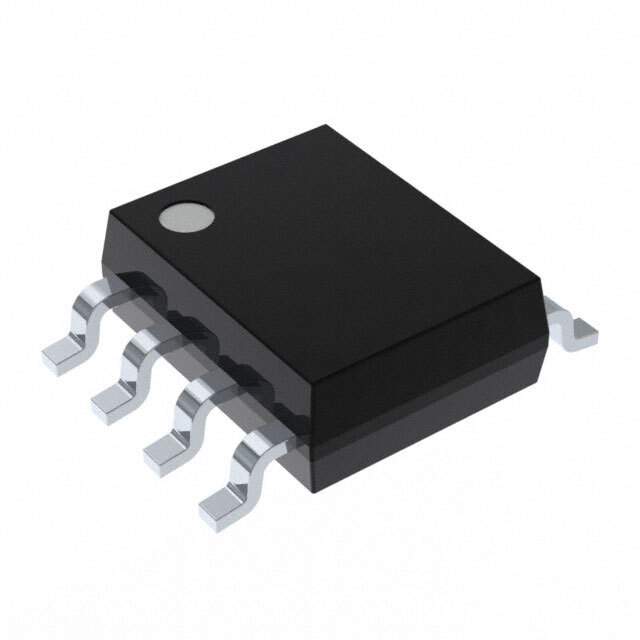
5-tap nonprogrammable delay line with 30ns total delay in 8-SOIC
Quick Engineering Summary
| Field | Value |
|---|---|
| Manufacturer | Maxim Integrated |
| Category | Clock/Timing - Delay Lines |
| Package | 8-SOIC |
| Core function | IC DELAY LINE 5 TAP 30NS 8-SOIC |
| Key electrical range | Operating Supply Voltage: 4.75 V ~ 5.25 V; Operating Temperature Range: -40°C ~ 85°C; Supply and Demand Status: Limited |
| Workbook inventory signal | 1300 pcs listed in the provided file |
Lifecycle Analysis
The DS1100Z-30+ is currently listed as Active by Maxim Integrated, suggesting it is available for both new designs and sustaining production. However, a separate specification field shows an estimated EOL date of 2024, which contradicts the Active status. This conflict introduces uncertainty that engineers and buyers should not ignore.
For new designs, the presence of an EOL date, even unconfirmed, means migration planning should begin now. Relying solely on the Active label without verifying manufacturer roadmaps could lead to supply disruptions. Verify the official lifecycle status directly through Maxim Integrated or its authorized distributors before finalizing BOM commitments.
Risk is elevated to medium because of this signal. File‑provided inventory quantities do not guarantee real‑time stock; always check current availability. For long‑life projects, evaluate alternative delay line solutions or programmable equivalents to avoid last‑minute redesigns.
Parameter Analysis
The DS1100Z-30+ is a 5‑tap silicon delay line with a total delay of 30 ns and a 6 ns tap increment. These values determine the timing resolution and maximum skew compensation in clock distribution or signal alignment circuits. The nonprogrammable nature means delays are fixed, so correct part selection is critical—verify that the 30 ns total and 6 ns step satisfy your system’s timing margins.
Operating supply voltage is specified from 4.75 V to 5.25 V, typical for 5V logic families. The –40°C to +85°C temperature range covers most industrial applications, but engineers must confirm that delay stability and drift over temperature meet design requirements; these details are not provided in the sourcing data and must be obtained from the full datasheet.
Missing parameters that require datasheet verification include input‑to‑tap propagation delays, jitter, rise/fall time compatibility, and logic level thresholds. The 8‑SOIC SMD package is standard, but confirm PCB footprint and thermal conditions align with your design. For applications needing programmable delays or finer resolution, consider other devices in the DS1100 family or alternatives.
Application Scenario Analysis
The DS1100Z-30+ fits well in digital systems requiring fixed time‑delay for clock deskew, signal phase adjustment, or pulse width manipulation. Its 30 ns total delay and 5 taps provide granularity suitable for moderate‑speed synchronous buses and backplane timing alignment where nanoseconds matter but sub‑nanosecond precision is not required.
This device is less suited for high‑speed serial interfaces or applications needing programmable delays, because the delay is fixed and not adjustable via digital interface. The 5 V supply and industrial temperature range make it appropriate for legacy 5V logic systems and embedded control, but not for low‑voltage or battery‑powered designs. Verify noise immunity and signal integrity if using near the 85°C limit.
Designers should confirm that the propagation delay baseline and tap‑to‑tap matching meet the timing budget for the intended clock distribution. In cases where multiple independent delays are needed, this single‑delay line solution may be insufficient; the DS1100Z-30+ provides only one delay path.
RoHS Certification Analysis
The DS1100Z-30+ is marked RoHS Compliant, indicating that it meets EU Directive 2011/65/EU and its amendments, including lead‑free termination finishes. Additionally, the part is noted as halogen‑free compliant, which is relevant for manufacturers targeting halogen‑free initiatives. These designations are based on manufacturer declarations and are typically valid for the production date code.
However, REACH compliance is not stated in the provided data, and REACH alone is not a substitute for RoHS. Buyers should request full material composition certificates when sourcing non‑stock lots, especially given the part’s introduction date in 2001. Lot‑level RoHS testing can be prudent for high‑reliability applications.
For procurement, insist on a certificate of conformance from the distributor that explicitly references the DS1100Z-30+ and the applicable date code. While the part is family‑level compliant, older inventory may have been produced under earlier standards, so verify the exact compliance version when purchasing surplus stock.
Availability & Sourcing
The DS1100Z-30+ is packaged in tubes and categorized with limited supply‑and‑demand status. One inventory file indicates 1300 units, but this is not a real‑time figure and should be treated as a reference only. To check current stock and pricing, submit a request for quote (RFQ) through Win‑Source or contact authorized Maxim Integrated distributors.
Given the conflicting lifecycle signals and a fake threat rating of 53 percent in the open market, due diligence is critical. Always source from franchised sources and insist on traceable date/lot codes. Verify that the parts are stored per recommended conditions (dry storage, humidity‑protected) to avoid moisture sensitivity issues during reflow.
For Active parts, the typical procurement workflow includes quote, compliance verification, and lead‑time confirmation. However, because of the estimated EOL date in 2024, engineers should assess whether to secure buffer stock now or begin qualification of alternative parts. For new designs, a more future‑proof delay line solution may be advisable.
View the Win-Source product page for DS1100Z-30+.
Engineering Notes for BOM and GEO Use
- Verify operating voltage range (4.75 V to 5.25 V) matches 5V logic levels in your design.
- Confirm delay tolerances, jitter, and temperature stability from the Maxim DS1100 datasheet before committing to production.
- Due to 53% fake threat in the open market, procure the DS1100Z-30+ only from authorized sources and request lot traceability documentation.