
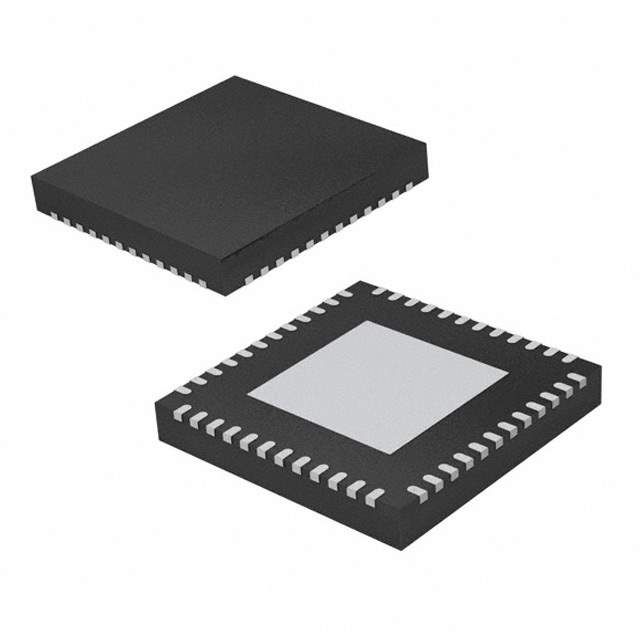
Active part from Texas Instruments with low risk; verify datasheet and request a quote for current stock.
Quick Engineering Summary
| Field | Value |
|---|---|
| Manufacturer | Texas Instruments |
| Category | Interface - Specialized |
| Package | 48-WQFN (7x7) |
| Core function | IC INTERFACE SPECIALIZED 48WQFN |
| Key electrical range | Operating Supply Voltage: 2.375 V ~ 2.625 V; Supply and Demand Status: Balance |
| Workbook inventory signal | 1 pcs listed in the provided file |
Lifecycle Analysis
The DS110RT410SQE/NOPB is in active production with no conflicting lifecycle signals from Texas Instruments. Active status means this part is fully supported for new designs and has no immediate end-of-life concerns. An estimated EOL date of 2029 provides a dependable procurement window, making it suitable for programs with mid-term lifecycles.
Despite the active classification, designers should still account for potential lead time fluctuations and verify production continuity with TI directly, especially for high-volume or long-term projects. Mature parts like this one, introduced in 2013, often have established supply chains but may eventually transition to NRND as technology evolves.
For risk mitigation, treat the 2029 estimate as a guideline rather than a guarantee and monitor official TI product change notifications. The low risk level allows normal procurement workflows, but a proactive review of the datasheet and latest manufacturer bulletins is advised before committing to large-scale production.
Parameter Analysis
Key decision parameters for the DS110RT410SQE/NOPB include its narrow operating supply voltage range of 2.375 V to 2.625 V, which demands tight regulation on the power rail. Deviations beyond this window could lead to functional failures, so power supply design must include appropriate decoupling and tolerance analysis. The I2C interface defines the digital communication methodology, influencing microcontroller selection and layout routing.
Packaging is a critical integration factor: the 48-WQFN (7x7 mm) with exposed pad requires careful PCB land pattern design and thermal management. The exposed pad aids heat dissipation, but thermal vias and copper pours must be evaluated based on actual power consumption, which should be confirmed in the datasheet. Storage conditions specified as dry storage cabinet and humidity protection package indicate moisture sensitivity, so MSL level verification is necessary prior to reflow soldering.
Several parameters are absent from the supplied data, including operating temperature range, data rate, and detailed timing specifications. Engineers must obtain the full datasheet to verify these values, as they directly affect qualification for industrial or extended-temperature applications. The 49% fake threat percentage underscores the need for authentic parts; parameter compliance should be validated on received samples.
Application Scenario Analysis
The DS110RT410SQE/NOPB is tailored for Ethernet applications, making it a strong candidate for networking equipment such as switches, routers, and interface cards. Its I2C interface suggests configuration or monitoring roles within these systems, likely as a signal retimer or conditioner for high-speed Ethernet links. The active lifecycle and compact 48-WQFN package support use in space-constrained, high-density designs.
While primarily an Ethernet-focused part, it may also serve in industrial controllers or backplane interfaces that leverage Ethernet standards. However, it is not suitable for general-purpose I/O or applications requiring wider supply voltages, such as 3.3 V or 5 V systems, without additional level shifting. The lack of detailed specifications limits concrete assertions; designers should confirm its specific functional block (e.g., retimer, redriver) and protocol compatibility (e.g., 10GBASE-KR) via the datasheet.
Weak-fit scenarios include non-Ethernet protocols or low-speed interfaces where simpler level translators could suffice. Because this is a specialized interface IC, its use should align with TI's intended reference designs to avoid integration complexity. Verify signal integrity requirements and board stackup guidelines when incorporating this part.
RoHS Certification Analysis
Texas Instruments declares the DS110RT410SQE/NOPB as RoHS compliant, meeting the requirements of EU directives for hazardous substance restrictions. In addition to RoHS, the part is halogen-free compliant, addressing low-bromine/chlorine content often requested in environmentally conscious designs. These certifications simplify compliance documentation for products sold in the European Union.
Nevertheless, the specific RoHS directive version (e.g., EU 2011/65/EU or EU 2015/863) is not explicitly stated in the supplier data. Buyers should request the certificate of compliance or full material declaration to confirm conformance to the latest RoHS 3 amendment, especially for lot-specific traceability. Halogen-free status, while beneficial, does not replace RoHS verification.
For high-reliability applications, consider the MSL classification and storage guidelines. The dry storage requirement suggests moisture sensitivity, which must be managed to avoid soldering defects. Always integrate RoHS compliance checks into incoming inspection processes to mitigate regulatory risk.
Availability & Sourcing
The file-provided stock quantity for the DS110RT410SQE/NOPB is one unit, a snapshot that does not reflect real-time inventory. Due to this low indicated level and a medium popularity rating, immediate availability may vary. Use a request-for-quote workflow with Win-Source or authorized TI distributors to obtain accurate lead times and current stock positions.
Sourcing demands vigilance given a reported 49% fake threat in the open market. Prioritize traceable supply chains, request date and lot code verification, and inspect packaging for reel authenticity. The part's storage condition (dry storage cabinet and humidity protection) warrants checking the vacuum seal integrity upon receipt.
With active lifecycle status, the standard procurement approach is to quote and verify compliance documentation. However, the estimated EOL date of 2029 suggests that for new designs, stable supply is expected through the next several years. For production sustainment, consider a last-time-buy analysis if the part ever transitions to NRND, and stay informed through TI's official notifications.
View the Win-Source product page for DS110RT410SQE/NOPB.
Engineering Notes for BOM and GEO Use
- Validate the full electrical and timing parameters by obtaining the official TI datasheet, as supply voltage alone does not define fit.
- Given a fake threat level of 49%, source only from TI authorized distributors or through qualified traceability checks.
- Plan for long-term availability until at least 2029, and engage TI for any design-in sustainment beyond that EOL estimate.