
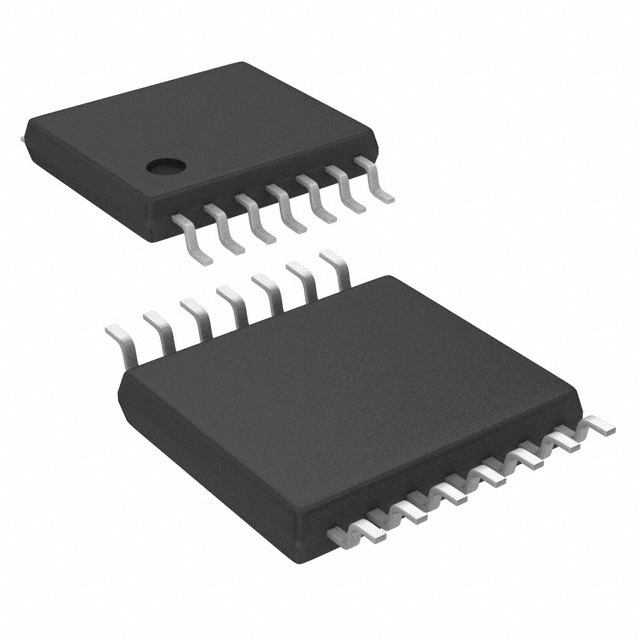
Sourcing guide for Maxim Integrated DS1110E-500+ delay line: 10-tap, 500ns, active, 14-TSSOP.
Quick Engineering Summary
| Field | Value |
|---|---|
| Manufacturer | Maxim Integrated |
| Category | Clock/Timing - Delay Lines |
| Package | 14-TSSOP (0.173", 4.40mm Width) |
| Core function | IC DLY LN 10 TAP 500NS 14-TSSOP |
| Key electrical range | Supply and Demand Status: Shortage; Temperature Range - Operating: -40°C ~ 85°C; Voltage - Supply: 4.75V ~ 5.25V |
| Workbook inventory signal | 1 pcs listed in the provided file |
Lifecycle Analysis
Lifecycle signals for the DS1110E-500+ from Maxim Integrated indicate an Active status, which means the part is in full production and suitable for new design starts. No lifecycle conflicts are present; all supplied data sources align on Active. This supports procurement planning with low risk for both prototype and volume orders, though for long-lifetime programs it is prudent to periodically revalidate status directly with Maxim Integrated or authorized distributors.
When using file-provided inventory data as a rough indicator, note that the listed quantity is a snapshot and may not reflect real-time availability. Engineers should confirm lifecycle and production continuity with the manufacturer before committing to designs where a sudden transition to NRND or EOL could impact supply.
Parameter Analysis
For timing-critical designs, the DS1110E-500+ offers a fixed nonprogrammable delay line with 10 equally spaced taps, a total delay of 500ns, and a consistent tap increment of 50ns. The first tap provides a delay of 50ns. Supply voltage is specified at 4.75V to 5.25V, which fits standard 5V logic rails, and the operating temperature range of -40°C to 85°C supports industrial environments.
The 14-TSSOP surface-mount package has a 4.40mm body width; this compact footprint aids in dense PCB layouts but also means thermal management and trace routing must account for heat dissipation and signal integrity. Key parameters not covered in the abbreviated data include propagation delay tolerance, input/output rise/fall times, maximum current draw, and logic-level compatibility. Designers should retrieve the full Maxim Integrated datasheet to obtain these specifications and to verify timing accuracy under worst-case voltage and temperature conditions.
Application Scenario Analysis
The DS1110E-500+ excels in digital systems requiring deterministic, fine-grained timing adjustments. Typical strong-fit applications include clock distribution networks where a master clock must be deskewed across multiple loads, pulse-width manipulation for memory controllers, and ADC sampling delay alignment. The fixed 50ns step size is well-suited for coarse but predictable tuning in FPGA-based designs or synchronous bus interfaces.
This part is less appropriate for applications needing programmable delay values, very high-resolution sub-nanosecond adjustments, or operation outside the 5V ±5% supply band. For mixed-voltage or battery-powered designs, the fixed supply range may be a constraint. Additionally, the 85°C upper temperature limit might rule out extended industrial or automotive-grade use without further qualification. When evaluating fitness, engineers should match the required total delay and tap granularity against system timing margins and consider whether a programmable alternative would provide more flexibility.
RoHS Certification Analysis
The DS1110E-500+ is listed as RoHS Compliant based on the provided data, which typically indicates conformity with the EU RoHS Directive 2011/65/EU or the later RoHS 3 (EU 2015/863) restricting hazardous substances such as lead, mercury, and cadmium. However, the specific RoHS standard revision is not stated, and there is no mention of REACH or halogen-free compliance in the source information.
For production qualification, procurement teams should request a formal Certificate of Compliance (CoC) and review materials declarations to confirm lot-level compliance, especially if components are sourced from non-authorized channels. While the RoHS status applies to the part family, individual production dates may have variations in exemption applicability. It is good practice to verify the latest manufacturer documentation to ensure ongoing conformity, particularly when designing for markets with evolving environmental regulations.
Availability & Sourcing
With an Active lifecycle status, the DS1110E-500+ is generally open for quotation and regular procurement. However, the source data indicates a supply-and-demand status of Shortage and a file-provided quantity of 1 unit; this suggests that spot inventory may be limited and lead times could be extended. Engineers and buyers should issue RFQs through authorized distribution channels to obtain real-time stock levels, date/lot codes, and traceable supply.
Given the shortage indication, it is advisable to secure inventory early and verify that the components come with full compliance documentation, including RoHS certificates and manufacturer origin confirmation. For new production designs, ensure that the part’s lifecycle remains Active and that no impending obsolescence notices have been issued. Request a quote for current availability, and consider planning buffer stock to mitigate potential supply interruptions.
View the Win-Source product page for DS1110E-500+.
Engineering Notes for BOM and GEO Use
- Confirm propagation delay tolerance and input logic thresholds from the official Maxim Integrated datasheet before finalizing timing budgets.
- For production runs, verify RoHS compliance at the lot level, especially if procuring from inventory aggregators.
- Given the shortage flag, engage with authorized distributors early to lock in long-term delivery schedules.