
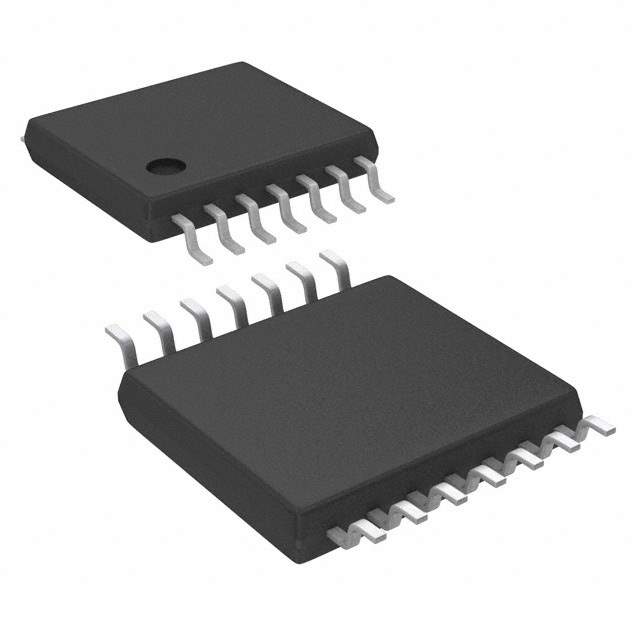
EOL 10-tap silicon delay line with 125ns total delay, 12.5ns tap increment, 2.7-3.6V, -40°C-85°C, RoHS
Quick Engineering Summary
| Field | Value |
|---|---|
| Manufacturer | Maxim Integrated |
| Category | Clock/Timing - Delay Lines |
| Package | 14-TSSOP |
| Core function | IC DLY LN 10 TAP 125NS 14-TSSOP |
| Key electrical range | Supply and Demand Status: Balance; Supply Voltage (V): 2.7V ~ 3.6V; Temperature Range - Operating: -40°C ~ 85°C |
| Workbook inventory signal | 1340 pcs listed in the provided file |
Lifecycle Analysis
The DS1110LE-125+ is classified as End-of-Life (EOL) in the source data, with all lifecycle signals aligning and no conflicts. This status means Maxim Integrated has discontinued the part, and it is no longer recommended for new designs. Engineers developing new products should select an alternative delay line that is in active production. For existing designs in sustaining production, the high risk level demands immediate action to secure any remaining stock and to verify the manufacturer’s last-time-buy window.
The file indicates an inventory quantity of 1340 units, but this figure is not a real-time guarantee and may reflect either distributor stock or historical data. Buyers must contact the supplier to confirm current availability, lot date codes, and whether the parts are from an authorized source. Without manufacturer confirmation, there is a risk that the remaining supply will be exhausted before production needs are met.
A further consideration is the 30 percent counterfeit threat level noted for this part in the open market. This elevates the sourcing challenge and makes it critical to work only with trusted, traceable channels. Procurement teams should request certificates of conformance and, if possible, perform sample testing to verify authenticity.
Parameter Analysis
The DS1110LE-125+ offers ten equally spaced taps with a fixed 12.5ns increment, yielding a total delay of 125ns from input to the last tap. This nonprogrammable architecture provides deterministic timing without the need for configuration, which is useful in systems requiring fixed phase adjustments or pulse alignment.
The operating voltage range of 2.7V to 3.6V is compatible with many 3.3V logic families, but the absence of a 5V option limits it to low-voltage designs. The industrial temperature rating of -40°C to 85°C covers most embedded and telecom applications. With MSL Level 1, the 14-TSSOP package does not require special dry-bag handling before reflow, which eases board assembly.
Key missing parameters in the source data include tap-to-tap delay accuracy (such as deviation in ns or percent), additive jitter, and output edge-rate specifications. These details are critical for high-speed clock distribution and should be obtained from the manufacturer’s datasheet before finalizing a design or qualifying a replacement. Additionally, input-to-output propagation delay and supply current versus frequency are not provided and must be verified for power budgeting.
Application Scenario Analysis
Strong-fit applications for the DS1110LE-125+ center on fixed clock deskewing and timing alignment in digital systems. Its ten taps at precise 12.5ns steps allow generation of multiple phase-offset clock signals, which can be used for SDRAM timing adjustment, data-eye centering, or coordinating multiple peripheral interfaces. The nonprogrammable nature suits designs where the delay profile is known at layout time and does not need field reconfiguration.
Another good use case is pulse-width manipulation in industrial control or test equipment. By selecting a tap output, a known delay can be introduced to create pulses of specific widths or to align edge-sensitive signals. The wide temperature range supports outdoor or automotive cabin electronics, provided the voltage rails are within the 2.7-3.6V range.
Weak-fit scenarios include applications requiring continuous delay adjustment or very low jitter. Since the part is nonprogrammable, it cannot be reconfigured in firmware to adapt to changing system conditions. Also, without published jitter data, it may be unsuitable for high-speed serial links or precision instrumentation where timing uncertainty must be below a few picoseconds. Designers needing programmability or wider operating voltages should consider active alternatives.
RoHS Certification Analysis
The DS1110LE-125+ is marked as RoHS Compliant in the source data, indicating that it meets European Union restrictions on hazardous substances. The exact directive version is not specified, but generally this implies conformity with RoHS 2 (2011/65/EU) or the later RoHS 3 (EU 2015/863) phthalate restrictions. No exemptions are noted in the supplied information.
While the part is marked compliant at the case level, purchasers should be aware that compliance declarations can be family-wide and may not automatically reflect lot-specific changes. For products destined for the EU market or customers requiring full materials disclosure, it is advisable to request the manufacturer’s certificate of compliance or a third-party lab report that covers the actual batch being shipped.
The part also has an MSL rating of 1, meaning it is not moisture-sensitive and can be stored indefinitely without special conditions prior to soldering. This is a separate characteristic from RoHS and does not substitute for REACH or halogen-free certifications, which are not addressed in the provided data and should be verified if needed.
Availability & Sourcing
As an EOL component, the DS1110LE-125+ cannot be sourced through standard distributor replenishment. The file-provided inventory quantity of 1340 units suggests some stock may still exist, but availability must be confirmed by requesting a quote from the supplier. Buyers should specify required packaging (tube, with manufacturer pack quantity of 96) and ask for a detailed certificate of conformance that includes date/lot codes and manufacturer origin.
Traceability is especially important given the 30 percent fake threat estimate in the open market. Authorized sources, such as excess inventory from OEMs or approved aftermarket channels, are strongly preferred over broker-based procurement. Any received parts should undergo visual inspection and, for critical parameters, sample testing to verify they match the datasheet specifications.
Before placing an order, obtain the official EOL notice from Maxim Integrated / Analog Devices to determine the last-time-buy date and any recommended replacements. For production quantities, expedite evaluation of a pin-compatible alternative or plan a board revision to accommodate a different delay line. The supply and demand status is listed as “Balance,” but with EOL parts this can change rapidly, so prompt action is advised.
View the Win-Source product page for DS1110LE-125+.
Engineering Notes for BOM and GEO Use
- Confirm EOL status directly with the manufacturer and evaluate remaining stock for lifetime buys.
- Consult the full datasheet for tap-to-tap delay accuracy, jitter, and output rise/fall times before finalizing timing margins.
- The 30% counterfeit threat estimate makes authorized sourcing and incoming inspection essential.