
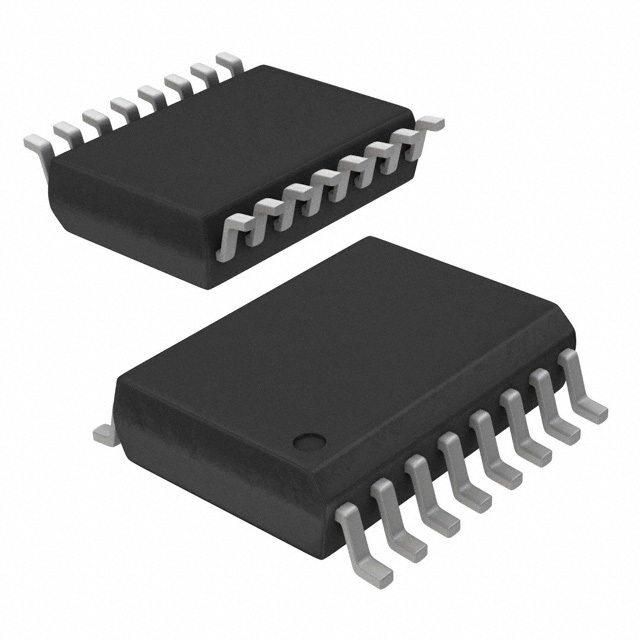
Discontinued 10-tap, 60ns delay line in 16-SOIC from Maxim Integrated. Check lifecycle, specs, and sourcing options.
Quick Engineering Summary
| Field | Value |
|---|---|
| Manufacturer | Maxim Integrated |
| Category | Clock/Timing - Delay Lines |
| Package | Tube |
| Core function | IC DLY LN 10 TAP 60NS 16-SOIC |
| Key electrical range | Temperature Range - Operating: -40°C ~ 85°C; Voltage - Supply: 4.75V ~ 5.25V |
| Workbook inventory signal | 1 pcs listed in the provided file |
Lifecycle Analysis
The DS1110S-60+ from Maxim Integrated has been discontinued, as confirmed by multiple lifecycle signals indicating EOL and discontinuation. This status means the part is no longer recommended for new designs and may have limited remaining stock. Engineers and buyers should immediately evaluate migration paths and secure any needed inventory.
Given the conflicting lifecycle signals—all pointing to discontinuation—conservative procurement language is essential. There is no indication of continued production, so treating this as an active part would pose supply chain risks. The workbook shows a single unit in stock, but this file-provided quantity is not guaranteed real-time and should be verified through an RFQ.
For legacy system sustainment, validating the precise discontinuation date and exploring manufacturer-authorized last-time buy options is critical. Without a direct replacement part number, redesigning with a functionally equivalent delay line or programmable alternative may be necessary.
Parameter Analysis
The DS1110S-60+ is a nonprogrammable 10-tap delay line providing a total delay of 60ns with a tap increment of 6ns. It operates from a 4.75V to 5.25V supply over the industrial temperature range of -40°C to 85°C, and comes in a surface-mount 16-SOIC package. These specifications define its suitability for 5V logic timing applications.
Key parameters such as the voltage supply and temperature range directly impact derating and thermal margin in system design. The 6ns tap increment allows for fine-grained skew adjustments, making the part useful for clock distribution where individual clock phases need precise alignment. However, critical timing parameters like propagation delay, input threshold levels, and output rise/fall times are not provided in the available data and should be verified against the manufacturer’s datasheet before integration.
For PCB layout, the 16-SOIC package is widely supported, but thermal considerations are minimal for this low-power device. Missing datasheet items such as minimum input pulse width and maximum operating frequency are essential to confirm before qualifying the part for high-speed designs.
Application Scenario Analysis
The DS1110S-60+ is typically used in digital systems requiring adjustable signal delays for clock synchronization, pulse-width modulation, or skew compensation. Given its 5V operation and 60ns maximum delay, it fits well in low-to-moderate-speed microprocessor and FPGA-based designs where multiple time-aligned outputs are needed.
Strong-fit applications include legacy industrial controllers, test equipment, and communication interfaces that rely on precise edge placement. The 10 taps allow generation of multiple delayed copies of a single input, which can simplify board-level timing closure without software calibration.
Weak-fit scenarios arise in high-speed differential signaling (e.g., LVDS, above 100 MHz) or analog signal buffering, where the fixed delay and lack of programmability limit flexibility. For new designs, engineers should consider programmable delay lines or clock distribution ICs that offer greater range and configurability. The part’s nonprogrammable nature means it cannot be adapted to different delay requirements without hardware changes.
RoHS Certification Analysis
The DS1110S-60+ carries a RoHS Compliant status from the manufacturer. This indicates that, as of its listing, the part meets EU RoHS directives restricting hazardous substances such as lead. The RoHS status is provided as a categorical declaration, not a lot-specific certification, so compliance should be reconfirmed at the time of purchase.
In addition, the REACH status is listed as unaffected, and the moisture sensitivity level (MSL) is 1 (unlimited), meaning no special dry-pack storage is required. While the RoHS compliance suggests lead-free processing, the absence of explicitly stated exemptions (e.g., lead in glass of electronic components) suggests they are not applicable, but verification through the manufacturer’s compliance documentation is prudent.
For companies requiring full material declarations or compliance certificates, it is recommended to request these documents from the distributor or manufacturer. Since the part is discontinued, ensuring that any remaining stock meets current RoHS standards before use in products requiring environmental compliance is essential.
Availability & Sourcing
The DS1110S-60+ is a discontinued Maxim Integrated delay line, and as such, availability is extremely constrained. The workbook data shows a single unit on hand, but this is a file-provided snapshot and not indicative of real-time stock. A formal request for quote (RFQ) is necessary to confirm current availability and obtain pricing.
Sourcing for this part requires rigorous traceability and counterfeit mitigation, especially given the reported 37% fake threat in the open market. Buyers should insist on manufacturer-authorized distribution channels, full traceability documentation, and date/lot code verification. The part is packaged in tubes, and its MSL 1 rating simplifies storage, but age-related solderability concerns may arise, so incoming inspection is advised.
For legacy production, secure remaining inventory and evaluate pin-compatible alternatives where possible. For new designs, immediate migration to an active delay line or programmable timing IC is strongly recommended. Always obtain up-to-date manufacturer discontinuation notices to plan last-time buys and avoid production gaps.
View the Win-Source product page for DS1110S-60+.
Engineering Notes for BOM and GEO Use
- Verify all timing parameters, including propagation delay and rise/fall times, against the full datasheet.
- With a reported 37% fake threat in the open market, only procure through authorized channels with traceability.
- As a discontinued part, evaluate alternative delay lines for new designs and secure remaining stock for legacy systems.