
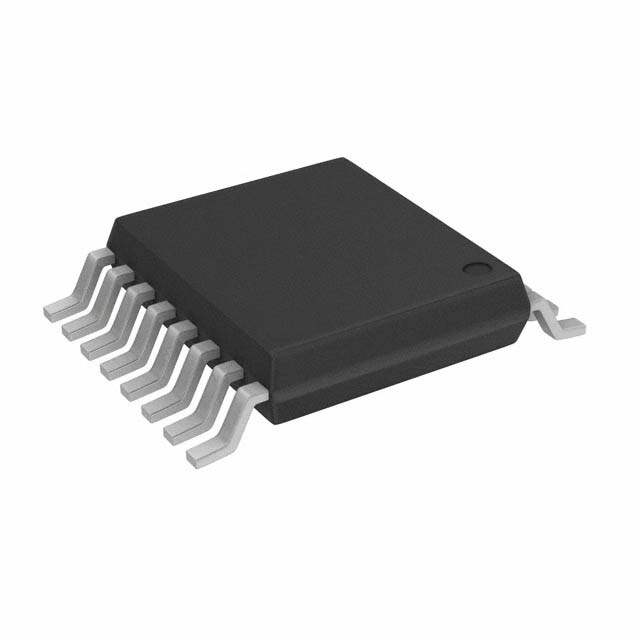
EOL Programmable Delay Line with 256-Tap 510ns Delay in 16-TSSOP Package
Quick Engineering Summary
| Field | Value |
|---|---|
| Manufacturer | Maxim Integrated |
| Category | Clock/Timing - Delay Lines |
| Package | 16-TSSOP |
| Core function | IC DLY LN 256 TAP 510NS 16-TSSOP |
| Key electrical range | Supply and Demand Status: Limited; Supply Voltage - Operating: 3 V to 3.6 V; Temperature Range - Operating: 0°C to 70°C |
| Workbook inventory signal | 2300 pcs listed in the provided file |
Lifecycle Analysis
The DS1123LE-200+ is firmly in the End-of-Life (EOL) phase, as confirmed by Maxim Integrated. With no conflicting lifecycle signals, this status indicates that the part is no longer manufactured and is not recommended for new designs. For engineers maintaining legacy systems, the immediate step is to verify the remaining supply. The workbook indicates a quantity of 2300 pieces, but this is a file-provided figure and must be validated with the supplier for real-time availability.
EOL parts carry high procurement risk. Without a guaranteed supply chain, production schedules can be disrupted. The open market reports a 68% counterfeit threat for this device, making authorized sourcing critical. Teams should request a last-time buy (LTB) schedule from the manufacturer if available and begin evaluating alternative delay line ICs. Postponing migration can lead to forced redesigns or costly spot buys from unverified sources.
Parameter Analysis
The DS1123LE-200+ provides a total delay of 510ns, selectable via 256 equal taps with a 2ns tap increment. The delay to the first tap is 16.5ns. These parameters define the granularity and range for timing adjustments. The device operates at a supply voltage of 3V to 3.6V, fitting modern low-voltage logic families. Its operating temperature range of 0°C to 70°C restricts it to commercial-grade environments.
As a 1-shot programmable delay line, the DS1123LE-200+ is configured once to set a pulse width or timing interval. The 16-TSSOP package requires standard SMD assembly. For integration, designers must check the datasheet for input/output voltage levels, propagation delay variation over temperature and supply, and output current capability—none of which are provided here. Power consumption and noise susceptibility are also missing and should be verified. Without full timing diagrams, precise modeling in the target system is not possible. Engineers should obtain the official Maxim Integrated datasheet and characterize performance across the expected operating envelope.
Application Scenario Analysis
The DS1123LE-200+ is intended for clock/timing applications that require a fixed, precise delay generation or pulse-width adjustment. Its programmable nature suits tasks like clock deskew, pulse shaping, and timing signal alignment in test equipment, data acquisition systems, and communication interfaces.
Strong-fit scenarios include commercial-grade products where delay up to 510ns with 2ns resolution is needed and where a single configured delay is acceptable. Its 3.3V operation and 0–70°C range align with many digital systems. However, it is a weak fit for high-speed designs requiring sub-nanosecond resolution, extended industrial temperature ranges, or re-configurable delays on the fly. Additionally, the EOL status makes it unsuitable for new product introductions. For existing designs, it may still serve if sufficient stock is secured. Complementary components include microcontrollers, FPGAs, and clock generators.
RoHS Certification Analysis
The DS1123LE-200+ is listed as RoHS Compliant. The manufacturer's original compliance likely adheres to RoHS 3 (EU 2015/863), though the standard is not explicitly confirmed in the provided data. As an EOL part, the compliance status may reflect the directive in force at the time of production.
For procurement, lot-level RoHS certificates should be obtained to confirm that the specific inventory meets current requirements. No exemptions are noted, but none are expected for a silicon-based delay line. REACH compliance is not stated, so if REACH certificates are needed, they must be requested separately. MSL information is absent; thus, storage and handling according to the datasheet's recommendations, such as dry storage and humidity protection as mentioned, are essential. Verify that the tube/rail packaging maintains moisture sensitivity levels during transport.
Availability & Sourcing
The DS1123LE-200+ is discontinued, and supply is constrained. The workbook indicates 2300 units, but this is a static inventory snapshot and not a live count. Buyers must contact the supplier directly to confirm current stock and request a quotation. Given the 68% counterfeit risk in the open market, sourcing should be limited to authorized or trusted distributors with traceable date/lot codes.
For production, the priority is to secure enough inventory to cover the remaining lifecycle of the product. The device is shipped in tube/rail packaging, suitable for SMD mounting. Request compliance documentation, including RoHS certificates and labeling, with each shipment. For new designs, this part is not recommended; instead, work with Maxim Integrated or alternative suppliers to identify a pin-compatible or functionally similar device. Delaying migration increases the likelihood of encountering obsolete stock or counterfeits.
View the Win-Source product page for DS1123LE-200+.
Engineering Notes for BOM and GEO Use
- Verify EOL status with Maxim Integrated before committing to new designs
- The DS1123LE-200+ offers 2ns tap resolution, but actual delay may vary with voltage and temperature; consult datasheet for derating
- Risk of counterfeit parts is high (68% open-market threat); source only from authorized channels with traceability