
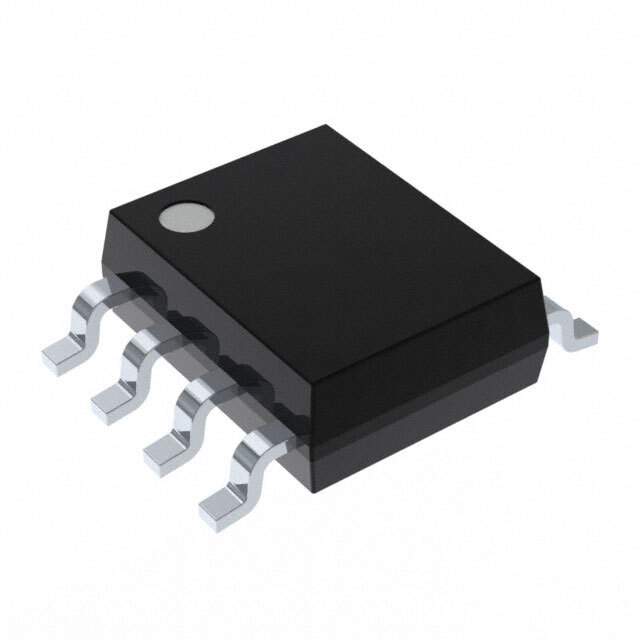
Active 30ns 3‑tap nonprogrammable delay line in 8‑SOIC from Maxim Integrated – verify lifecycle and compliance before design‑in.
Quick Engineering Summary
| Field | Value |
|---|---|
| Manufacturer | Maxim Integrated |
| Category | Clock/Timing - Delay Lines |
| Package | 8-SOIC |
| Core function | IC DELAY LINE 30NS 8-SOIC |
| Key electrical range | Operating Supply Voltage: 2.7 V ~ 3.6 V; Operating Temperature Range: -40°C ~ 85°C; Supply and Demand Status: Limited |
| Workbook inventory signal | 1 pcs listed in the provided file |
Lifecycle Analysis
The Maxim Integrated DS1135LZ-30+ is listed as Active, with a low supply risk according to manufacturer signals. This status means the part remains in full production and is generally suitable for both new designs and ongoing volume sourcing. No conflicting lifecycle data has been found across the provided sources.
An estimated end‑of‑life date of 2025 is noted in the specification records. While this does not change the current Active standing, it introduces a forward‑looking consideration: design teams should assess whether the expected program lifetime extends beyond that date. For programs with multi‑year production runs, it is prudent to obtain a formal lifecycle confirmation from Maxim Integrated and consider alternate or drop‑in replacements if the EOL timeline hardens.
File‑provided inventory information shows a stock quantity of 1 unit. This figure is not a real‑time stock level and should only be used as a rough signal; actual availability must be verified through an RFQ. Supply and demand status is reported as Limited, reinforcing the need to check lead times and authorized channel allocations before committing to new production.
Parameter Analysis
The DS1135LZ-30+ offers a total available delay of 30ns, with delay to the first tap also specified at 30ns. With three independent, nonprogrammable delays in a single package, it provides fixed‑phase timing adjustments without requiring external programming. The operating supply voltage range of 2.7V to 3.6V aligns with many low‑voltage logic families, while the industrial temperature range of ‑40°C to 85°C supports robust environmental deployment.
Key physical parameters include the 8‑SOIC package (3.90mm width) and SMD mounting. The small footprint is a benefit for space‑constrained PCB layouts. Because the part is nonprogrammable, its delay values are fixed; engineers should verify that the exact timing values match system requirements without the flexibility of software tuning. The lack of publicly specified delay accuracy, jitter, and power consumption data means these critical parameters must be obtained from the full manufacturer datasheet.
Additionally, parameters such as tap‑increment granularity, input/output logic levels, and propagation delay skew are not detailed in the provided dataset. For rigorous design, confirm these items directly with Maxim Integrated documentation to ensure reliable integration into clock distribution, signal skew correction, or pulse‑width manipulation circuits.
Application Scenario Analysis
The DS1135LZ-30+ is well‑suited for applications requiring fixed 30ns total delays with three independent taps. Typical use cases include clock phase alignment in digital systems, basic pulse‑width adjustment, or coarse timing calibration where precise tap increments are not critical. Its low‑voltage operation and industrial temperature range make it appropriate for embedded controllers, communication interfaces, and test equipment operating in moderate environments.
This delay line is not optimal for scenarios demanding programmable delay steps, multiple fine‑resolution tap points, or wide supply voltage flexibility. Because tap increments are not specified, designs needing precise intermediate delays should look to programmable alternatives or parts with clearly defined tap spacing. Also, with a narrow operating voltage band (2.7V–3.6V), it may not fit legacy 5V systems without level translation.
Engineers should verify that the propagation delay and signal integrity (rise/fall time degradation) meet system timing budgets, particularly in high‑speed clock trees where skew accumulation can be problematic. For applications like synchronization of multiple data channels or glitch‑free clock switching, additional characterization may be required.
RoHS Certification Analysis
The DS1135LZ-30+ is marked as RoHS Compliant, indicating conformity to the European Union’s Restriction of Hazardous Substances directive. This compliance is typically valid at the family level, but component‑level lot testing may vary. Additionally, the part is noted as halogen‑free compliant, which further supports its environmental acceptability in eco‑conscious designs.
When integrating this part into products sold in RoHS‑regulated markets, request a formal certificate of compliance from Maxim Integrated or your distributor. The certificate should reference the applicable RoHS revision (e.g., EU 2015/863) and confirm that no exemptions apply unless explicitly documented. While REACH data is not provided here, it does not substitute for RoHS compliance and should be evaluated separately if required.
Because compliance can be lot‑dependent, especially for older component families, it is prudent to add a verification step in your incoming inspection process. The provided compliant status is reliable but should not be assumed without documentation for every procurement event.
Availability & Sourcing
The current supply and demand status for the DS1135LZ-30+ is described as Limited, with a file‑provided stock quantity of 1 unit. This inventory figure is sourced from a workbook snapshot and is not a real‑time reflection of market availability. The part is packaged in tubes, typical for manual or semi‑automated assembly lines. A fake threat rating of 28% in the open market underscores the importance of purchasing through authorized Maxim Integrated or Analog Devices distributors.
To secure genuine components, request a quote (RFQ) that includes full traceability, date/lot codes, and manufacturer certification. Given the active lifecycle status but an estimated EOL date of 2025, buyers should verify current lead times and consider ordering safety stock or qualifying alternative parts for programs expected to extend beyond that horizon. For immediate needs, inquire about factory‑direct availability as well as distributor stock.
Compliance documentation—RoHS certificate, material declarations, and packaging condition reports—should accompany each shipment. The recommended storage condition is a dry storage cabinet with humidity‑protected packaging, which should be maintained to avoid moisture‑related defects before board assembly.
View the Win-Source product page for DS1135LZ-30+.
Engineering Notes for BOM and GEO Use
- Verify delay accuracy and tap‑to‑tap variation against your timing budget directly from the latest Maxim Integrated datasheet.
- Plan procurement with the 2025 estimated EOL date in mind; evaluate migration paths for long‑life programs.
- Due to the 28% fake threat in the open market, source from authorized distributors to ensure component authenticity and full traceability.