
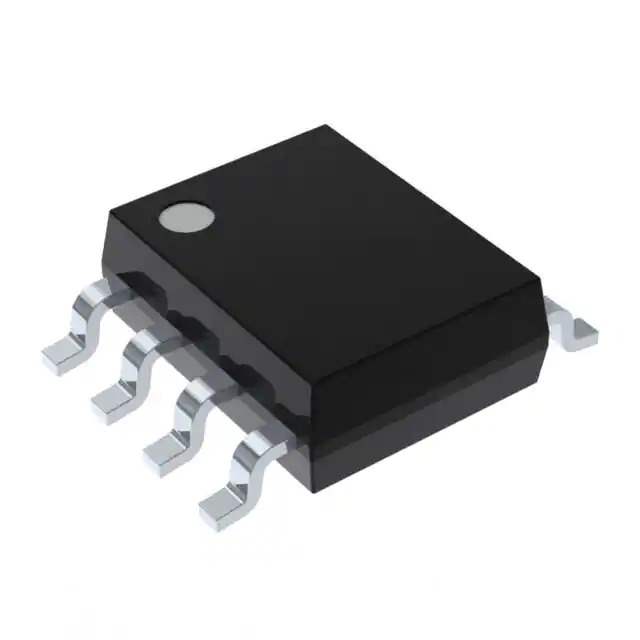
Active 30ns nonprogrammable delay line in 8-SOIC from Maxim Integrated. RoHS compliant, tube packaging.
Quick Engineering Summary
| Field | Value |
|---|---|
| Manufacturer | Maxim Integrated |
| Category | Clock/Timing - Delay Lines |
| Package | Tube |
| Core function | IC DELAY LINE 30NS 8-SOIC |
| Key electrical range | Temperature Range - Operating: -40°C ~ 85°C; Voltage - Supply: 4.75V ~ 5.25V |
| Workbook inventory signal | 24 pcs listed in the provided file |
Lifecycle Analysis
The DS1135Z-30+ is classified as Active across all available indicators, including its Excel lifecycle parameter, Lifecycle Status, and Product Status. This consensus signals that Maxim Integrated (now part of Analog Devices) continues full production and support for this delay line part. For new designs, the Active status means the DS1135Z-30+ can be selected with low risk of sudden discontinuation, allowing normal procurement planning and qualification cycles.
For existing production builds, the part remains a safe sustaining choice. Buyers should still monitor manufacturer product change notifications (PCNs) or lifetime-buy announcements periodically, as business conditions can shift. The file-provided inventory quantity of 24 units is a workbook snapshot and does not reflect live global stock; actual availability must be confirmed via a quote request.
No lifecycle conflicts exist in the supplied data, reinforcing the low risk rating. Engineering teams integrating the DS1135Z-30+ into long-lifecycle industrial or communications equipment should also verify with authorized distribution that the current Active status aligns with their project roadmaps, particularly given market consolidation within the semiconductor industry.
Parameter Analysis
The key performance parameters of the DS1135Z-30+ center on its nonprogrammable 30ns delay across three independent channels. Each tap provides a full 30ns delay (Delay to 1st Tap equals Available Total Delays), making the part a fixed timing resource for applications that do not need adjustable or cascaded delays. The 4.75V to 5.25V supply range places it squarely in legacy 5V logic and TTL-compatible systems, while the -40°C to 85°C operating temperature range supports standard industrial environments.
Surface‑mount packaging (8‑SOIC, 3.90mm width) and tube bulk packaging (standard package 100 pcs) are suitable for automated assembly lines. However, several critical specifications are absent from the provided data and must be verified directly against the official Maxim Integrated datasheet: input‑to‑output propagation delay, delay tolerance (minimum/maximum), temperature coefficient of delay, logic‑level thresholds (VIL/VIH, VOL/VOH), and power‑supply rejection. For high‑speed clock distribution or precision timing desksew, these missing parameters can dominate system timing margins.
Engineers evaluating the DS1135Z-30+ should plan derating and qualification specifically around timing accuracy under simultaneous switching noise and variation across the full supply‑voltage and temperature corners. Because the part is nonprogrammable, any need for finer delay resolution or longer total delays must be solved at the architecture level, for example by using multiple DS1135Z-30+ units or selecting an alternative programmable delay line.
Application Scenario Analysis
The DS1135Z-30+ shows strong fit in digital timing adjustments where a fixed 30ns delay is needed on up to three independent signal paths. Typical uses include clock deskewing in synchronous digital systems, timing alignment for memory interfaces, pulse stretching for capture triggering, and signal skew compensation in telecom or data communication backplanes. The part’s nonprogrammable nature is an advantage in applications where delay stability and low jitter are more critical than adjustability, as no programming interface or power‑on configuration adds latency or uncertainty.
It is less suitable for scenarios requiring adjustable delays, such as dynamic phase alignment in adaptive equalizers or test‑and‑measurement equipment, where a programmable delay line would be a better fit. Similarly, systems needing delays significantly longer than 30ns per channel would require cascading multiple devices or selecting an alternative with longer taps.
Designers should also consider the 5V‑only supply and industrial temperature range when assessing environmental constraints; battery‑powered or 3.3V‑only systems would need level translation, adding cost and complexity. In safety‑critical or high‑reliability applications, the availability of a compliant MSL Level 1 rating and RoHS documentation simplifies board‑level qualification, but the datasheet should be scrutinized for FIT rates and long‑term reliability data.
RoHS Certification Analysis
The DS1135Z-30+ is marked RoHS Compliant, indicating adherence to EU Directive 2011/65/EU as amended by 2015/863 (RoHS 3). This classification generally covers restrictions on lead, mercury, cadmium, hexavalent chromium, PBBs, PBDEs, and the four phthalates, making the part suitable for CE‑marked equipment and global markets aligned with EU environmental regulations.
Supporting evidence includes a REACH Unaffected status, meaning no Substances of Very High Concern (SVHCs) are present above the 0.1% weight threshold. While REACH is separate from RoHS, the joint compliance profile strengthens the part’s environmental standing. The MSL Level 1 rating (unlimited floor life) confirms that the 8‑SOIC package does not require special moisture‑sensitive handling beyond standard ESD precautions, which reduces manufacturing risk.
It is important to note that RoHS compliance in component databases is often declared at the part‑number family level. Verification through lot‑level certification or a full material declaration from Maxim Integrated (now Analog Devices) is recommended for products subject to regulatory audits or customer‑specific environmental requirements. No exemptions are listed in the provided data; however, if the DS1135Z-30+ uses lead‑frame finishes compliant via exemptions (e.g., 7a, 7c‑I), that would be clarified in the manufacturer’s IPC‑1752 declaration.
Availability & Sourcing
The DS1135Z-30+ is distributed in tube packaging with a standard package quantity of 100 pieces. As an Active part, lead times should be typical for Maxim Integrated’s delay line portfolio, but recent industry‑wide supply constraints make it essential to request an updated quote for current stock levels and delivery schedules. The file‑provided quantity of 24 units is a static reference and not a real‑time inventory guarantee.
Counterfeit risk is a notable concern for this part: the open‑market fake threat metric is reported at 69%. To mitigate this, source only through Maxim Integrated’s authorized distributors or directly from Analog Devices. Insist on full traceability, including date codes and lot codes, and consider third‑party inspection for high‑volume or critical builds. The part’s ECCN classification (EAR99) and HTSUS 8542.39.0001 indicate standard export control status, simplifying international procurement.
For design and procurement teams, the recommended workflow is to validate the official datasheet for electrical and mechanical specifications, confirm lifecycle status with the manufacturer, and then submit an RFQ through authorized channels. Request compliance certificates (RoHS, REACH) and verify that the offered stock is factory‑fresh, not surplus. Because the DS1135Z-30+ remains Active, there is no immediate need to stockpile large quantities, but for production programs with forecasted demand, a scheduled order or safety stock may be prudent to guard against allocation.
View the Win-Source product page for DS1135Z-30+.
Engineering Notes for BOM and GEO Use
- The DS1135Z-30+ integrates three independent 30ns delay elements in a single 8-SOIC package; verify timing tolerances and propagation delay from the full datasheet before finalizing timing budgets.
- Operate only within the 4.75V–5.25V supply and -40°C to 85°C range; thermal margin and decoupling layout should follow manufacturer recommendations to maintain delay accuracy.
- With a reported 69% fake threat rate on the open market, source exclusively through authorized Maxim Integrated distributors and require traceability documentation (date codes, lot codes).