
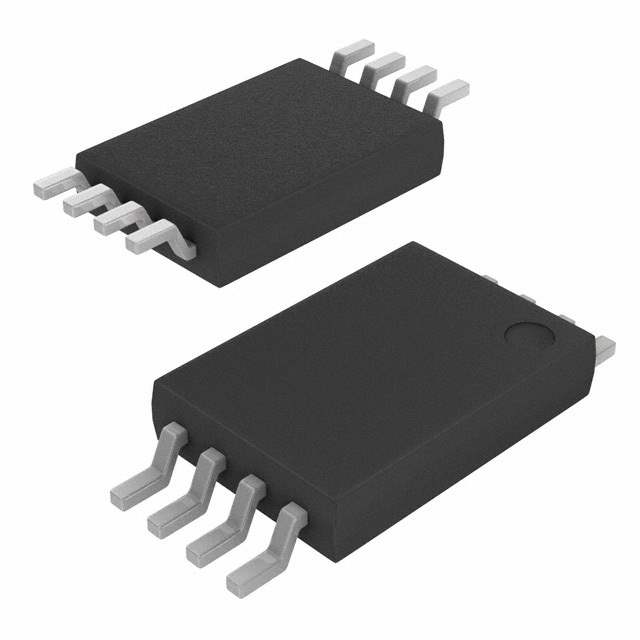
Maxim Integrated Spread Spectrum LCD Panel Clock IC
Quick Engineering Summary
| Field | Value |
|---|---|
| Manufacturer | Maxim Integrated |
| Category | Clock/Timing - Application Specific |
| Package | 8-TSSOP |
| Core function | IC SPREAD SPECT LCD PNL 8-TSSOP |
| Key electrical range | Input: Clock; Maximum Input Frequency: 134MHz; Output: LVCMOS; Supply and Demand Status: Balance |
| Workbook inventory signal | 9000 pcs listed in the provided file |
Lifecycle Analysis
The lifecycle status of the Maxim Integrated DS1181LE+T is uncertain from available data. The specifications list 'Status: Active', yet an 'Estimated EOL Date' is noted as 'Obsolete / End of life'. This conflict suggests outdated or erroneous signals, placing the part in a medium-risk category. For new designs, direct confirmation from Maxim Integrated or Analog Devices is mandatory before commitment. Sustaining production should evaluate inventory buffers and migration strategies.
The supplied data indicates a workbook quantity of 9000 units, but this is not a real-time guarantee and should be verified. Until the manufacturer clarifies, treat the part as possibly NRND or EOL. Procurement teams must avoid sole-sourcing and seek authorized distribution channels to reduce the risk of counterfeit or unavailable stock.
Parameter Analysis
The DS1181LE+T is a single-circuit spread spectrum clock generator designed for LCD panel timing, housed in an 8-TSSOP SMD package. Key parameters include a maximum input frequency of 134 MHz and LVCMOS output, suitable for driving LCD controllers directly. The operating voltage range of 3 V to 3.6 V aligns with typical 3.3 V system rails, and the temperature range of -40 °C to +125 °C qualifies it for industrial environments.
However, critical design parameters such as output jitter, spread spectrum modulation depth, and supply current are not provided in the current dataset; engineers must consult the full datasheet for these values. Additionally, the presence of only one PLL circuit implies single-channel operation, so multi-output applications require external buffering or alternative parts. Verify the actual spread spectrum profile to ensure compliance with EMI requirements.
Application Scenario Analysis
The DS1181LE+T is purpose-built for LCD panel clocking applications, leveraging spread spectrum technology to reduce electromagnetic interference (EMI) in display interfaces. Strong-fit scenarios include digital signage, automotive infotainment displays, and industrial HMI panels where reliable LVCMOS clocking and wide temperature tolerance are essential. The device may also suit other EMI-sensitive clock distribution tasks within the 134 MHz range.
Weak-fit cases involve general-purpose clock generation for non-display logic, or high-speed communication links requiring ultra-low jitter—the spread spectrum modulation could introduce timing uncertainty in such systems. Without detailed jitter specs, caution is advised for tightly timed protocols. Additionally, the single-channel limitation restricts it to single-display applications unless multiple chips are used. Confirm that the spread spectrum profile matches the LCD panel's timing controller requirements.
RoHS Certification Analysis
The DS1181LE+T is marked as RoHS Compliant, and additional documentation indicates Halogen Free compliance. This suggests conformance to EU RoHS Directive (2011/65/EU) including amendments such as 2015/863, though no explicit standard version is provided. RoHS compliance is critical for global distribution and avoiding import restrictions.
However, compliance declarations are typically issued for the part family; purchasers should request lot-specific certificates to guarantee that the actual production batch meets current RoHS requirements. The REACH status is not specified; if required, obtain a REACH compliance statement from the supplier. While the chip meets lead-free soldering standards suitable for 8-TSSOP SMD reflow, always verify MSL (Moisture Sensitivity Level) from the datasheet prior to assembly.
Availability & Sourcing
Sourcing for the DS1181LE+T requires careful lifecycle verification due to conflicting status signals. The dataset reports 9000 units in stock, but this figure reflects a file-provided snapshot and not real-time availability. Engineers and buyers should request a current quote through the platform's RFQ system to confirm quantity, date codes, and packaging (reel/TR).
Given the 32 % counterfeit threat reported for this part in open markets, procurement from authorized distribution channels is strongly recommended. For production use, insist on traceability documentation including manufacturer certificates of origin and RoHS compliance per lot. Since the EOL status is uncertain, bulk purchases for new designs are risky until the lifecycle is clarified. If the part is indeed active, advance orders may be possible; if NRND or EOL, alternative sources or last-time-buy notifications should be explored. Always negotiate for humidity-protected storage conditions as noted in the storage condition field.
View the Win-Source product page for DS1181LE+T.
Engineering Notes for BOM and GEO Use
- Obtain manufacturer confirmation of lifecycle status before committing to new designs—data shows both 'Active' and 'Obsolete/EOL' signals.
- Source through authorized distributors to mitigate the 32 % open-market counterfeit threat; demand lot-based RoHS and traceability documentation.
- Verify spread spectrum modulation depth, output jitter, and supply current directly from the full datasheet for design integration.