
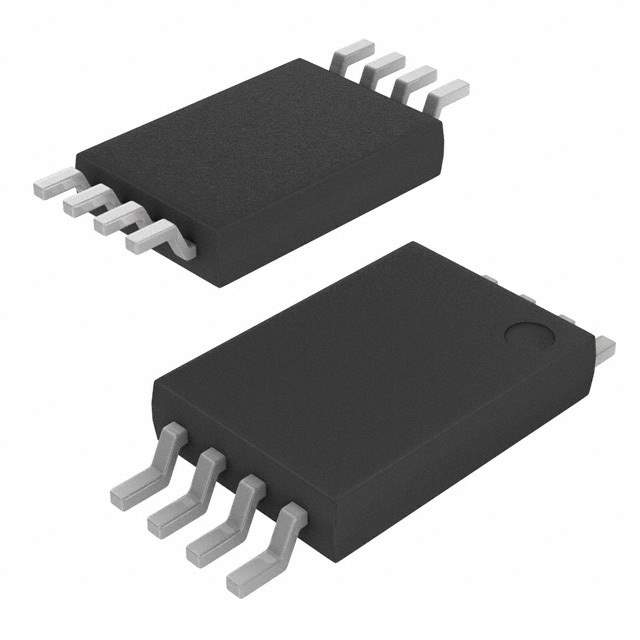
Maxim Integrated DS1181LE+ spread-spectrum LCD panel clock generator – technical parameters, lifecycle, and sourcing information.
Quick Engineering Summary
| Field | Value |
|---|---|
| Manufacturer | Maxim Integrated |
| Category | Clock/Timing - Application Specific |
| Package | 8-TSSOP |
| Core function | IC SPREAD SPECT LCD PNL 8-TSSOP |
| Key electrical range | Frequency - Max: 134MHz; Input: Clock; Operating Supply Voltage: 3 V ~ 3.6 V; Operating Temperature Range: -40°C ~ 125°C |
| Workbook inventory signal | 1600 pcs listed in the provided file |
Lifecycle Analysis
The DS1181LE+ lifecycle status is unknown in the supplied data. However, an Estimated EOL Date of 'Obsolete' is listed, indicating that the part may have been discontinued. This conflict requires careful interpretation: the formal lifecycle field did not provide a known status, but an internal data field suggests obsolescence. For new designs, it is risky to rely on a part with ambiguous lifecycle signals. The original manufacturer, Maxim Integrated (now part of Analog Devices), should be contacted directly to obtain a current product lifecycle notice or PCN.
With an introduction date of November 2007, the DS1181LE+ is a mature device, and it is plausible that it has moved toward discontinuation. The absence of an official NRND or EOL notice from the manufacturer could mean the part is still in limited production or available only through remaining inventory.
Sourcing decisions should be conservative: treat the DS1181LE+ as potentially discontinued and plan a second source or migration path. If inventory is procured, verify date/lot codes and request manufacturer certification to ensure authenticity, given the 45% reported fake threat in the open market.
Parameter Analysis
The critical parameters for the DS1181LE+ include its maximum frequency of 134 MHz, LVCMOS output, and PLL-based spread-spectrum functionality designed for LCD panel clock generation. The operating supply voltage range of 3 V to 3.6 V is standard for many LCD timing controllers, but careful decoupling and power sequencing should be followed per the datasheet. The device operates over an extended temperature range of -40°C to +125°C, which covers most industrial applications but may be insufficient for automotive Grade 1 (150°C) without further confirmation.
The single PLL circuit accepts a clock input and provides a spread-spectrum-modulated clock output, helping to reduce electromagnetic interference (EMI) in LCD panels. Engineers should verify the spread percentage and modulation profile, as these specifications are not provided here but are essential for EMI compliance. The 8-TSSOP package is compact, enabling dense PCB layouts.
Missing key datasheet parameters that must be confirmed include phase noise/jitter performance, output drive strength, input clock frequency range, and the exact spread-spectrum depth. Before designing in the DS1181LE+, obtain the full Maxim Integrated datasheet to check these values against your system requirements, especially if precise timing margins are critical.
Application Scenario Analysis
The DS1181LE+ is purpose-built for LCD panels, specifically to provide a spread-spectrum clock for the timing controller. Strong-fit applications include consumer, industrial, and medical displays where EMI reduction is necessary. Its LVCMOS output interfaces directly with many LCD column driver or timing controller ICs. The extended temperature range makes it suitable for outdoor kiosks, industrial monitors, and some automotive infotainment screens (if the -40°C to +125°C range is adequate).
Weak-fit or marginal scenarios include high-resolution display protocols like LVDS or eDP, which may require differential clocks; the DS1181LE+ provides single-ended LVCMOS only. Designs that need multi-output clocks or different frequency plans would require additional buffer or conversion stages. Also, applications sensitive to jitter, such as high-speed serial links, should evaluate additive jitter carefully, as the PLL and spread-spectrum modulation can degrade timing margins.
Although the device is categorized as application-specific, it could potentially serve as a general-purpose spread-spectrum clock source for other digital systems needing reduced EMI, provided the output frequency and logic levels match. However, such use is not guaranteed and should be validated with the manufacturer.
RoHS Certification Analysis
The DS1181LE+ is listed as RoHS Compliant according to the supplied data. This generally indicates compliance with EU RoHS Directive 2011/65/EU and its amendments, but the specific standard (e.g., RoHS 3) is not specified. The absence of REACH, halogen-free, or MSL (Moisture Sensitivity Level) information means that full environmental and handling compliance cannot be assumed from this record alone.
Engineers and buyers should request a Certificate of Conformance (CoC) or full material declaration from the distributor or manufacturer to confirm that the DS1181LE+ meets RoHS 3 (EU 2015/863) requirements, including the four additional phthalates, and to verify REACH compliance if required. The RoHS status is typically assigned at a part family level; lot-level variations could occur if older stock is mixed. Since the part has an Estimated EOL of Obsolete, older non-RoHS inventory might still be in the supply chain, so specifying RoHS compliance at the point of purchase is essential.
For high-reliability or export-controlled applications, also check for China RoHS, conflict minerals reporting, and PFAS content, as these are not addressed by the basic RoHS flag. With a 45% fake threat, compliance documentation becomes a key anti-counterfeit verification.
Availability & Sourcing
As of the provided file date, there are reported 1600 units of DS1181LE+ in stock, but this quantity is not a live inventory figure and must be verified. The device is shipped in tubes (from the 'Packaging' spec), and the listed storage condition recommends dry storage and humidity protection, suggesting an MSL requirement that should be confirmed.
Due to the ambiguous lifecycle and the Estimated EOL Date of Obsolete, request a quote early and secure available inventory if the part is essential for existing production. For new designs, evaluate migration to a current-generation Maxim Integrated (now Analog Devices) clock generator recommended by the manufacturer. Always source from authorized distributors to mitigate the high counterfeit risk (45% fake threat). Request date and lot code verification, along with RoHS compliance certificates.
When procuring the DS1181LE+, consider full lot traceability and third-party testing if the supply chain is suspect. For EOL or obsolete parts, it is advisable to negotiate long-term supply agreements or last-time buy options directly with the manufacturer, though the official lifecycle status remains unknown.
View the Win-Source product page for DS1181LE+.
Engineering Notes for BOM and GEO Use
- Treat DS1181LE+ as potentially obsolete; contact Analog Devices/Maxim Integrated for a definitive lifecycle notice and migrate to a recommended replacement for new designs.
- The LVCMOS output and 134 MHz max frequency are tailored for LCD panel spread-spectrum clocking; verify jitter and EMI reduction specifications in the full datasheet.
- Counterfeit risk is reported at 45%—only source from authorized distributors with full traceability, RoHS certification, and date code validation.