
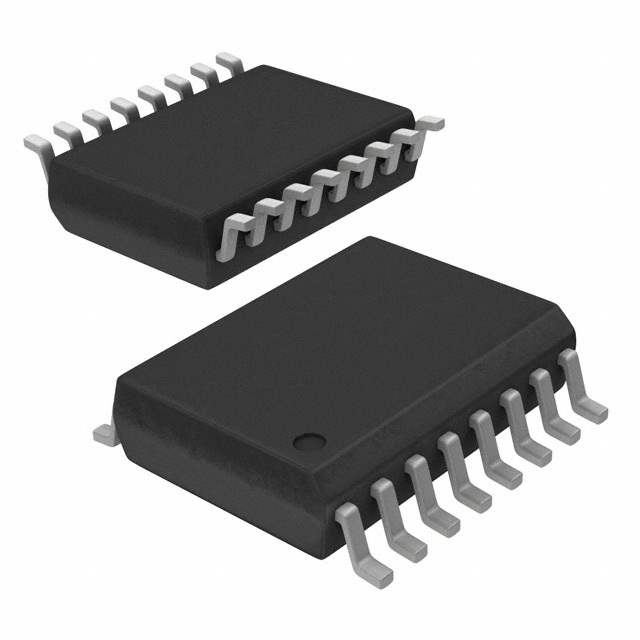
EOL Lifecycle | 16-SOIC Package | RoHS Compliant | High Counterfeit Risk
Quick Engineering Summary
| Field | Value |
|---|---|
| Manufacturer | Maxim Integrated |
| Category | Memory - Controllers |
| Package | 16-SOIC |
| Core function | IC MEM CTLR NV RAM 16-SOIC |
| Key electrical range | Supply and Demand Status: Balance; Supply Voltage - Operating: 4.75 V to 5.5 V; Temperature Range - Operating: 0°C to 70°C |
| Workbook inventory signal | 380 pcs listed in the provided file |
Lifecycle Analysis
The DS1210S from Maxim Integrated (now Analog Devices) carries an official EOL (End-of-Life) lifecycle status, with all sourced signals aligning. This means the component is no longer recommended for new designs, and last‑time buy or last‑time shipment windows may have already closed. The high risk level reflects potential supply gaps and increased counterfeit activity.
Engineers and buyers must treat this part as a sustaining‑only purchase. For any remaining production demand, immediate action is needed to secure authentic inventory. File‑provided quantity of 380 units should not be considered a live stock guarantee; always confirm real‑time availability through a formal RFQ. Migration to an alternative nonvolatile RAM controller should be evaluated in parallel.
Parameter Analysis
Key parameters extracted from the source data include the controller type (Nonvolatile RAM), supply voltage (4.75V to 5.5V), operating temperature (0°C to 70°C), and package (16‑SOIC). These are fundamental for determining fit in existing 5V‑based embedded systems, especially where battery‑backed SRAM is used.
However, several performance‑critical parameters are missing. The source does not specify the maximum supported memory density, access time, interface protocol, or standby current. For a memory controller, these directly impact PCB layout, timing closure, and power budgeting. Engineers must consult the official Maxim Integrated datasheet to obtain full AC/DC characteristics, pin‑out details, and any derating guidelines for extended temperature use. Without this data, qualification for an existing design may be incomplete.
Application Scenario Analysis
The DS1210S serves as a dedicated controller for nonvolatile RAM, typically interfacing with low‑power SRAMs to preserve data during power loss. Strong fit scenarios include sustaining legacy industrial control systems, telecom line cards, and medical instrumentation where 5V logic and DIP‑compatible footprints (with SOIC adaptation) are still in use. In these cases, drop‑in replacement may be possible if the memory map and timing match.
Weak fit or unsuitable scenarios involve new designs. Modern systems often migrate to 3.3V or lower supply rails and higher density memories with integrated controllers, making the DS1210S’s 5V‑only, limited temp range, and discrete controller architecture outdated. Additionally, the EOL status makes it inappropriate for any future‑proofed product. Designers should verify if an FPGA‑based or integrated NVRAM solution better meets current requirements.
RoHS Certification Analysis
The source data indicates the DS1210S is RoHS Compliant, which likely aligns with EU RoHS directives (2011/65/EU and amendment 2015/863). This suggests that the homogeneous materials used do not contain restricted substances above maximum concentration values. However, the data does not provide supporting details such as REACH regulation compliance, halogen‑free claims, or moisture sensitivity level (MSL).
For compliance documentation in production, it is essential to request a full material declaration or certificate of compliance from the supplier, covering the specific lot. Family‑level compliance statements are common for EOL parts, but lot‑level verification reduces risk, especially for export‑controlled industries. Absence of MSL information also demands clarification before reflow soldering.
Availability & Sourcing
Given the DS1210S EOL status and a file‑reported quantity of 380 units in tube packaging, availability is extremely constrained. The supply and demand status is listed as Balance, but this does not reflect real‑time market conditions. The reported 63% fake threat in the open market underscores the need for rigorous sourcing protocols.
Buyers should immediately request a quote through authorized channels and verify date/lot codes against manufacturer shipment records. Confirm that parts are stored per the specified dry cabinet and humidity protection conditions to preserve solderability. For production continuity, pair the purchase with a formal EOL notice from Analog Devices and explore authorized aftermarket sources. Never rely solely on file‑provided inventory; treat every transaction as high‑risk until authenticity is documented.
View the Win-Source product page for DS1210S.
Engineering Notes for BOM and GEO Use
- Confirm EOL status directly with Analog Devices to avoid last-time-buy surprises and plan production transition.
- Due to a reported 63% fake threat, insist on full traceability and X-ray verification for high-volume purchases.
- Validate RoHS compliance certificate for the specific lot before production use; MSL and lead‑free data must be obtained from the manufacturer.