
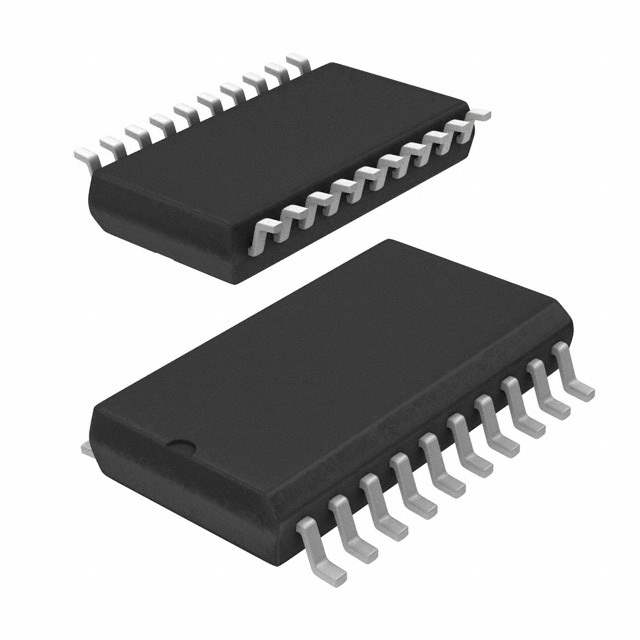
End-of-life nonvolatile RAM memory controller in 20-SOIC package, requiring careful sourcing for legacy maintenance.
Quick Engineering Summary
| Field | Value |
|---|---|
| Manufacturer | Maxim Integrated |
| Category | Memory - Controllers |
| Package | 20-SOIC |
| Core function | IC MEM CTLR NV RAM 20-SOIC |
| Key electrical range | Supply and Demand Status: Limited; Supply Voltage - Operating: 4.75 V to 5.5 V; Temperature Range - Operating: 0°C to 70°C |
| Workbook inventory signal | 6000 pcs listed in the provided file |
Lifecycle Analysis
The DS1211S from Maxim Integrated (now part of Analog Devices) is officially End-of-Life (EOL) according to all available lifecycle signals, with a high procurement risk level. EOL status means that Maxim Integrated no longer manufactures this part, and authorized distributors do not maintain active stock. This part is not recommended for new designs; it should only be considered for sustaining production or repair of existing legacy systems where a redesign is not feasible.
For applications still dependent on the DS1211S, immediate action is advised. Validate your remaining inventory against forecasted demand and identify potential last-time buy opportunities if any stock remains available. The file-provided inventory quantity of 6000 units should be confirmed with a distributor or broker, as it is not a real-time guarantee and may represent aggregated non-verified stock.
Given the high risk associated with EOL components, avoid integration into new production. Engineering teams should begin evaluating alternative nonvolatile RAM controllers or integrated NVRAM solutions that are in active production to ensure long-term supply continuity.
Parameter Analysis
The DS1211S is a nonvolatile RAM controller designed to interface with standard SRAM to create nonvolatile memory. Key electrical and mechanical parameters extracted from the provided data are the supply voltage range of 4.75 V to 5.5 V and an operating temperature range of 0°C to 70°C. The 5 V nominal supply aligns with legacy TTL-level systems, and the commercial temperature grade limits its use to standard indoor environments. The package is a 20-SOIC, a surface-mount plastic small-outline IC with a 7.50 mm body width, which dictates the PCB footprint and thermal characteristics for integration.
These parameters are critical for backward compatibility in existing board designs. The absence of datasheet-level details such as active current consumption, standby current, access time, and the specific interface protocol (typically a parallel bus) means that engineers must obtain the full Maxim Integrated DS1211S datasheet before qualifying the part for any system. Without these values, a proper worst-case analysis and derating assessment cannot be performed.
Additionally, verify the controller's voltage thresholds and ramping characteristics if used in power-sensitive applications. The lack of detailed timing diagrams and pinout descriptions in the available specifications is a gap that must be filled by manufacturer documentation to ensure a reliable design fit.
Application Scenario Analysis
The DS1211S nonvolatile RAM controller is purpose-built for maintaining data integrity in battery-backed SRAM systems or for creating nonvolatile memory arrays using standard SRAM and a backup power source. Its primary application fit is in legacy industrial controllers, embedded systems, data loggers, and instrumentation where nonvolatile memory must retain data during power loss, and where existing board designs already incorporate this controller.
In modern designs, the DS1211S is a weak fit because integrated NVRAM modules and microcontrollers with built-in nonvolatile memory controllers have largely replaced the need for a standalone chip. The 5 V operation and commercial temperature range also limit its use in newer low-voltage, wide-temperature applications. However, for sustaining engineering of legacy equipment that cannot be redesigned, the DS1211S remains an essential drop-in replacement part.
When evaluating the DS1211S for continued production, ensure that the application’s memory requirements—such as SRAM density, access speed, and retention voltage—match the controller’s capabilities as delineated in the full manufacturer datasheet. In the absence of a direct replacement, consider designing a daughterboard with a more modern solution if board respin is an option.
RoHS Certification Analysis
The RoHS status of the DS1211S presents a conflict in the available data: the primary compliance field lists the part as "RoHS Compliant," while a separate specification attribute reports "RoHS Non-Compliant." This discrepancy demands immediate verification before any procurement. For engineering and sourcing teams, this means that the actual compliance of a given lot cannot be assumed without documentation.
Given the EOL lifecycle, mixed lots may exist in the supply chain, some manufactured before RoHS regulations took full effect or under exemptions that have since expired. There is no REACH or MSL information provided, and no indication of halogen-free status. REACH is not a substitute for RoHS; both must be verified independently if required end-market regulations.
To resolve this conflict, request the Certificate of Compliance (CoC) and any test reports for specific date codes from the supplier. If the application mandates RoHS compliance, each shipment batch should be validated to avoid import or market access issues. In the absence of clear documentation, treat the part as potentially non-RoHS-compliant to reduce compliance risk.
Availability & Sourcing
Sourcing the DS1211S demands a cautious approach due to its EOL status, limited supply and demand indicators, and a reported 60% fake threat in the open market. The file-provided inventory figure of 6000 pieces is not a live stock confirmation and should be treated as a reference only. Request quotes from multiple authorized or specialized distributors, and insist on date code verification, lot traceability, and a certificate of conformance to minimize counterfeit risk.
Packaging is specified as tube/rail, and storage conditions require a dry cabinet with humidity protection, which is critical for moisture-sensitive SMD components. When ordering, confirm that the parts have been stored in compliance with these conditions and that packaging integrity is intact.
For end-of-life components, the recommended action is to secure enough inventory to cover your expected lifespan of the product, while simultaneously evaluating migration to an alternative part. Maxim Integrated (now Analog Devices) may have issued a product discontinuation notice (PDN) with guidance on replacements; obtain that notice if possible. Ultimately, treat the DS1211S as a high-risk procurement item and never commit to new production use without a verified, compliant supply.
View the Win-Source product page for DS1211S.
Engineering Notes for BOM and GEO Use
- Verify exact RoHS compliance status with supplier; datasheet specifications conflict between compliant and non-compliant sources.
- Plan for replacement or last-time buys; Maxim DS1211S is EOL with limited supply and 60% fake threat risk in open market.
- Request lot-specific date codes, traceability documentation, and dry-pack verification when sourcing remaining inventory.