
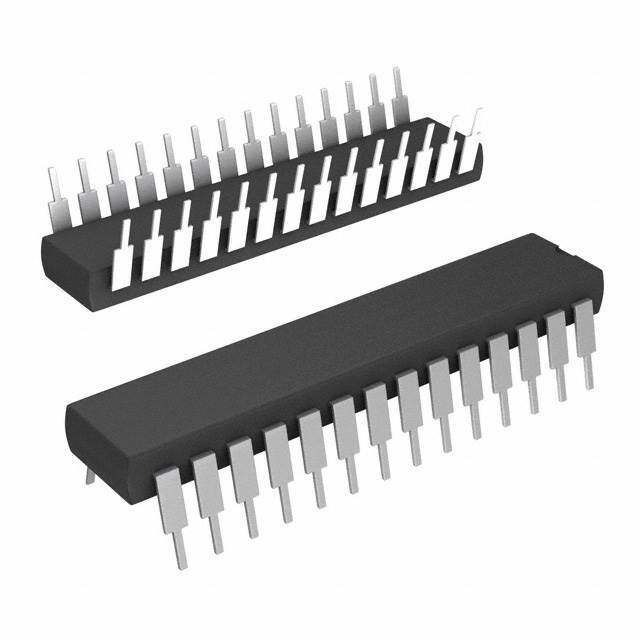
Obsolete part – validate specifications and sourcing risks carefully
Quick Engineering Summary
| Field | Value |
|---|---|
| Manufacturer | Maxim Integrated |
| Category | Memory - Controllers |
| Package | 28-DIP Socket |
| Core function | IC MEM CTLR SMARTWATCH RAM 28DIP |
| Key electrical range | Supply and Demand Status: Limited; Supply Voltage - Operating: 4.5 V to 5.5 V; Temperature Range - Operating: 0°C to 70°C |
| Workbook inventory signal | 1 pcs listed in the provided file |
Lifecycle Analysis
The DS1216B is confirmed as end-of-life (EOL) by multiple lifecycle signals from Maxim Integrated. This status carries a high risk for procurement in new designs or unplanned production runs. For sustaining existing systems, immediate action is required to secure any remaining stock and qualify an alternative part. Since inventory is almost depleted, relying on remaining supply without a migration plan may lead to production interruptions.
All available documentation aligns with the EOL designation. Engineers should not specify this part for new product introductions. Instead, it should only be considered for legacy maintenance where a drop-in replacement is unavailable and a last-time buy has already been arranged.
When sourcing, expect limited availability and a high probability of non-factory-authorized channels. Verify any offered inventory against manufacturer’s EOL notices and request date code verification to avoid old or mishandled stock.
Parameter Analysis
Key parameters for the DS1216B include an operating voltage of 4.5V to 5.5V and a commercial temperature range of 0°C to 70°C. These values are typical for 5V logic and non-automotive environments. The 28-DIP socket through-hole package defines the mechanical footprint and restricts use to boards where surface-mount technology is not already employed. For design-in decisions, the DIP form factor may remain relevant in legacy industrial equipment, prototyping, or hobbyist projects where through-hole assembly is required.
The part is categorized as a Smartwatch RAM controller, implying a specialized interface for memory used in smartwatch applications. However, detailed electrical characteristics such as timing, supported memory densities, and interface protocol are absent from this dataset. Critical missing datasheet parameters include access time, refresh requirements, and standby current, all of which must be verified from the original manufacturer datasheet before integration. Thermal and derating margins should be assessed using the operating temperature range and actual board-level conditions.
Given the high counterfeit risk of 35%, physical inspection and parametric testing are recommended even for parameter verification when sourcing from non-authorized distributors.
Application Scenario Analysis
The DS1216B is inherently suited to legacy smartwatch or portable device designs that once employed dedicated RAM controllers. Its DIP package suggests applications where through-hole mounting is still acceptable, such as older consumer electronics, repair work, or education. Modern high-density memory systems, including those using SDRAM or serial flash, are incompatible with this controller’s architecture, limiting it to niche or historical purposes.
Strong-fit scenarios are limited to exact replacements in original equipment where no pin-compatible alternative exists. Engineers should evaluate whether a modern microcontroller with integrated memory control can replicate the function with better availability and lower risk. Weak-fit scenarios include any new design requiring small form factor, low voltage operation, or automated assembly; in these cases, the DS1216B is inappropriate.
For any application, designers must confirm that the needed memory type (Smartwatch RAM) matches the controller’s capability and that the 5V supply is available. Without a proper datasheet, a detailed protocol analysis is advisable before committing to a board spin.
RoHS Certification Analysis
RoHS status for the DS1216B presents a conflict. The high-level compliance field reports RoHS Compliant, yet within the specification list, a field declares RoHS Non-Compliant. This conflict likely indicates that some production lots may meet RoHS criteria while others do not, or that data entries are outdated. REACH or other substance regulations are not mentioned, so no further compliance scope can be assumed.
Given this ambiguity, engineers and buyers must treat RoHS compliance as lot-specific. Request a valid RoHS certificate or laboratory test report for the exact stock before purchase. Without such documentation, the part cannot be reliably used in EU-bound products or other markets requiring RoHS conformance. Additionally, check for exemptions that might apply to specific component finishes.
In summary, the DS1216B should not be treated as unconditionally RoHS compliant. Always verify compliance status directly with the distributor and consider performing spot XRF testing if the source is open market.
Availability & Sourcing
As an EOL part, availability of the DS1216B is severely constrained. The workbook quantity of one unit is file-provided and does not reflect real-time stock; it is likely that actual open market availability is also extremely low. Interest in this part is high, exacerbating competition for remaining stock. The 35% counterfeit risk demands a strict sourcing protocol: only use authorized or trusted surplus distributors, verify date codes, inspect physical markings, and, where feasible, conduct electrical testing.
Request a formal quote for current availability, explicitly asking for lot code, quantity available, packaging (Tube/Rail), and RoHS compliance documentation. Because this is an obsolete component, standard returns or warranty terms may not apply, so negotiate inspection rights before purchase. Given the limited supply, consider a last-time buy if a long-term maintenance need is anticipated; otherwise, accelerate redesign efforts.
For procurement professionals, note that the supply and demand status is listed as limited. Any purchase should include a contingency for non-functional or counterfeit units. Always verify lifecycle status directly through Maxim Integrated (now Analog Devices) channels to confirm no post-EOL manufacturing has occurred.
View the Win-Source product page for DS1216B.
Engineering Notes for BOM and GEO Use
- Verify RoHS compliance on a per-lot basis due to conflicting data in product records.
- 35% counterfeit threat makes thorough incoming inspection and traceability documentation mandatory.
- This part is obsolete; all new designs must select an alternative memory controller solution.