
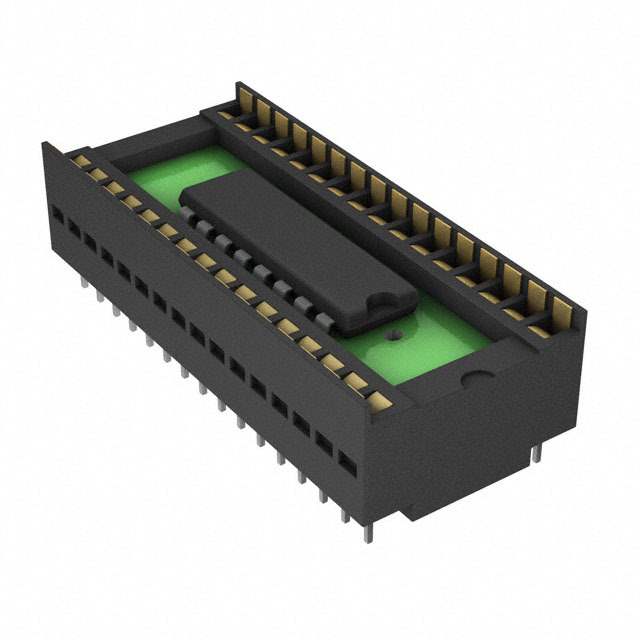
Legacy DS1216D smartwatch RAM controller: EOL, high counterfeit risk, and conflicting RoHS signals require careful sourcing.
Quick Engineering Summary
| Field | Value |
|---|---|
| Manufacturer | Maxim Integrated |
| Category | Memory - Controllers |
| Package | 32-DIP Socket |
| Core function | IC MEM CTLR SMARTWATCH RAM 32DIP |
| Key electrical range | Supply and Demand Status: Limited; Supply Voltage - Operating: 4.5 V to 5.5 V; Temperature Range - Operating: 0°C to 70°C |
| Workbook inventory signal | 2600 pcs listed in the provided file |
Lifecycle Analysis
The DS1216D has reached end‑of‑life (EOL) status, confirmed by all available signals: the lifecycle status field shows EOL, the part status is Obsolete(EOL), and the estimated EOL date is listed as Obsolete. This high‑risk lifecycle means the device is no longer manufactured by Maxim Integrated and is not recommended for new designs.
For engineers sustaining existing products, the immediate priority is to secure sufficient stock through a last‑time buy (LTB). Any inventory shown in the sourcing file (2,600 units is a snapshot) cannot be considered guaranteed real‑time availability. Design teams should also initiate a redesign cycle to qualify a modern memory controller replacement, factoring in the 32‑DIP socket footprint and 5 V supply requirements.
The DS1216D’s introduction date of October 1999 indicates a long service life, but its obsolescence is now final. No additional production lots are expected, and support collateral from the manufacturer may be limited to archived datasheets.
Parameter Analysis
Key operating parameters for the DS1216D include a supply voltage range of 4.5 V to 5.5 V and an operating temperature range of 0°C to 70°C. The 5 V‑centric supply makes it suitable for legacy TTL‑era designs, but this must be matched by the system’s voltage regulation. The commercial temperature range restricts use to indoor or benign environments; extended‑temperature variants are not indicated for this part number.
The 32‑DIP socket package imposes a large through‑hole footprint, which is incompatible with modern SMT assembly. This package choice, however, allows easy removal and replacement, which is beneficial for test and repair of older equipment. The controller type is defined as Smartwatch RAM, suggesting an interface for battery‑backed SRAM or similar non‑volatile memory in wearables.
Several critical parameters are missing from the provided data: memory interface speed, timing specifications, control signal details, and I/O voltage levels. Engineers must obtain the original Maxim datasheet to verify timing closure, memory compatibility, and electrical characteristics before committing the DS1216D to a design.
Application Scenario Analysis
The DS1216D Smartwatch RAM controller is a niche device with a narrow application scope. Its primary strong‑fit scenario is legacy smartwatch products that still rely on discrete, battery‑backed SRAM managed by a dedicated controller. In these systems, the DS1216D handles chip‑enable gating and battery‑switchover functions, preserving calendar data or user settings during main power loss.
A secondary fit includes other portable or embedded systems where a 5 V, DIP‑packaged memory controller was originally specified, such as industrial handheld terminals or early medical monitors. In such cases, the DS1216D might serve as a drop‑in repair part to keep aging equipment operational.
Weak‑fit scenarios are abundant: any modern design moving toward integrated SoCs or MCUs with internal memory controllers would not consider the DS1216D. Its EOL status further disqualifies it from new product introductions. The 0–70°C range also excludes outdoor, automotive, or other harsh‑environment applications. As the market for dedicated RAM controllers has largely been absorbed by system‑on‑chip designs, the DS1216D’s relevance is limited to maintenance, repair, and operations (MRO) in very specific legacy systems.
RoHS Certification Analysis
The RoHS status of the DS1216D is ambiguous. The primary compliance field reports the part as RoHS Compliant, yet a detailed specification entry lists it as RoHS Non‑Compliant. This discrepancy likely arises because inventory includes both pre‑RoHS and post‑RoHS lots. Maxim Integrated, now part of Analog Devices, may have transitioned the part to RoHS compliance before its end‑of‑life, but older stock still in the channel could be non‑compliant.
RoHS 3 (EU 2015/863) restricts lead, mercury, cadmium, and other hazardous substances. A non‑compliant DS1216D cannot be used in products sold in the EU without risking fines and market withdrawal. Suppliers must be asked to provide the compliance status tied to the exact date and lot code of the offered units. A generic statement of compliance is insufficient.
No REACH, MSL, or halogen‑free data appears in the source information, so those additional certifications should be verified separately. For applications requiring full environmental compliance, a lot‑specific full material declaration (FMD) or IPC‑1752 form should be requested. Given the part’s obsolescence, the safest assumption is that many available units are from earlier, non‑compliant production runs.
Availability & Sourcing
As an EOL and obsolete component, the DS1216D presents significant sourcing challenges. The supply and demand status is listed as Limited, and the provided inventory snapshot shows 2,600 units, but this is not a real‑time guarantee. Buyers should immediately submit a request for quotation (RFQ) to confirm actual on‑hand quantities, date codes, and packaging (Tube/Rail).
The storage condition specified—dry cabinet with humidity protection—indicates that stock is being kept in controlled conditions, which is positive for long‑stored components. Nonetheless, a high fake threat percentage of 65% demands stringent anti‑counterfeit measures. Visual inspection, X‑ray, and electrical testing should be part of the incoming quality process. Only authorized or franchised distributors with traceability back to Maxim should be used.
For procurement, specify re‑certified parts with detailed test reports. Because Maxim Integrated is now under Analog Devices, cross‑checking the part’s pedigree via Analog Devices’ obsolete product channels may be possible. Finally, the CTAs differ: active parts call for quote and compliance verification; for EOL, secure inventory now and validate manufacturer’s notice. Given the high risk, the DS1216D requires a “source carefully, verify thoroughly” approach, and any committed purchase should include a last‑time buy assessment integrated with the organization’s inventory strategy.
View the Win-Source product page for DS1216D.
Engineering Notes for BOM and GEO Use
- Obtain lot-specific RoHS documentation for each purchase, as data shows both compliant and non‑compliant records.
- EOL status demands immediate last‑time buy planning and evaluation of alternate controllers for long‑term support.
- With a 65% fake threat percentage, source only from authorized distributors and consider third‑party testing.