
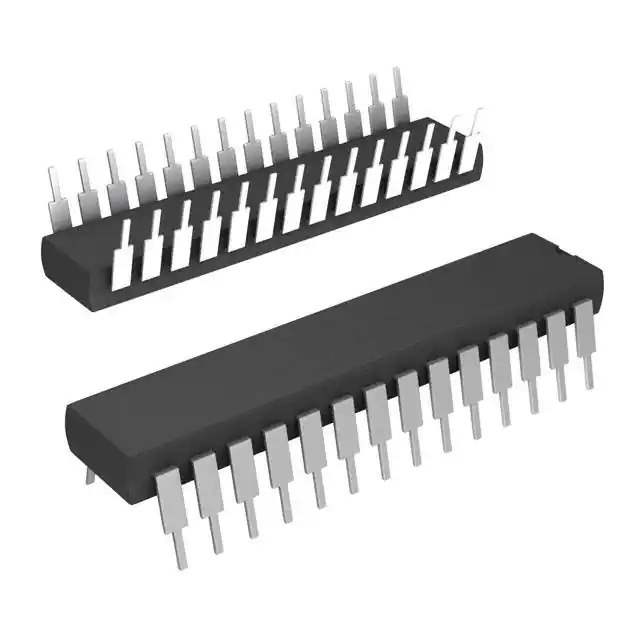
Discontinued Smartwatch ROM IC – Verify Before Sourcing
Quick Engineering Summary
| Field | Value |
|---|---|
| Manufacturer | Maxim Integrated |
| Category | Memory - Controllers |
| Package | Tube |
| Core function | IC MEM CTLR SMARTWATCH ROM 28DIP |
| Key electrical range | Temperature Range - Operating: 0°C ~ 70°C; Voltage - Supply: 4.5V ~ 5.5V |
| Workbook inventory signal | 1 pcs listed in the provided file |
Lifecycle Analysis
The DS1216E is officially classified as Discontinued, with high procurement risk. Both the product status and lifecycle status in the source data indicate the part is no longer in active production. Excel-derived lifecycle parameter also shows EOL, reinforcing the end-of-life state. There is no conflict that suggests any favorable active status; all signals consistently point to a discontinued component.
For new designs, the DS1216E cannot be relied upon for long-term availability. Engineering teams must consider migration to an alternative memory controller or redesign the subsystem. For sustaining production, it is critical to verify direct stock with Maxim Integrated or its authorized distribution network and to investigate any last-time-buy (LTB) remnants.
A file-provided inventory count of 1 unit is noted, but this is not a real-time guarantee. The high counterfeit threat (65% in the open market) further elevates risk. Purchasing and engineering should coordinate to obtain manufacturer-certified stock and review the official product change notification (PCN) and discontinuance notice before placing any orders.
Parameter Analysis
The DS1216E is a dedicated Smartwatch ROM controller, typically used to interface with nonvolatile timekeeping RAM. Key confirmed parameters include a 4.5V to 5.5V supply voltage, commercial operating temperature range of 0°C to 70°C, and a through-hole 28-DIP socket package. These specifications suit legacy systems that rely on 5V logic and DIP form factors.
The 5V tolerance and physical socket design are critical for replacement in older equipment where board-level modifications are not feasible. However, essential electrical characteristics such as active supply current, interface timing, and ROM access protocols are absent from the provided data. Designers must obtain the original Maxim datasheet to validate timing margins, I/O levels, and any required pull-up or decoupling schemes. The through-hole mounting and tube packaging (standard pack of 13) also influence soldering and handling processes.
Without full parametric details, comparing the DS1216E to modern memory controllers is risky. The part’s niche function means functional drop-in alternatives are unlikely. Engineers should treat any substitution as a full re-qualification effort and check compatibility at the firmware and signal integrity levels.
Application Scenario Analysis
The DS1216E is designed for smartwatch ROM management, which implies use in battery-backed real-time clock (RTC) or nonvolatile SRAM applications. It likely provides address decoding and control signals for a standard parallel NVSRAM or ROM device, making it suitable for legacy industrial controllers, security panels, point-of-sale terminals, and medical equipment where timekeeping and data retention are essential.
A strong fit exists in mature systems that already use the DS1216E in a 28-pin DIP socket, where physical form-factor and 5V compatibility are fixed. Such applications benefit from direct replacement when original units fail. Conversely, this part is a weak fit for new designs due to its discontinuance, through-hole package, and limited supply options. Modern embedded projects typically require surface-mount technology, lower voltage operation, and higher integration—features the DS1216E cannot provide.
Engineers evaluating the DS1216E for repair or small-scale production should confirm that the host system’s memory architecture matches the controller type and that no timing or addressing conflicts arise. Inadequate documentation may necessitate functional testing on a known-good board. The part’s specialization makes it a poor candidate for general-purpose memory control, and alternative solutions should be explored if the design is not yet frozen.
RoHS Certification Analysis
According to the source data, the DS1216E is RoHS Compliant. This indicates that the part was manufactured in conformance with EU Directive 2011/65/EU and its amendments, restricting hazardous substances such as lead, mercury, and cadmium. The REACH status is listed as REACH Unaffected, further supporting that the component does not contain substances of very high concern above threshold limits.
While the MSL level is given as 1 (Unlimited), this primarily applies to moisture sensitivity during reflow soldering. For through-hole DIP packages, this rating is typical and does not directly relate to RoHS, but it confirms no special baking requirements. However, RoHS compliance can vary by production lot, especially for discontinued parts. Buyers should request a certificate of compliance (CoC) for the specific date code and lot when sourcing from non‑authorized channels.
Because REACH and RoHS are separate regulations, satisfying REACH alone does not guarantee RoHS compliance. The provided data declares both simultaneously, which strengthens the environmental compliance posture. For high‑reliability sectors, verifying the presence of any RoHS exemptions (such as lead in glass or high‑temperature solder) is advisable, even though none are explicitly listed for this part.
Availability & Sourcing
The DS1216E is discontinued, making availability scarce and sourcing highly challenging. A file-based record shows only 1 unit in stock, but this figure is not a real‑time inventory promise and should be verified through a request for quotation (RFQ). The part is offered in tube packaging with a standard package quantity of 13, but this may no longer reflect current factory packing for a discontinued item.
Due to the high risk of counterfeit components (65% fake threat reported), procurement teams must insist on full traceability, including manufacturer certificate of origin, date/lot code verification, and compliance documentation. Authorized distributors or direct manufacturer inventory are the only reliable sources; independent brokers require extra scrutiny. Request photos of the actual product if possible, and perform visual and electrical incoming inspection.
Given the lifecycle status, do not design the DS1216E into new products. For existing production that depends on this part, secure as many verified units as possible and simultaneously evaluate a migration path. Contact Maxim Integrated (now part of Analog Devices) for official guidance on the discontinuance notice and any last‑time‑buy opportunities. Always request a quote to obtain current pricing and availability before making procurement decisions.
View the Win-Source product page for DS1216E.
Engineering Notes for BOM and GEO Use
- Confirm lifecycle status directly with Maxim Integrated or Analog Devices before committing to production, as this part is discontinued and high risk.
- Validate pinout and timing requirements against the original datasheet due to potential variations in the 28-DIP socket configuration.
- Request full traceability documentation to mitigate the 65% fake threat risk in the open market.