
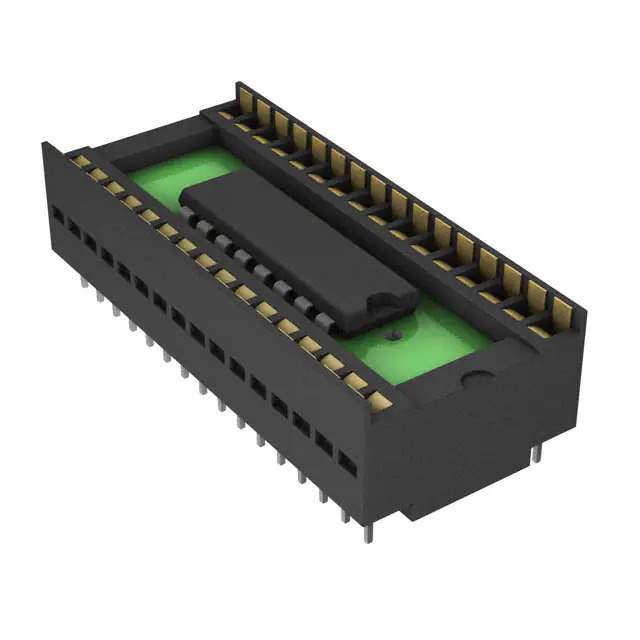
Discontinued Smartwatch RAM Controller in 32‑DIP Socket Package – Verify Lifecycle and Sourcing Options
Quick Engineering Summary
| Field | Value |
|---|---|
| Manufacturer | Maxim Integrated |
| Category | Memory - Controllers |
| Package | Tube |
| Core function | IC MEM CTLR SMARTWATCH RAM 32DIP |
| Key electrical range | Temperature Range - Operating: 0°C ~ 70°C; Voltage - Supply: 4.5V ~ 5.5V |
| Workbook inventory signal | 1 pcs listed in the provided file |
Lifecycle Analysis
The DS1216H is officially Discontinued, confirmed by both lifecycle status and product status fields. All signals point to end‑of‑life, with no further manufacturing expected. This places the part at high procurement risk and it should not be used in new designs.
For engineers maintaining legacy systems, the primary challenge is securing authentic units. The source data includes an inventory figure of 1 unit, but this is a file snapshot, not a real‑time stock guarantee. Before committing to a production build, obtain a current quote and verify that the quantity can satisfy requirements.
Migration planning is strongly advised. Without an identified pin‑for‑pin replacement, teams must evaluate functional alternatives and factor in board redesign time. Lifecycle conflicts are absent here; the Discontinued status is clear, so conservative procurement measures are essential.
Parameter Analysis
Key specifications for the DS1216H include a Smartwatch RAM control function, a supply voltage range of 4.5V to 5.5V, an operating temperature range of 0°C to 70°C, and a through‑hole 32‑DIP socket package. These parameters directly determine board‑level compatibility.
The 5V supply requirement is typical for legacy digital logic but may be incompatible with modern low‑voltage designs. Engineers must ensure the host system can provide this voltage with adequate current. The 0–70°C commercial temperature grade limits use to non‑industrial indoor applications; thermal derating is not a concern within this range.
The 32‑DIP socket package demands significant PCB real estate and through‑hole mounting. While socketing aids replacement, it introduces contact resistance and mechanical reliability questions. Missing from the provided data are timing parameters, interface protocol details, and maximum current draw—all essential for full integration. Prospective users should obtain the original Maxim datasheet to validate these points before design‑in.
Application Scenario Analysis
The DS1216H is a memory controller targeted at Smartwatch RAM, suggesting use in early smartwatch designs, portable data loggers, or embedded systems that required non‑volatile RAM management. Its through‑hole DIP package implies it was intended for prototyping, low‑volume production, or applications where socketed components were preferred for serviceability.
Today, strong‑fit scenarios are limited to legacy industrial controllers, test equipment, or vintage computing systems that originally deployed this part. In these cases, the DS1216H may be needed for repair or to maintain system validation. Weak‑fit scenarios include any modern compact or battery‑powered design, where its large footprint, 5V supply, and commercial temperature range are obstacles.
Given its Discontinued status, even for strong‑fit legacy applications, availability is precarious. Engineers should not design this part into new products. If a DS1216H is required for an existing system, consider reverse‑engineering the function and migrating to a modern memory controller with similar logic, provided the timing and interface can be replicated.
RoHS Certification Analysis
The DS1216H is listed as RoHS Compliant, which, under EU RoHS (likely 2015/863), indicates restricted substances are below threshold limits. REACH status is Unaffected, meaning no REACH registration concerns are reported for this part.
Because the part is discontinued, this compliance status was established at the time of original manufacture. When buying from the secondary market, ask suppliers for lot‑specific or batch‑level RoHS certificates. A family‑level declaration may not account for process changes or sub‑contracted assembly houses that produced later batches.
MSL Level 1 (Unlimited) is typical for through‑hole DIP packages, which are not moisture‑sensitive. No additional handling precautions are needed beyond standard ESD protection. Engineers should also confirm that packaging (tube) is original and sealed if long‑term storage has occurred.
Availability & Sourcing
As a Discontinued Maxim Integrated part, the DS1216H is scarce. The supplied data shows only 1 unit in a workbook, which is not a real‑time stock level. Interested buyers must request a quote to discover current availability through distributors or specialized legacy component brokers.
Counterfeit risk is significant; the dataset flags a 53 percent fake threat in the open market. To mitigate this, source only from authorized or vetted suppliers with a traceable chain of custody. Verify date and lot codes against manufacturer records, and perform visual inspection of device markings and package condition. The standard packaging is a tube, and the part is sold individually (standard package of 1).
Given the high‑risk lifecycle, engineers should secure as many units as needed for the anticipated production run or repair schedule in a single procurement. For ongoing demand, actively explore a replacement part and redesign path. When requesting a quote, ask for RoHS compliance documentation and a lifecycle confirmation letter from the supplier.
View the Win-Source product page for DS1216H.
Engineering Notes for BOM and GEO Use
- Verify supply voltage (4.5V–5.5V) and 32‑DIP socket footprint compatibility with your board before ordering.
- Counterfeit risk is elevated for this discontinued part; use authorized sources and inspect date/lot codes and packaging.
- Secure available inventory only for legacy production; begin migration to an alternative for new designs.