
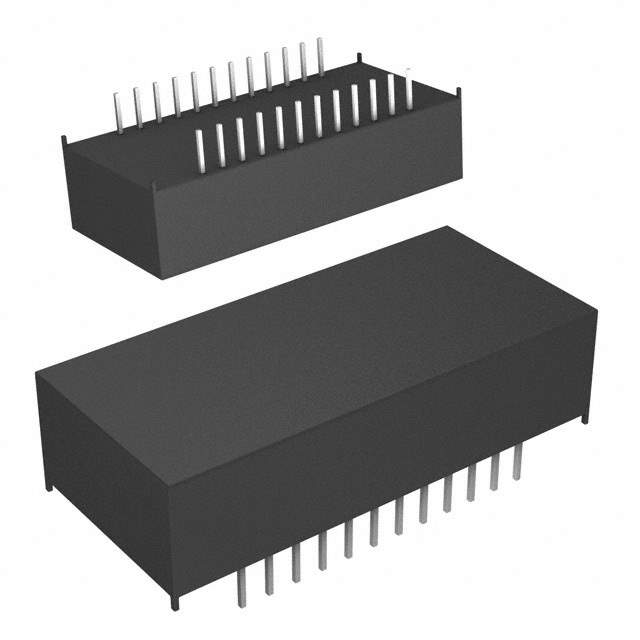
Discontinued NVSRAM, 16Kbit, parallel interface, through‑hole 24‑EDIP module.
Quick Engineering Summary
| Field | Value |
|---|---|
| Manufacturer | Maxim Integrated |
| Category | Memory |
| Package | Tube |
| Core function | IC NVSRAM 16KBIT PARALLEL 24EDIP |
| Key electrical range | Temperature Range - Operating: 0°C ~ 70°C (TA); Voltage - Supply: 4.5V ~ 5.5V |
| Workbook inventory signal | 7900 pcs listed in the provided file |
Lifecycle Analysis
The DS1220AD-150 is officially Discontinued by Maxim Integrated, with all available lifecycle signals (EOL, Product Status, Lifecycle Status) pointing to end‑of‑life. This places the part in a high‑risk category for new designs and long‑term production. Buyers should treat this as a last‑time‑buy opportunity only, and not plan new product introductions around this component.
Conflicting terms like EOL and Discontinued appear in different databases, but the conservative interpretation is clear: the device is no longer manufactured and stock is limited. The file‑provided quantity of 7900 units is a static snapshot and does not reflect real‑time availability. Engineers must revalidate lifecycle status directly with Maxim Integrated (now part of Analog Devices) before committing to any production volume.
For sustaining existing systems, verify remaining inventory through authorized channels and implement an end‑of‑life transition plan. The 52% fake threat metric underscores the risk of unauthorized or counterfeit stock in the open market.
Parameter Analysis
The DS1220AD-150 is a 16Kbit (2K x 8) Non‑Volatile SRAM with a parallel interface. Its 150 ns access time and 150 ns write cycle time make it suitable for moderate‑speed data retention tasks. The 4.5–5.5V supply and 0°C to 70°C operating range are typical for industrial and commercial environments. The through‑hole 24‑DIP module (0.600” pitch) targets legacy or ruggedized designs where socketed memory is preferred.
Key missing parameters that designers must verify from the original Maxim datasheet include data retention duration without power, backup‑battery or capacitor requirements, write‑endurance cycles, and detailed AC timing waveforms. The NVSRAM technology combines SRAM with a non‑volatile element; understanding the precise switchover behavior is critical for reliable operation. The MSL level 1 rating indicates unlimited floor life, but this applies only to properly stored components.
The 52% open‑market fake threat is a red flag for procurement. Engineers should demand full traceability and consider electrical testing of samples from any source other than the original manufacturer or its authorized distributors.
Application Scenario Analysis
NVSRAM like the DS1220AD-150 is often used in applications requiring fast read/write with automatic data retention during power loss. Typical strong‑fit scenarios include industrial controllers, data loggers, CNC machines, gaming machines, and legacy networking equipment where a parallel interface and 5V tolerance are already present. The through‑hole DIP package simplifies repairs and updates in field‑serviceable equipment.
Weak‑fit scenarios include modern low‑power or battery‑operated designs that require a 3.3V or lower supply, or dense PCB layouts that cannot accommodate a 0.600” wide DIP footprint. The small 16Kbit capacity is insufficient for firmware or large configuration tables in contemporary systems. High‑speed processor buses operating at tens of MHz will also find the 150 ns access time too slow.
Because the part is discontinued, its use is most practical in maintaining existing fielded systems that cannot be redesigned quickly. New projects should consider pin‑compatible or functionally similar NVSRAM from Analog Devices if still available, but no direct replacements are supplied in this data.
RoHS Certification Analysis
The DS1220AD-150 presents a conflicting RoHS picture. The top‑level compliance indicator says RoHS Compliant, but a detailed specification row explicitly states RoHS Non‑Compliant. This contradiction likely stems from different stock date codes or legacy documentation. REACH status is reported as Unaffected, but this alone does not confirm RoHS conformity.
In practice, many through‑hole DIP packages manufactured before RoHS enforcement contained tin‑lead finishes. Buyers must request a lot‑level Certificate of Conformance from the seller, and ideally a full material declaration from the original manufacturer. Without such documentation, assume the part is not RoHS‑compliant, especially for shipments into the EU.
The MSL Level 1 rating is typical for non‑sensitive packages, but it does not address substance compliance. If lead‑free soldering is required, ensure the leads are compatible with higher reflow temperatures. Samples should be tested for RoHS substances if the final application demands strict compliance.
Availability & Sourcing
As a Discontinued part, the DS1220AD-150 is only available through residual distributor stock or independent brokers. The file shows a snapshot quantity of 7900 units, but this is not a live inventory promise. Buyers should request a formal quote to confirm current availability, date/lot codes, and packaging (tube, standard 14 pieces per package).
Due to the 52% fake threat, traceability is paramount. Insist on certificates of conformance, photographs of the actual stock, and third‑party test reports if necessary. Authorized sources are preferable; when none exist, select brokers with a proven record of supplying Maxim Integrated discontinued parts. Verify that the device is not obsolete‑date‑code rejects by checking the manufacturer’s last‑time‑buy window.
For critical systems, evaluate the feasibility of a layout respin to a newer non‑volatile memory that is in active production. If the DS1220AD-150 must be used, secure enough inventory to cover the entire remaining product lifecycle and plan for eventual redesign.
View the Win-Source product page for DS1220AD-150.
Engineering Notes for BOM and GEO Use
- The DS1220AD-150 is discontinued; secure inventory for last-time buy and verify authenticity due to high counterfeit risk.
- Verify RoHS compliance per lot, as documentation shows contradictory status.
- Ensure 5V supply and through-hole footprint are compatible; the NVSRAM requires external backup battery or controller (check datasheet).