
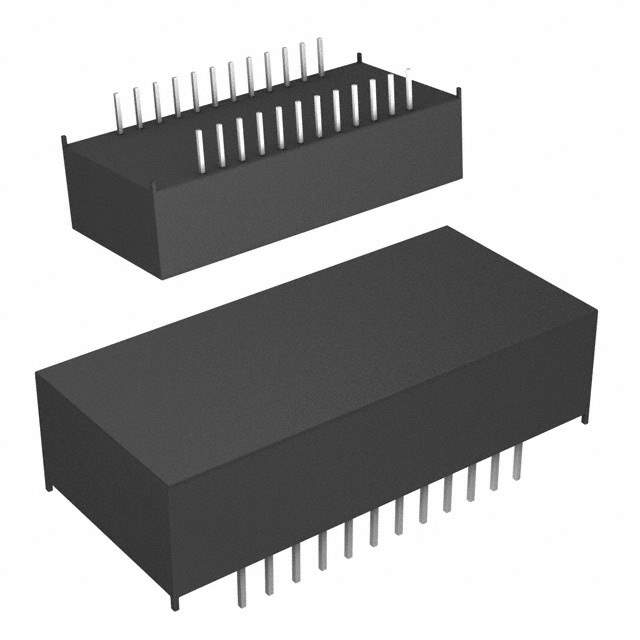
16Kb Non-Volatile SRAM with Parallel Interface, 24-EDIP Package, EOL Status
Quick Engineering Summary
| Field | Value |
|---|---|
| Manufacturer | Maxim Integrated |
| Category | SRAM |
| Package | 24-EDIP |
| Core function | IC NVSRAM 16KBIT PARALLEL 24EDIP |
| Key electrical range | Operating Supply Voltage: 4.5 V ~ 5.5 V; Operating Temperature Range: 0°C ~ 70°C (TA); Supply and Demand Status: Limited |
| Workbook inventory signal | 152 pcs listed in the provided file |
Lifecycle Analysis
The Maxim Integrated DS1220Y-100+ is officially designated as End-of-Life (EOL) by the manufacturer, with no lifecycle conflicts among supplier data. EOL status means that Maxim Integrated has ceased production, and distributors are selling remaining stock. For new designs, this part is not recommended; engineers should migrate to active NVSRAM or alternative non‑volatile memory like FRAM or serial‑interface EEPROM with similar density. For existing production systems, immediate action is required to secure inventory through last‑time buy or trusted aftermarket sources.
Given the high‑risk lifecycle classification, procurement teams should evaluate whether the DS1220Y-100+ can be redesigned out or if a lifetime buy is feasible. Note that the workbook reports a file‑provided quantity of 152 units, but this is not a real‑time stock guarantee. Confirming availability with suppliers is essential before committing to production schedules. Additionally, the part’s introduction date of 1995 indicates a mature product, so long‑term support from the manufacturer is unavailable.
Parameter Analysis
Key parameters define the DS1220Y-100+ performance envelope. The device provides 16Kb non‑volatile SRAM organized as 2K × 8 bits, accessed via a parallel interface with an access time of 100 ns and a matching write cycle time. The operating supply voltage range is 4.5 V to 5.5 V, and the specified temperature range is 0°C to 70°C, limiting it to commercial‑grade applications. The through‑hole 24‑EDIP package (0.600" width) suits legacy PCB layouts with DIP sockets.
The 100 ns access time is moderate for SRAM; engineers must ensure the host controller can meet this timing without wait states. However, datasheet scrutiny is required for parameters not provided here: standby current, power‑down recovery timing, non‑volatile data retention specifications (endurance cycles, retention years), and output drive strength. When qualifying remaining stock, measure these parameters to confirm conformance to the original Maxim datasheet, especially for parts sourced from independent distributors.
Application Scenario Analysis
The DS1220Y-100+ originally targeted applications requiring fast non‑volatile storage without battery backup, such as industrial controllers, medical instruments, and data loggers. Its parallel interface and commercial temperature range fit embedded systems where a host microcontroller needs simple, byte‑addressable persistent memory to hold configuration parameters, event logs, or calibration data. The device’s 100 ns speed is suitable for many 8‑bit and 16‑bit microprocessor buses of the 1990s and early 2000s.
In current design scenarios, the DS1220Y-100+ is a poor fit for new products because it is obsolete, has limited density, and lacks automotive or extended temperature options. Engineers maintaining legacy equipment may still use it as an exact replacement, but availability constraints make long‑term planning risky. For new designs, consider modern serial‑interface NVSRAM, FRAM, or MRAM with larger densities, lower power, and active lifecycle status.
RoHS Certification Analysis
The DS1220Y-100+ is listed as RoHS Compliant, indicating that it meets the EU Directive on the restriction of hazardous substances. However, the available data does not specify the exact RoHS standard version (e.g., RoHS 3 (EU 2015/863)) or any granted exemptions. Since the part was introduced in 1995, it likely transitioned to RoHS compliance later in its lifecycle; confirm the compliance date and certificate.
For procurement, request a Certificate of Compliance (CoC) from the supplier that explicitly references the part number and lot code. This is especially important for EOL parts sourced from non‑franchised channels. While RoHS compliance addresses hazardous substance restrictions, compliance with REACH may require separate documentation. Absent explicit REACH data, ask the distributor to confirm REACH status if needed for your end market.
Availability & Sourcing
The DS1220Y-100+ is an EOL part, so availability is limited to residual distributor stock and aftermarket sources. The workbook shows a file‑provided quantity of 152 pieces, but this does not represent live inventory. Supply and demand status is classified as "Limited", and the open‑market fake threat rate is 42%, indicating high counterfeit risk. Buyers must implement strict incoming inspection, including visual date/lot codes, electrical testing, and x‑ray package inspection when sourcing from independent channels.
To procure the DS1220Y-100+, always request a quote through authorized or verified distributors and confirm current stock, date codes, and RoHS documentation. For production continuity, consider lifetime buy quantities while verifying the seller’s traceability. If quantities are insufficient, engage with Maxim Integrated (now Analog Devices) to check if any last‑time buy programs are still active. Finally, prioritize redesign into an active memory solution to eliminate long‑term dependency on obsolete components.
View the Win-Source product page for DS1220Y-100+.
Engineering Notes for BOM and GEO Use
- Verify 100ns access time compatibility with host controller timing; write cycle matches access time.
- EOL status requires last-time buy planning; stock is limited and counterfeit risk is high (42% open market threat).
- Check datasheet for critical parameters like standby current, retention endurance, and voltage tolerance not listed here.