
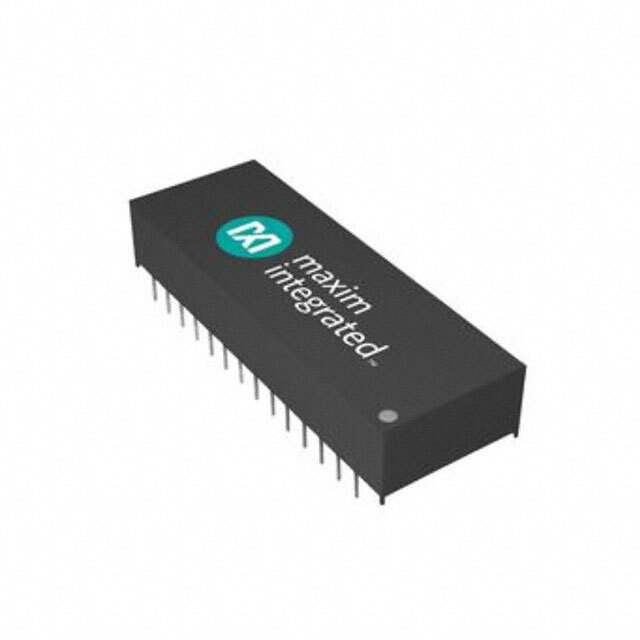
Maxim Integrated SRAM sourcing guide – active lifecycle, RoHS, and verified inventory details.
Quick Engineering Summary
| Field | Value |
|---|---|
| Manufacturer | Maxim Integrated |
| Category | SRAM |
| Package | 28-EDIP |
| Core function | IC NVSRAM 256KBIT PAR 28EDIP |
| Key electrical range | Supply and Demand Status: Limited; Supply Voltage - Operating: 4.75 V to 5.25 V; Temperature Range - Operating: 0°C to 70°C (TA) |
| Workbook inventory signal | 22793 pcs listed in the provided file |
Lifecycle Analysis
The DS1230AB-150+ is reported as Active by Maxim Integrated (now part of Analog Devices). All lifecycle signals available—catalog status, dedicated lifecycle field, and general product status—are consistent and point to a low‑risk profile for new designs and ongoing production. An Active classification means the manufacturer continues to produce and support the part, and no discontinuance notice has been issued.
Nevertheless, an Active label is not a guarantee of perpetual availability. Engineers should monitor Analog Devices’ official product change notifications (PCNs) and lifecycle updates, especially when the DS1230AB-150+ is earmarked for long‑lifecycle industrial or infrastructure equipment. The file provides a workbook inventory quantity of 22,793 units, but this figure is only a point‑in‑time snapshot and does not represent real‑time stock held by any specific distributor.
Given that the supply‑and‑demand status is noted as ‘Limited’ and the open‑market fake threat is rated at 53%, Active lifecycle alone does not eliminate sourcing risk. Procurement teams should treat the DS1230AB-150+ as a part that requires lifecycle revalidation at the time of order and should maintain second‑source contingency plans even while the component remains in full production.
Parameter Analysis
The DS1230AB-150+ is defined by its 256 Kb density (32K × 8 organization), 150 ns access time, and 5 V operation. The 150 ns speed grade is typical for legacy NVSRAMs; it suits microcontrollers and bus architectures with moderate timing requirements. Engineers must confirm that the system’s memory controller can accommodate this access time across the full 0°C to 70°C temperature range, as the spec is a guaranteed maximum.
The parallel interface and through‑hole 28‑EDIP package make the part especially relevant for designs where non‑volatile data retention is essential and a battery‑backed SRAM would be impractical. NVSRAM technology automatically stores SRAM data into non‑volatile elements on power loss, eliminating the need for external components. Critical parameters missing from the supplied data include standby current (important for power budgeting in always‑on systems), write‑cycle endurance, and data‑retention lifetime. These values are fundamental to reliability calculations and must be extracted from the official datasheet before finalizing BOM choices.
Voltage tolerance is 4.75 V to 5.25 V, which is standard for 5 V‑only systems but leaves little headroom for supply variation. Designers should perform a thorough derating analysis, especially if the DS1230AB-150+ is placed on a bus with other 5 V components that may not be tightly regulated. Finally, the 28‑EDIP outline (0.600‑inch row spacing) should be verified against the target PCB footprint to avoid mechanical interference in dense layouts.
Application Scenario Analysis
As a 5 V, parallel‑interface NVSRAM in a through‑hole package, the DS1230AB-150+ fits strongly into industrial control systems, legacy test equipment, and data‑logging applications where a discrete SRAM replacement that preserves data across power cycles is needed. Its non‑volatile architecture is advantageous in metering, point‑of‑sale terminals, and embedded controllers that must retain calibration or transaction data without a battery. The 150 ns access time aligns well with older microprocessor buses and 8‑/16‑bit MCUs operating at moderate clock speeds.
The through‑hole EDIP package also suits prototyping, socketed designs, and equipment that must withstand vibration or thermal cycling—environments where surface‑mount solder joints might be less reliable. In such scenarios, the DS1230AB-150+ can serve as a drop‑in NVSRAM upgrade where a standard SRAM socket already exists.
Conversely, high‑speed systems requiring access times below 100 ns, battery‑operated devices that demand wide supply‑voltage ranges or micro‑power standby, and compact SMT‑only boards are weak fits. The commercial 0°C to 70°C range excludes outdoor or automotive under‑hood applications without additional screening. Engineers evaluating the DS1230AB-150+ should confirm that the parallel bus timing, mechanical constraints, and environmental conditions of the target application are explicitly supported by the manufacturer’s full datasheet.
RoHS Certification Analysis
The DS1230AB-150+ carries a RoHS Compliant designation in the provided source data, indicating adherence to the EU’s Restriction of Hazardous Substances directive. Because no exemption details or specific directive version are listed, it is prudent to assume compliance at the family level under the latest RoHS 3 (EU 2015/863) requirements, but this must be confirmed with the manufacturer for a particular production lot.
For procurement in high‑reliability sectors such as medical or aerospace, a simple ‘RoHS Compliant’ flag is often insufficient. Buyers should request a full material declaration, including evidence of lead‑free termination finish and absence of halogenated flame retardants if those are project requirements. The provided data does not include REACH status, which is a separate regulation; REACH compliance must be verified independently and is not implied by RoHS.
An MSDS is listed as ‘Get Access,’ meaning that environmental documentation is available through a formal request to Maxim Integrated / Analog Devices. This channel should be used to obtain the latest compliance certificates. Lot‑level traceability becomes critical if the DS1230AB-150+ is sourced outside authorized distribution, as counterfeit parts may carry counterfeit compliance labels. In summary, while the device is nominally RoHS compliant, due‑diligence documentation should be gathered before design‑in.
Availability & Sourcing
The DS1230AB-150+ is an Active part, but supply signals indicate a ‘Limited’ market situation. The sourcing workbook for this guide shows an inventory quantity of 22,793 pieces, yet this is a reference figure only—not a live stock level. Buyers must request a current quote to confirm real‑time availability, lead times, and minimum order quantities.
This NVSRAM is supplied in tube/rail packaging, typical for through‑hole DIP components, and is rated for dry‑storage conditions with humidity‑protective packaging. When requesting quotes, specify packaging preferences and the need for date‑ and lot‑code traceability, because the open‑market fake‑threat rating is an elevated 53%. Authorized distribution or factory‑direct channels are strongly recommended to mitigate counterfeiting;
For non‑critical repairs, independent distributors with robust inspection processes may be an option, but purchasers should insist on X‑ray, decapsulation, or functional testing reports if authenticity cannot be verified. Given the Active lifecycle, the DS1230AB-150+ should be available through normal procurement workflows—submit an RFQ that includes your target volume, required delivery schedule, and compliance‑documentation needs. Negotiate terms that include order cancellation rights if the manufacturer’s lifecycle status changes between quotation and shipment. Always verify Analog Devices’ official PCN notifications before committing the DS1230AB-150+ to a new production run.
View the Win-Source product page for DS1230AB-150+.
Engineering Notes for BOM and GEO Use
- Verify operating voltage margins: 4.75V–5.25V supply may require tight regulation in 5V‑only systems and adequate decoupling near the DIP socket.
- The 53% open‑market fake threat rate demands procurement only from authorized sources with full traceability, date/lot code verification, and supplier certification.
- Through‑hole 28‑EDIP package limits automated assembly; plan for manual insertion or wave soldering processes in legacy or industrial designs.