
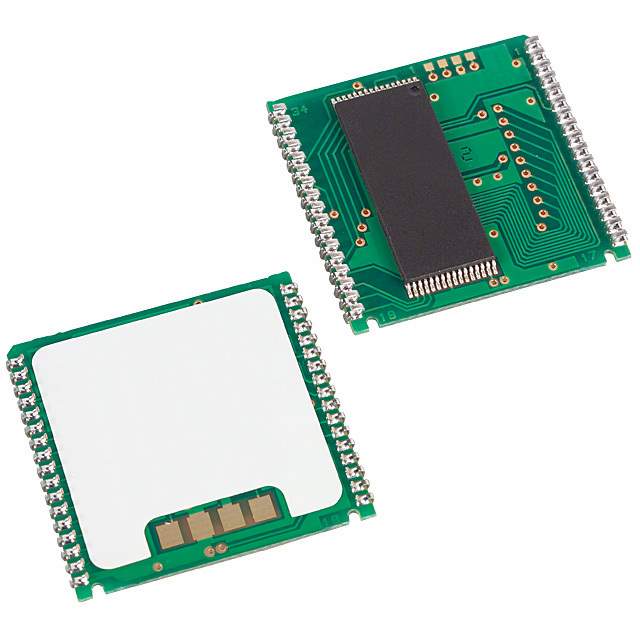
Maxim Integrated NVSRAM with 256Kb, 70ns access, parallel interface, 34-PowerCap package.
Quick Engineering Summary
| Field | Value |
|---|---|
| Manufacturer | Maxim Integrated |
| Category | SRAM |
| Package | 34-PowerCap Module |
| Core function | IC NVSRAM 256KBIT PAR 34PWRCAP |
| Key electrical range | Operating Supply Voltage: 4.75 V ~ 5.25 V; Operating Temperature Range: -40°C ~ 85°C (TA); Supply and Demand Status: Limited |
| Workbook inventory signal | 1 pcs listed in the provided file |
Lifecycle Analysis
The lifecycle status of the DS1230ABP-70IND+ is currently Unknown, with a medium risk level. No official lifecycle signals from Maxim Integrated (now Analog Devices) are available in the supplied data, meaning that its long-term availability and support are unconfirmed. For new designs, this presents a clear risk: without a commitment from the manufacturer, production longevity cannot be assured.
For sustaining production, engineers may continue to use the part if adequate inventory is secured, but they should monitor manufacturer notifications closely. The file-provided workbook indicates a single unit in stock, which is not a real-time reflection of market availability. The supply and demand status is marked as Limited, further suggesting constrained supply.
Given this uncertainty, the safest approach is to contact Analog Devices directly for a formal lifecycle statement and product discontinuance notice (PDN). In parallel, sourcing teams should explore reliable distribution channels and consider an audited source for existing inventory. Using this part in high-volume or long-lifecycle products requires a validated second-source or migration plan.
Parameter Analysis
The DS1230ABP-70IND+ integrates 256Kb (32K x 8) of non-volatile SRAM with a 70ns access time and a parallel interface. These core parameters directly dictate system design: the 70ns read/write cycle requires a memory controller capable of meeting this timing without wait states. The 5V ±5% operating supply (4.75–5.25V) demands a well-regulated power rail and may not suit 3.3V-only systems without level translation.
The ‘PowerCap’ module combines the SRAM die, a lithium battery, and a crystal in a single 34-pin package. This integration simplifies board layout but introduces unique mechanical and thermal considerations. The component is surface-mount (SMD), but the module’s height and battery presence may call for special pick-and-place handling and reflow profile adjustments.
Several parameters critical for qualification are absent from the supplied data and should be verified in the official datasheet: standby current (ISB), data retention endurance, write protection trip points, battery shelf life, and the exact pin capacitance values. The operating temperature range of -40°C to 85°C (TA) qualifies the part for industrial environments, but designers must confirm that the battery’s chemistry supports the full temperature range without accelerated aging.
Application Scenario Analysis
This NVSRAM is best suited for embedded systems that demand fast, byte-addressable non-volatile memory. Typical applications include industrial programmable logic controllers (PLCs), point-of-sale (POS) terminals, data loggers, network routers, and gaming equipment—anywhere critical run-time data must survive power loss without the write-cycle wear of EEPROM or Flash.
The parallel interface and 70ns speed make the DS1230ABP-70IND+ a drop-in SRAM in many microcontroller buses, provided the bus voltage and timing align. Its 256Kb density is appropriate for storing configuration tables, event counters, or small data logs. The industrial temperature range supports deployment in outdoor enclosures or factory floors.
However, this device is a weak fit for high-density buffering (e.g., video frames) or high-speed cache where larger capacities and sub-20ns access times are needed. Low-power, battery-operated devices may struggle with the 5V supply requirement and the module’s standby current. The unique 34-PowerCap footprint also locks designs into a specific socket ecosystem, which can limit mechanical flexibility and second-sourcing options. Engineers should evaluate whether an alternative NVSRAM or a battery-backed SRAM solution offers better long-term availability.
RoHS Certification Analysis
The DS1230ABP-70IND+ is listed as RoHS Compliant, but the supplied data does not specify the exact directive, such as EU RoHS (2011/65/EU) or the later EU 2015/863 (RoHS 3). Because the ‘PowerCap’ module contains a lithium battery and possibly lead-based solders internally, there may be exemptions in play—for example, exemption 7(a) for lead in high-melting-temperature solders. A blanket RoHS claim for the module may not address all substance restrictions equally.
For compliance-critical industries (medical, aerospace, automotive), a full material declaration (FMD) or certificate of compliance for the specific lot should be requested. The presence of a battery also raises REACH and disposal considerations; although no REACH data is provided in the source, it is prudent to confirm that the battery chemistry and module plastics do not contain Substances of Very High Concern (SVHCs) above threshold.
Additionally, the module’s battery and raw materials mean that environmental compliance may differ between fabrication plants or date codes. Engineers should not rely solely on a part-level RoHS badge when qualifying the component for a new design. Always obtain and archive the latest manufacturer compliance documentation before first-article acceptance.
Availability & Sourcing
Sourcing the DS1230ABP-70IND+ demands caution due to its ‘Unknown’ lifecycle, ‘Limited’ supply status, and a reported open-market counterfeit threat level of 48 percent. The file-based inventory shows only one unit available, which is insufficient for production planning. The part is supplied in tube packaging from standard distribution channels, but actual availability must be confirmed through a formal request for quotation (RFQ).
Given the high risk of non-authentic parts on the gray market, procurement teams should insist on full traceability: date/lot codes, manufacturer country of origin, and a valid certificate of conformance. Authorized distributors for Analog Devices/Maxim Integrated are the preferred source; third-party brokers should be audited against industry standards such as IDEA-STD-1010 and AS6081.
Because lifecycle status is unconfirmed, teams should not rely on this single part number for new designs without a manufacturer-backed longevity commitment. For existing production, secure enough inventory to cover forecasted demand and begin evaluating migration options to a recommended replacement. Use the RFQ process to obtain current lead times, minimum order quantities, and any applicable compliance documents. Request a quote today to initiate a sourcing inquiry and protect your supply chain from disruption.
View the Win-Source product page for DS1230ABP-70IND+.
Engineering Notes for BOM and GEO Use
- Verify lifecycle status with Analog Devices to assess long-term viability for new designs.
- Validate that the 70ns access time and 5V supply match your bus controller specifications before layout.
- Request lot-specific RoHS and battery compliance certificates to mitigate counterfeit and environmental risks.