
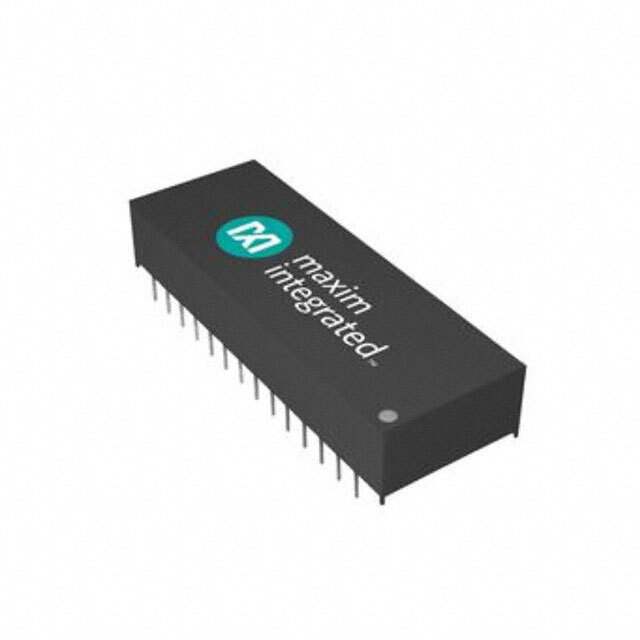
Maxim Integrated 256Kbit parallel NVSRAM in a 28-pin DIP package — lifecycle, RoHS, and availability analysis
Quick Engineering Summary
| Field | Value |
|---|---|
| Manufacturer | Maxim Integrated |
| Category | SRAM |
| Package | 28-EDIP |
| Core function | IC NVSRAM 256KBIT PAR 28EDIP |
| Key electrical range | Supply and Demand Status: Balance; Supply Voltage - Operating: 4.5 V to 5.5 V; Temperature Range - Operating: 0°C to 70°C (TA) |
| Workbook inventory signal | 1 pcs listed in the provided file |
Lifecycle Analysis
The DS1230Y-100+ is listed as Active by Maxim Integrated, implying ongoing production and full manufacturer support. However, a separate field in the supplied data shows an estimated end-of-life date of 2024, creating a significant ambiguity that must be resolved before design-in. This part has been available since 1998, placing it in a mature product segment where migration to newer families may already be underway.
For new designs, the conflicting EOL signal should be treated as a risk flag. Engineers should contact Analog Devices (which absorbed Maxim) directly for an official lifecycle statement and a product roadmap. The file-provided inventory of only 1 piece at Win Source is not a real-time guarantee and suggests that buffer stock may be limited.
Sustaining production of existing systems should involve revalidation of the supply chain. If the EOL date is accurate, last-time-buy opportunities may have passed, and a form-fit-function replacement evaluation should begin immediately. Without manufacturer confirmation, treat the lifecycle conservatively and avoid sole-sourcing on this part.
Parameter Analysis
Key parameters for the DS1230Y-100+ begin with its 100 ns access time, which defines the speed grade and determines compatibility with host bus timing. This device operates as a 256 Kbit (32 K x 8) Non-Volatile SRAM, meaning it retains data without a battery—critical for applications that require fast SRAM-like writes and permanent storage on power loss. The through-hole 28-EDIP (0.600" wide DIP) package is notable for legacy designs, manual assembly, or harsh environments where mechanical robustness is valued.
Supply voltage spans 4.5 V to 5.5 V, typical for 5 V logic families, and the commercial temperature range of 0°C to 70°C limits use to indoor or climate-controlled equipment. The missing parameters in the provided data—such as active/standby current, write cycle endurance, and data retention ratings—must be verified from the official datasheet to complete a derating analysis. The EAR99 ECCN classification simplifies export compliance for international procurement.
Engineers should also check the write protect and power-fail control features typical of NVSRAM devices. The 100 ns access time is valid across the full voltage and temperature range per usual datasheet conditions, but confirmation of timing waveforms is essential for reliable board integration.
Application Scenario Analysis
The DS1230Y-100+ fits applications requiring fast, byte-addressable non-volatile storage without the complexity of wear-leveled NAND or battery-backed SRAM. Strong-fit scenarios include industrial controllers, PLCs, medical monitoring equipment, and gaming machines where critical data must be saved rapidly on power down. The SRAM-like interface (parallel, asynchronous) allows easy connection to microcontrollers or legacy busses, and the 5 V operation matches older system architectures.
A weaker fit is seen in high-density, surface-mount designs where board space is limited. The through-hole DIP package is not compatible with modern SMT reflow processes, making it unsuitable for compact consumer products. Similarly, the 0°–70°C temperature range limits outdoor or extended industrial use, and the 256 Kbit density may be insufficient for larger data logging needs. These applications would be better served by higher-density, wider-temperature, surface-mount NVSRAM or FRAM alternatives.
Prototyping and low-volume production with through-hole assembly remain valid use cases, especially when redesign is not cost-effective. The part's simplicity and direct memory mapping can shorten development time for simple embedded systems.
RoHS Certification Analysis
RoHS compliance for the DS1230Y-100+ is ambiguous. The top-level compliance field indicates RoHS Compliant, but a conflicting specification field states RoHS Non-Compliant over the same part number. This inconsistency may arise from lot-to-lot differences, changes in lead finish over the long production history, or mislabeling in the component database.
For engineers and buyers, this means that a blanket assumption of RoHS compliance is unsafe. The through-hole DIP package often uses tin-lead plating, which would be non-compliant unless covered by an exemption, such as the lead-in-solder exemption for legacy infrastructure. If the shipment must meet RoHS 3 (EU 2015/863) or other regional directives, request a specific declaration of conformity tied to the date lot code being purchased. REACH information was not provided and should also be obtained.
In a procurement workflow, this part should be verified against the end-product’s environmental requirements before the order is placed. If non-compliant batches are the only stock available, a compliant equivalent or a compliance engineering review may be necessary.
Availability & Sourcing
Sourcing the DS1230Y-100+ requires careful due diligence. While the part is nominally Active, the presence of a 2024 EOL date estimate and a modest file-provided quantity (1 piece in workbook data) suggest spot-market reliance rather than steady factory flow. An Excel row from Win Source references 238 units, but all figures are snapshots and must be confirmed via a live quote.
Purchasing should follow a formal RFQ process that demands full traceability: manufacturer lot codes, date codes, and sealed packaging. The reported counterfeit threat of 33% in the open market elevates the risk; only authorized distributors or trusted brokers with rigorous inspection protocols should be used. Request an RoHS compliance certificate and, if needed, a non-condensable moisture verification for packages stored in dry-pack conditions.
Given the lifecycle uncertainty, active designs should explore second-source or drop-in replacement strategies. For NRND or EOL scenarios, secure sufficient inventory for the projected life of the end product. Always verify the manufacturer’s official lifecycle notice before committing to a purchase order, as relying solely on distributor stock status can lead to costly redesigns.
View the Win-Source product page for DS1230Y-100+.
Engineering Notes for BOM and GEO Use
- Verify lifecycle with Maxim Integrated/Analog Devices; Active status conflicts with a 2024 EOL date in sourcing data, suggesting possible NRND transition.
- Clarify RoHS compliance for the specific through-hole DIP package; conflicting data may indicate lot-level variation or lead exemption usage.
- In open-market procurement, account for a reported 33% counterfeit risk and insist on full traceability, date-code verification, and compliance documentation.