
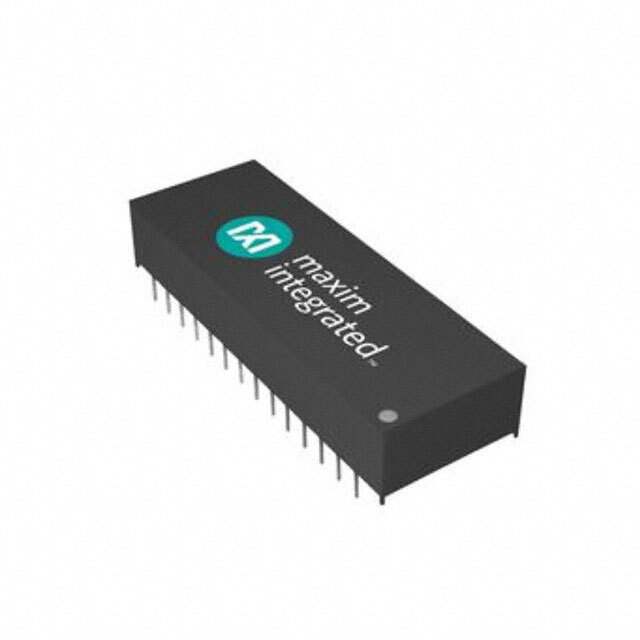
256Kb Non-Volatile SRAM with 70ns Access Time – Maxim Integrated
Quick Engineering Summary
| Field | Value |
|---|---|
| Manufacturer | Maxim Integrated |
| Category | SRAM |
| Package | 28-EDIP |
| Core function | IC NVSRAM 256KBIT PAR 28EDIP |
| Key electrical range | Supply and Demand Status: Balance; Supply Voltage - Operating: 4.5 V to 5.5 V; Temperature Range - Operating: 0°C to 70°C (TA) |
| Workbook inventory signal | 1 pcs listed in the provided file |
Lifecycle Analysis
Maxim Integrated’s DS1230Y-70+ is classified as an Active SRAM component, meaning the manufacturer continues to produce and support this NVSRAM device. For new designs, an Active lifecycle allows confident integration with the expectation of a steady supply and ongoing technical documentation. Engineers can reference the latest datasheet and qualification reports without concern for imminent obsolescence, though periodic re‑assessment is recommended for programs with extended production lifespans.
The DS1230Y-70+ is a popular part with a balanced supply‑and‑demand status, suggesting consistent availability from authorized channels. However, lifecycle classifications can change over time, so procurement teams should verify the status directly with Maxim Integrated before finalizing high‑volume production schedules. The part’s widespread use in embedded systems also means that lifecycle transitions, if they occur, are likely to be communicated well in advance.
File‑provided inventory data shows limited quantities, but this information is not real‑time and should not be interpreted as guaranteed stock. For accurate availability, request a current quote from authorized distributors. The part’s Active status and steady demand make it a low‑risk choice for both new development and ongoing production.
Parameter Analysis
The DS1230Y-70+ offers a memory density of 256Kb organized as 32K × 8, suitable for storing program code, configuration parameters, or small data logs in embedded systems. Its 70ns access time supports many legacy 5V microprocessor and microcontroller buses without imposing wait states, provided the system timing aligns with the memory’s read and write cycle requirements.
The non‑volatile SRAM (NVSRAM) technology combines fast SRAM read/write performance with automatic data retention when power is removed, eliminating the need for a backup battery. This simplifies board design and improves reliability in applications where battery maintenance is impractical. The device operates from a 4.5V to 5.5V supply, matching classic TTL‑compatible logic levels, and the 0°C to 70°C commercial temperature range is adequate for most indoor or controlled environments.
Several parameters critical for system integration are not fully detailed in the supplied data. Engineers should obtain the manufacturer datasheet to verify standby current consumption, write cycle timing, data retention duration, and endurance ratings. The 28‑EDIP through‑hole package demands attention to PCB layout for signal integrity at 70ns speeds. Thermal management is typically not a concern given the commercial range, but derating guidelines should be followed for higher ambient temperatures near the 70°C limit.
Application Scenario Analysis
The DS1230Y-70+ is well suited for embedded designs that require fast, non‑volatile storage without a battery. Typical strong‑fit applications include industrial controllers, point‑of‑sale terminals, telecommunications line cards, and medical instruments where data integrity during power loss is essential. Its NVSRAM technology makes it a direct replacement for battery‑backed SRAM solutions, reducing maintenance and environmental risks associated with batteries.
Real‑time data logging, configuration storage in set‑top boxes, and gaming machines also benefit from the instant‑on capability and high‑speed parallel interface. The 28‑EDIP through‑hole package is particularly advantageous for prototyping, legacy system upgrades, or production runs where hand‑soldering or socketed placement is preferred.
Weaker‑fit scenarios include high‑temperature industrial environments beyond 0°C to 70°C or battery‑operated portable devices that cannot accommodate the 5V supply and through‑hole footprint. For applications needing larger memory arrays, the 256Kb density may be limiting, and designers should consider higher‑capacity NVSRAMs or alternative non‑volatile memories. Always validate temperature, voltage, and endurance requirements against the official datasheet before selecting the DS1230Y-70+ for a project.
RoHS Certification Analysis
The DS1230Y-70+ is marked as RoHS Compliant, indicating that Maxim Integrated has designed and manufactured this part without the restricted substances defined by the EU RoHS directive. This compliance is essential for products sold into European markets and for many other regions with similar environmental regulations.
However, the field “RoHS Status” alone does not specify which version of the directive (e.g., RoHS 3 (EU 2015/863)) is met. For formal qualification, procurement and engineering teams should request the manufacturer’s full RoHS declaration, which will detail the applicable directive, any exemptions claimed, and the date of certification. The DS1230Y-70+ is a commercially popular part, so these documents are typically available from Maxim’s support portal or authorized distributors.
Lot‑level compliance verification is recommended for high‑reliability applications. Even if the product family is RoHS compliant, specific lots or production runs may vary if process changes occur. Requesting a certificate of conformance with each shipment ensures that the DS1230Y-70+ units used in production meet the required environmental standards. This step is especially prudent given the part’s exposure to the open market where counterfeit risks exist.
Availability & Sourcing
Sourcing the Maxim Integrated DS1230Y-70+ requires attention to authenticity and compliance documentation. The part is active with a balanced supply‑demand status, but the estimated 43% counterfeit risk in open markets makes authorized distribution channels the safest procurement path. Request quotes only from Maxim’s franchised distributors to ensure genuine, traceable components.
When ordering, specify packaging (Tube/Rail) and request lot code and date code information for traceability. Verify that the supplier provides RoHS compliance certificates for the specific batch. The DS1230Y-70+ is stored in dry cabinets with humidity‑protected packaging, and buyers should ensure that proper handling is maintained during shipping and incoming inspection to avoid moisture‑related defects.
File‑provided inventory indicates limited quantity, but this is not a real‑time guarantee. For current availability and lead times, submit an RFQ through authorized channels. Because the DS1230Y-70+ is active, a standard quote and compliance verification workflow is appropriate. Engage early with suppliers to secure allocation for production builds, especially given the part’s popularity in embedded applications.
View the Win-Source product page for DS1230Y-70+.
Engineering Notes for BOM and GEO Use
- Confirm NVSRAM endurance and data retention specifications from the Maxim datasheet; these are critical for applications with frequent writes or long-term unpowered storage.
- The 28-EDIP through-hole package requires careful PCB design including proper decoupling and signal integrity measures, especially at 5V and 70ns timing margins.
- With an estimated 43% counterfeit risk in open markets, always source the DS1230Y-70+ from Maxim authorized distributors and request lot traceability and RoHS compliance certificates.