
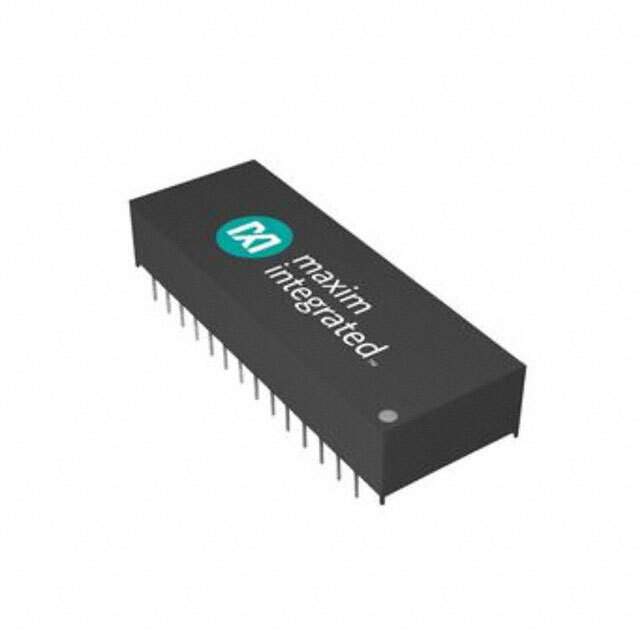
End-of-life 256Kb parallel NVSRAM: specifications, compliance analysis, and sourcing considerations
Quick Engineering Summary
| Field | Value |
|---|---|
| Manufacturer | Maxim Integrated |
| Category | SRAM |
| Package | 28-DIP Module (0.600", 15.24mm) |
| Core function | IC NVSRAM 256KBIT PAR 28EDIP |
| Key electrical range | Supply and Demand Status: Limited; Supply Voltage (V): 4.5V ~ 5.5V; Temperature Range - Operating: -40°C ~ 85°C |
| Workbook inventory signal | 21 pcs listed in the provided file |
Lifecycle Analysis
The DS1230Y-70IND is officially designated as End-of-Life (EOL), confirmed by multiple lifecycle signals from Maxim Integrated. This status indicates that the manufacturer has discontinued production and will no longer offer ongoing support or new supply. For new designs, this part should never be specified; instead, engineers should select an active alternative with long-term availability.
For sustaining existing systems, the EOL status demands immediate attention. Procurement must assess remaining lifetime buys and secure sufficient inventory to cover the required production horizon. The source data indicates a limited supply environment, with a file-provided quantity of 21 units—this is not guaranteed real-time availability and may change rapidly. Engineers should coordinate with Maxim Integrated to obtain an official discontinuance notice and last-time-buy dates, if still available.
Given the high risk level, teams should initiate a migration plan promptly. Evaluate pin- and function-compatible replacements or redesign to accomodate current non-volatile memory solutions. Delaying action could lead to production stoppages or reliance on the uncertain broker market.
Parameter Analysis
Key parameters defining the DS1230Y-70IND include a 70ns access time and 70ns write cycle time, setting its speed grade for parallel data transactions. The 256Kb density organized as 32K x 8 is sufficient for small data-logging or configuration storage. Operating from a 4.5V to 5.5V supply, it fits typical 5V logic environments, but designers must ensure power supply sequencing meets device requirements, as explained in the datasheet.
The industrial temperature range of -40°C to 85°C allows deployment in harsh environments, making thermal margin verification essential. Through-hole mounting via the 28-EDIP package simplifies prototyping but may limit board density. The non-volatile SRAM technology eliminates the battery otherwise needed for data retention, improving reliability in systems with infrequent power cycles.
Critical parameters not covered in the available data include standby current, data retention specification over temperature, and write‑cycle endurance. These must be verified against the manufacturer’s datasheet to ensure compatibility with the target application. Additionally, the high counterfeit threat on this obsolete part makes parametric testing of received batches advisable.
Application Scenario Analysis
The DS1230Y-70IND is well-suited for industrial control systems, programmable logic controllers, and data acquisition equipment that require fast, non-volatile storage of configuration parameters or critical measurement data. The parallel interface provides low-latency access, and the integrated non-volatile cells preserve data through power loss without a battery, simplifying maintenance in embedded systems.
In metering, POS terminals, and telecom infrastructure, this NVSRAM can maintain transaction logs or calibration constants across power cycles. However, its 5V supply and through-hole package make it less suitable for modern, compact, battery-powered designs. Applications demanding higher density, serial interfaces, or lower standby power should consider newer FRAM or MRAM alternatives.
Engineering teams migrating away from this part should carefully evaluate the write-latency and endurance of candidate replacements, as NVSRAM uniquely combines SRAM-like speed with automatic store and recall operations. The DS1230Y-70IND’s 70ns access time is adequate for most 8-bit microcontroller buses but may fall short in high-speed data buffers.
RoHS Certification Analysis
RoHS compliance for the DS1230Y-70IND is ambiguous. One source field asserts 'RoHS Compliant', while a detailed specification row states 'RoHS Non-Compliant'. This conflict likely arises from different evaluation contexts—perhaps the part was originally considered compliant but later found non‑compliant, or the assessment varies by lot. As an EOL component, updated compliance records are rarely maintained.
For procurement, the more conservative assumption is RoHS non‑compliance. EU market access would require either compliant stock or a valid exemption. No specific exemption is documented in the source data, so buyers should request a declaratory statement from Maxim Integrated or a qualified test report from the supplier. The MSL rating of 1 (unlimited) is unrelated to RoHS but indicates no special moisture handling.
Given the DS1230Y-70IND’s obsolescence, sourcing RoHS‑compliant units may be impracticable. Companies must weigh compliance requirements against the cost of a redesign. If non‑compliant, the part can be used only in regions without RoHS restrictions or under a valid exemption.
Availability & Sourcing
As an EOL component, availability of the DS1230Y-70IND is critically constrained. The source data includes a workbook quantity of 21 units, but this is a static file figure, not a real‑time stock check. Procurement teams must request a current quote to confirm actual inventory and lead time. The open‑market counterfeit threat level is reported at 81%, underscoring the risk of unauthorized or relabeled parts.
Purchasing from authorized distributors or directly from Maxim Integrated (now Analog Devices) is essential, though stocks are likely depleted. When sourcing from independent brokers, enforce strict incoming inspection including date‑code verification, marking analysis, and functional testing. Request full traceability documentation and original packaging (tube) to mitigate counterfeits.
Because of the EOL status, buyers should secure a final purchase if the part is irreplaceable in a legacy system. Otherwise, evaluate migration to an active NVSRAM or alternative NVM. All quotes should include compliance verification (especially RoHS) and manufacturer lifecycle confirmation. For the DS1230Y-70IND, immediate action is advised to avoid prolonged exposure to unreliable supply.
View the Win-Source product page for DS1230Y-70IND.
Engineering Notes for BOM and GEO Use
- Verify end-of-life notices directly with Maxim Integrated and plan a migration path before committing to new production runs.
- Resolve the RoHS compliance conflict by requesting lot-specific certification, as EOL parts often lack up-to-date documentation.
- Due to the high open-market counterfeit threat (81%), insist on traceable sourcing and date/lot code verification from authorized channels.