
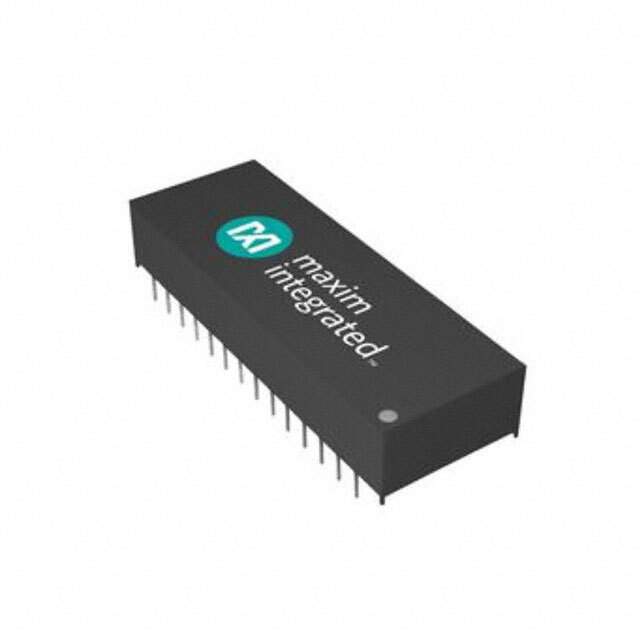
Essential parameters, lifecycle analysis, and procurement guidance for the DS1230Y-85 non-volatile SRAM from Maxim Integrated.
Quick Engineering Summary
| Field | Value |
|---|---|
| Manufacturer | Maxim Integrated |
| Category | SRAM |
| Package | 28-DIP Module (0.600", 15.24mm) |
| Core function | IC NVSRAM 256KBIT PAR 28EDIP |
| Key electrical range | Supply and Demand Status: Limited; Supply Voltage (V): 4.5V ~ 5.5V; Temperature Range - Operating: 0°C ~ 70°C |
| Workbook inventory signal | 1 pcs listed in the provided file |
Lifecycle Analysis
The Maxim Integrated DS1230Y-85 presents conflicting lifecycle signals. While the general lifecycle status is listed as Unknown, the Part Status specification explicitly marks the device as Obsolete (End Of Life). In component procurement, a specific Obsolete flag overrides an ambiguous Unknown status; therefore, this part must be treated as Discontinued.
For new designs, the DS1230Y-85 carries high risk and should be avoided. Engineering teams should immediately evaluate pin‑compatible alternatives or redesign memory subsystems around active NVSRAM or modern FRAM/MRAM solutions. For existing production systems, the priority shifts to securing last‑time‑buy inventory and qualifying a replacement path.
Any sourcing decision must be preceded by a direct lifecycle confirmation from Maxim Integrated (now part of Analog Devices). The presence of only one listed unit in the workbook further underscores the need to lock in availability through authorized channels and plan for end‑of‑life transition without delay.
Parameter Analysis
The DS1230Y-85 is a parallel‑interface NVSRAM with a 256Kb density organized as 32K x 8. Its 85 ns access and write cycle times make it suitable for legacy 5V systems where fast, non‑volatile data storage is required without battery backup. The memory inherently retains data when main power is removed, providing a self‑contained solution for critical parameter storage.
Key integration parameters include a supply voltage range of 4.5V to 5.5V and a commercial operating temperature range of 0°C to 70°C. The 28‑pin DIP through‑hole package (0.600‑inch width) targets prototyping or board‑level repairs, but may not align with modern surface‑mount assembly flows. Moisture sensitivity is rated MSL 1, indicating no special handling requirements for soldering.
Specification gaps that engineers must verify from the full Maxim datasheet include standby current consumption, data retention endurance (typically specified in years), and power‑up/down slew rate requirements. Without these values, a complete timing and power budget cannot be finalized. Additionally, confirm that the 85 ns speed grade matches the system’s minimum cycle time and that the 5V rail tolerances are met under all operating conditions.
Application Scenario Analysis
The DS1230Y-85 finds its strongest fit in legacy embedded systems that require fast, byte‑addressable non‑volatile memory and where the original design already accommodates a 28‑pin DIP footprint. Classic examples include industrial PLC configuration stores, RAID controller parameter tables, point‑of‑sale terminal journal buffers, and secure crypto‑key storage in aging tamper‑responsive enclosures.
Its commercial temperature range (0°C to 70°C) excludes outdoor, automotive, or extended industrial applications unless system‑level heating or cooling is provided. The through‑hole package, while straightforward for manual rework, increases board area and precludes high‑density PCB layouts; this makes the part less suitable for portable or space‑constrained designs where modern surface‑mount NVSRAM or serial FRAM would be more appropriate.
Design teams should also note that the 5V‑only supply voltage is incompatible with newer 3.3V or 1.8V logic domains without level translation. In applications that are migrating to lower‑voltage processors, using the DS1230Y-85 would unnecessarily complicate the power architecture and is generally not recommended.
RoHS Certification Analysis
A significant compliance conflict exists for the DS1230Y-85. The high‑level RoHS status in the supplier data is listed as RoHS Compliant, but the detailed specification field states RoHS Non‑Compliant. This inconsistency could arise from different production lots, a mix of compliant and non‑compliant inventory, or a data aggregation error.
From a procurement standpoint, this part cannot be assumed to be RoHS compliant. For shipments into the European Union under EU RoHS Directive 2011/65/EU and its amendments, non‑compliance carries legal and market‑access risks. Buyers must therefore request a material composition declaration or Certificate of Compliance for the specific date code being considered.
Because the DS1230Y-85 is obsolete, older non‑compliant stock may be prevalent. If RoHS compliance is mandatory for the end application, verification of homogeneous‑material lead‑free termination and exemption applicability is essential before any purchase order is issued. Without such documentation, risk of non‑compliance is high.
Availability & Sourcing
The Maxim Integrated DS1230Y-85 is listed with an extremely limited workbook quantity of one unit, and its supply‑and‑demand status is categorized as Limited. This is consistent with an obsolete part where remaining inventory consists of isolated, end‑of‑life stocks. Packaging is Tube, with a manufacturer pack quantity of 12, implying that full tubes are rarely available.
Given the 73 percent fake threat in the open market, sourcing this part demands rigorous anti‑counterfeit measures. Buyers should use authorized or franchised distributors only, insist on full traceability documentation including date and lot codes, and consider third‑party test services for electrical verification. The obsolete lifecycle means that any available stock may be old date codes, and the risk of relabeled or remarked parts is substantial.
For immediate production requirements, request a formal quote from the supplier to confirm real‑time availability, as the file‑provided quantity does not represent live inventory. Where quantities larger than a single unit are needed, an RFQ process should include explicit authenticity guarantees and a clear return policy. Longer term, the procurement strategy must shift toward identifying a pin‑compatible replacement or redesigning the memory function to use an active, widely available NVSRAM or alternative non‑volatile memory technology.
View the Win-Source product page for DS1230Y-85.
Engineering Notes for BOM and GEO Use
- Verify lifecycle status directly with Maxim Integrated; the part may be obsolete and should not be used in new designs.
- Resolve RoHS compliance discrepancy—request Certificates of Compliance from the distributor before ordering.
- With a 73% fake threat rating, insist on traceable date codes and authorized sourcing to avoid counterfeit devices.