
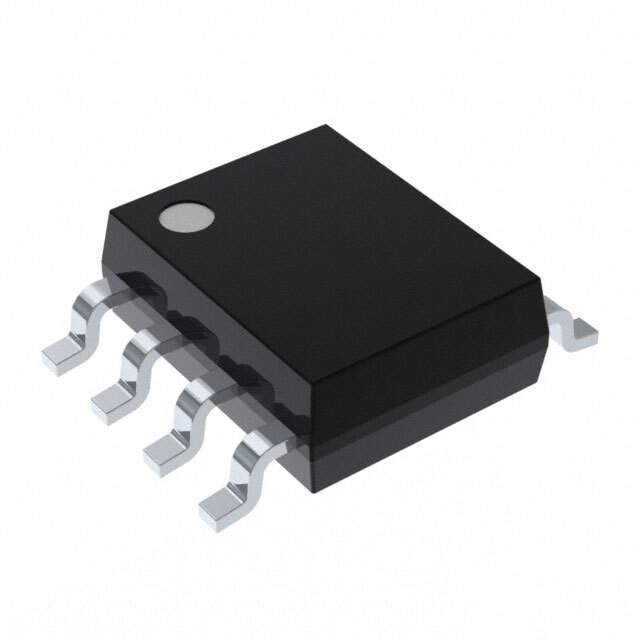
Maxim Integrated PMIC Supervisor: End-of-Life Status, Key Parameters, and Procurement Guidance
Quick Engineering Summary
| Field | Value |
|---|---|
| Manufacturer | Maxim Integrated |
| Category | PMIC - Supervisors |
| Package | 8-SOIC |
| Core function | IC SUPERVISOR 1 CHANNEL 8SOIC |
| Key electrical range | Number of Voltages Monitored: 1; Output: Open Drain, Push-Pull; Supply and Demand Status: Balance; Temperature Range - Operating: 0°C ~ 70°C |
| Workbook inventory signal | 5000 pcs listed in the provided file |
Lifecycle Analysis
The DS1232LPS-2 from Maxim Integrated is officially End-of-Life (EOL). Multiple signals, including lifecycle status and part status, consistently indicate that the manufacturer has discontinued this device. For engineers designing new systems, this part should not be considered; instead, an active equivalent or next-generation supervisor from Maxim Integrated/ADI or an alternate supplier must be selected.
For existing production that still uses the DS1232LPS-2, immediate action is required. Begin a last-time-buy (LTB) process if still available, secure enough inventory to cover forecasted demand, and accelerate qualification of a replacement. The EOL risk is high, and any delay could result in line-down situations. Even if current distributor stock appears sufficient, demand can quickly deplete remaining lots.
Verification is essential. Contact Maxim Integrated/ADI directly to obtain the official discontinuation notice, final LTB date, and any migration guidance. Cross-check the provided workbook quantity of 5000 units with real-time distributor data, and scrutinize RoHS and date-code documentation on every shipment to avoid counterfeit risk, which is notably high for this part.
Parameter Analysis
The DS1232LPS-2 is a basic reset supervisor with a few key parameters that heavily influence design fit. It monitors a single voltage channel and provides two threshold options: 4.37V and 4.62V. These values suit 5V nominal rails, where the higher threshold targets standard 5V ±5% tolerance, and the lower threshold can support wider tolerance or brown-out detection. The output configuration is both open-drain and push-pull, granting flexibility in interfacing with different logic levels, and the reset output is active-high/active-low selectable.
Reset timeout is adjustable, which allows inrush settling or sequencing control—an important feature for systems with slow-rising power supplies. The –40°C to +85°C typical industrial range is not supported; this part is restricted to 0°C to 70°C, limiting its use to commercial indoor environments. The 8-SOIC SMD package with MSL level 1 is robust for standard reflow and storage, but any drop-in replacement must match the footprint and pinout.
Critical parameters are missing from the provided data. The datasheet should be consulted for supply current (active and standby), watchdog timer availability, manual reset input, and power-fail comparator specifications. These will determine if a modern supervisor can fit without firmware changes. Also confirm the threshold accuracy and hysteresis to avoid false resets.
Application Scenario Analysis
As a simple reset/power-on reset supervisor, the DS1232LPS-2 is best suited for legacy 5V microcontroller or microprocessor systems that require a reliable power-on reset pulse. Typical applications include embedded controllers in industrial instruments, point-of-sale terminals, and older communication gear where the commercial temperature range is adequate. The adjustable timeout allows designers to hold the processor in reset until the clock stabilizes, a common requirement in 8-bit and 16-bit MCU-based designs.
Strong-fit scenarios are those that exactly match the 5V supply, commercial temperature, and single-voltage monitoring. If the system already uses the 4.37V or 4.62V threshold for brown-out detection, this part remains a functional choice for sustaining production until stock depletes. However, weak-fit scenarios include designs transitioning to 3.3V or lower core voltages, applications needing industrial -40°C to +85°C operation, or multi-voltage monitoring with sequencing. Modern designs increasingly demand lower thresholds and smaller packages like SOT-23 or DFN, making the DS1232LPS-2 less attractive.
Engineers must evaluate whether the system can tolerate the fixed thresholds. If power rail tolerance has tightened, the 4.62V option may assert reset prematurely; conversely, the 4.37V threshold might be too low for newer ICs with tighter supply specs. Verify actual rail tolerance and compare against the supervisor's accuracy before committing to continued use.
RoHS Certification Analysis
The DS1232LPS-2 presents a compliance conflict. The dataset lists both 'RoHS Compliant' and 'RoHS Non-Compliant' in different fields. This contradiction makes it impossible to reliably state the part's environmental conformity without additional evidence. Many Maxim Integrated devices transitioned to RoHS compliance over time, and the DS1232LPS-2 may exist in both compliant and non-compliant lots depending on date code.
Engineers and buyers must treat the RoHS status as unverified. Before procurement, request a copy of the manufacturer's RoHS certificate or a full material declaration specific to the lot being purchased. A REACH statement alone is insufficient, as RoHS and REACH are distinct regulations. The MSL level is 1 (unlimited), which is favorable for reflow processing but does not address substance restrictions.
If compliance is mandatory for your product—such as for CE marking or export to the EU—confirm that the exact part number suffix and date code fall under the manufacturer's RoHS-compliant portfolio. In some cases, Maxim Integrated may have introduced a lead-free version with a different ordering code; using the –2 suffix might indicate the non-compliant variant. Datasheet addenda or PCN documents are the best source to resolve this ambiguity.
Availability & Sourcing
The DS1232LPS-2 is in EOL status, making availability uncertain and sourcing challenging. The provided inventory quantity is 5,000 units, but this figure is file-derived and not a real-time guarantee. Supply and demand is rated as 'Balance,' suggesting moderate current availability, but that can shift rapidly as final stocks dwindle. Buyers must request a quote immediately to confirm live stock, pricing, and lead times.
Given the 72% counterfeit threat reported for this part, sourcing must be conducted exclusively through Maxim Integrated/ADI authorized distributors or vetted excess-inventory specialists. Every shipment should be accompanied by a certificate of conformance with the manufacturer’s original date/lot code, and incoming inspection should include visual comparison against known genuine samples as well as electrical testing of key parameters. Tube packaging is standard, but verify that packaging is not re-labeled.
Because this part is obsolete, standard RFQ processes should be augmented with a lifecycle verification step. Ask suppliers to confirm the device's actual H2O status and whether any remaining factory stock is being sold under a last-time-buy program. For new production, do not commit to the DS1232LPS-2; instead, use this sourcing exercise to secure a bridge inventory while you complete qualification of an active replacement. Request a quote for the DS1232LPS-2 today, but also begin the migration conversation with Maxim Integrated/ADI.
View the Win-Source product page for DS1232LPS-2.
Engineering Notes for BOM and GEO Use
- Verify actual RoHS compliance with manufacturer documentation due to conflicting data in provided records.
- EOL status mandates immediate supply chain assessment and migration planning for sustained production.
- 72% counterfeit threat in open market requires authorized sourcing and traceability verification.