
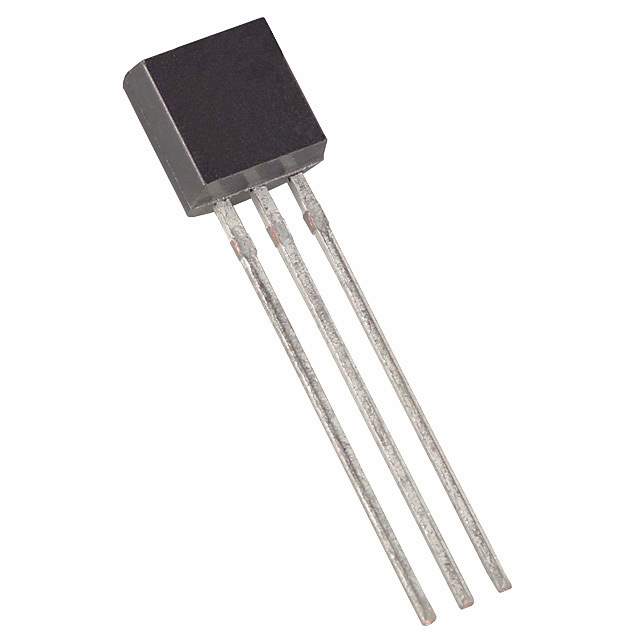
Obsolete 1-Channel Simple Reset IC in TO-92-3 from Maxim Integrated
Quick Engineering Summary
| Field | Value |
|---|---|
| Manufacturer | Maxim Integrated |
| Category | PMIC - Supervisors |
| Package | TO-226-3, TO-92-3 (TO-226AA) |
| Core function | IC SUPERVISOR 1 CHANNEL TO92-3 |
| Key electrical range | Number of Voltages Monitored: 1; Output: Open Drain or Open Collector; Supply and Demand Status: Balance; Temperature Range - Operating: -40°C ~ 85°C |
| Workbook inventory signal | 1 pcs listed in the provided file |
Lifecycle Analysis
The DS1233A-15 is classified as Obsolete (End Of Life) in the supplied specifications, despite a higher-level lifecycle status of Unknown. This conflict means that Maxim Integrated has likely discontinued production, and any remaining inventory is limited to existing distributor stock. For new designs, this part should not be considered unless no alternative exists and a full migration plan is in place. Engineers in sustaining production must immediately contact Analog Devices (which acquired Maxim Integrated) to confirm the official end-of-life notice and last-time-buy dates, if any.
Given its obsolete status, procurement risk is elevated. The file-provided inventory shows only 1 unit, which is insufficient for even small prototype runs. Buyers should treat all available stock as potentially date-coded and should request certificates of conformance to validate authenticity. Without explicit manufacturer support, long-term availability is not guaranteed, and any commitment to this part for future builds carries significant supply chain risk.
To mitigate, sourcing teams should cross-reference authorized distributors for any residual inventory and concurrently identify functional replacements from the DS1233 family or equivalent supervisors from other manufacturers. In all cases, the DS1233A-15 should be sourced with a lifecycle verification request as part of the RFQ process.
Parameter Analysis
The DS1233A-15 is a simple reset/power-on reset supervisor with a single monitored voltage and a fixed 2.72V threshold. Its open-drain, active-low reset output provides compatibility with various logic families and allows OR-tie configurations in multi-voltage systems. The minimum reset timeout of 250ms ensures a stable reset pulse duration for most microcontrollers, but the exact typical value and its tolerance are not specified in the supplied data, so timing-critical designs should verify against the original datasheet.
The operating temperature range of -40°C to 85°C suits industrial and extended commercial environments, but designers must derate appropriately for higher ambient conditions. The through-hole TO-92-3 package is large and suited for prototyping, legacy board layouts, or hand-soldered repairs; it is poorly matched for modern SMT manufacturing and high-density designs. MSL Level 1 means the device is not moisture-sensitive, simplifying storage and handling.
Critical missing parameters that must be verified before use include the supply voltage range (VDD), accuracy of the threshold voltage, quiescent current, and any watchdog or manual reset features that might be integrated. Without these, a complete electrical qualification is impossible. The absence of a manufacturer datasheet link in the source data further emphasizes the need for direct documentation retrieval from Analog Devices' archives.
Application Scenario Analysis
The DS1233A-15 is best suited for legacy 3.3V-based systems where a simple power-on reset with a 2.72V threshold is used to hold a microcontroller or processor in reset until the supply stabilizes. Its active-low output and open-drain configuration make it a drop-in for many older MCU supervisory circuits. The through-hole TO-92 package makes it practical for repair and maintenance of existing equipment, such as industrial controllers, automotive aftermarket modules, or instrumentation that cannot be redesigned.
Conversely, this part is a weak fit for new high-volume production. The obsolete status, shortage of inventory, and lack of surface-mount package exclude it from modern SMT assembly lines. Designs requiring higher precision thresholds, adjustable reset voltages, or integrated watchdog timers will find more capable alternatives in current production. Systems targeting EU markets must also consider the RoHS uncertainty; if the part is indeed non-compliant, it is unsuitable for RoHS-required applications.
For prototyping one-off projects or debugging legacy boards, the DS1233A-15 might serve as a temporary solution, but engineers should plan for a pin-compatible replacement or a board spin to a newer supervisor IC. The high counterfeit risk (70% open-market fake threat) further discourages its use in any production-worthy design, as field reliability could be compromised.
RoHS Certification Analysis
The DS1233A-15 presents a RoHS conformance conflict: one data source reports RoHS Compliant, while another explicitly states RoHS Non-Compliant. Without an official certificate of compliance from Maxim Integrated/Analog Devices, the part's environmental compliance cannot be trusted for EU, China RoHS, or other regulated markets. This discrepancy may stem from multiple manufacturing batches or packaging options, but for this specific part number, verification is mandatory.
The part is rated MSL 1 (unlimited floor life), which is favorable for manufacturing but does not address Pb-free or hazardous substances. No REACH, halogen-free, or conflict minerals declarations are included in the supplied data. If the non-compliant status is accurate, the DS1233A-15 would contain lead or other restricted substances, disqualifying it from RoHS sales.
Procurement teams must request the full material declaration and RoHS certificate from the distributor before purchase. In the absence of clear documentation, assume the part is non-compliant to avoid certification risk. For designs requiring RoHS compliance, consider alternative supervisor ICs with confirmed lead-free and green status, and avoid the DS1233A-15 entirely unless a compliant variant is unequivocally proven.
Availability & Sourcing
The DS1233A-15 is an obsolete part with extremely limited file-provided inventory of 1 unit. This quantity is not guaranteed and may reflect a single lot or leftover stock; real-time availability requires a formal RFQ to distributors. The supply-demand status is listed as 'Balance', but this may not reflect the physical market given the EOL condition. Buyers should expect to find only residual stock, possibly with older date codes.
Given the 70% fake threat rating on the open market, sourcing must be restricted to authorized or franchised distributors with full traceability. Request documentation including date/lot code, certificates of conformance, and RoHS status confirmation. Avoid independent brokers unless a rigorous inspection and test protocol is in place. For small repair-quantity needs, one unit may suffice, but larger orders are not viable.
As an obsolete device, the DS1233A-15 is not recommended for new procurement in production volumes. Engineers should treat this part as end-of-life and immediately begin migration evaluation to a current Maxim Integrated or alternative supervisor. For emergency repairs, secure the remaining stock with a non-cancellable order and verify functionality before committing to a production line fix.
View the Win-Source product page for DS1233A-15.
Engineering Notes for BOM and GEO Use
- Treat DS1233A-15 as end-of-life; reserve only for legacy repairs where no substitute exists and re-qualification is unjustified.
- Counterfeit risk is high (70% open-market threat); source only from authorized distributors with full traceability documentation.
- Verify exact threshold tolerance and supply voltage range from the manufacturer datasheet, as the provided data lacks these critical parameters.