
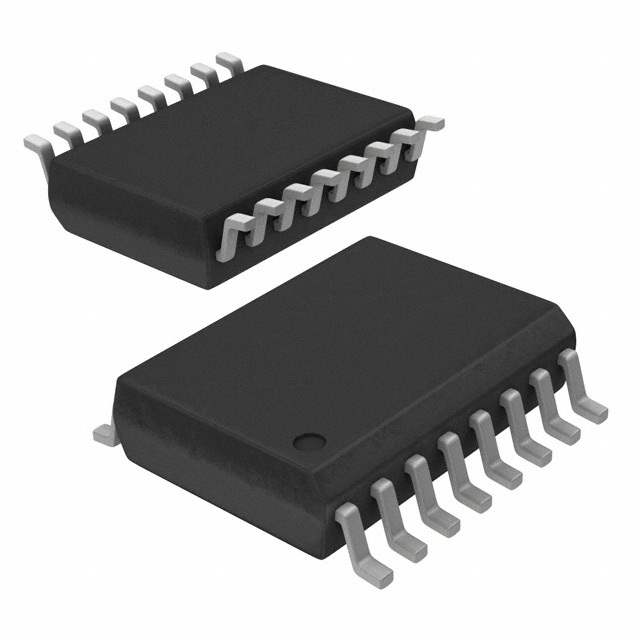
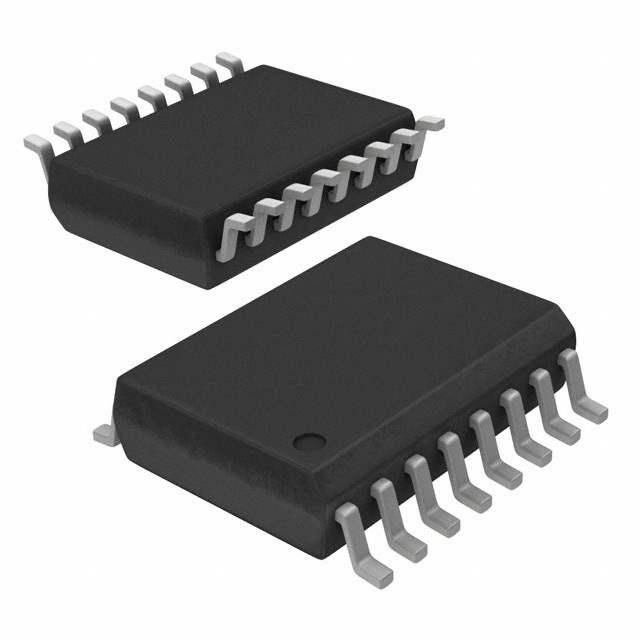
End-of-life 1-channel supervisor with battery backup, 4.62V threshold, and commercial temperature range.
Quick Engineering Summary
| Field | Value |
|---|---|
| Manufacturer | Maxim Integrated |
| Category | PMIC - Supervisors |
| Package | 16-SOIC |
| Core function | IC SUPERVISOR 1 CHANNEL 16SOIC |
| Key electrical range | Number of Voltages Monitored: 1; Output: Open Drain, Push-Pull; Supply and Demand Status: Limited; Temperature Range - Operating: 0°C to 70°C (TA) |
| Workbook inventory signal | 1 pcs listed in the provided file |
Lifecycle Analysis
The DS1236S-5 supervisor IC from Maxim Integrated is classified as End-of-Life (EOL). This status indicates that the manufacturer has discontinued production, and the part is no longer recommended for new designs. EOL components carry a high risk for procurement, as availability may diminish rapidly and long-term support is not guaranteed. For existing designs in sustained production, it is critical to verify the remaining supply and plan an immediate migration to an alternative part.
The EOL status is confirmed by multiple lifecycle signals, with no conflicts in the provided data. The workbook shows a file-provided quantity of one unit, which is not a real-time inventory guarantee and should be treated as an indicative snapshot. Engineers and buyers should not depend on this figure for production planning. Instead, direct verification with Maxim Integrated (now part of Analog Devices) or their authorized distributors is essential to clarify last-time buy options or recommended replacements.
Using an EOL part in new designs exposes projects to supply chain disruptions and potential re-qualification costs later. For purchasers, the recommendation is to secure any remaining stock only after confirming authenticity, date codes, and compliance documentation. Simultaneously, evaluate pin-compatible or functionally equivalent supervisors from the manufacturer's current portfolio.
Parameter Analysis
The DS1236S-5 is a single-channel supervisor with a fixed voltage threshold of 4.62V, making it suitable for 5V-powered microprocessor systems that require reliable power-on reset and brown-out protection. The reset output is configurable as active-high or active-low and supports both push-pull and open-drain configurations, offering flexibility to interface with different logic families or wired-OR setups. The specified minimum reset timeout is 25 ms, which provides adequate settling time for most microcontrollers, though designers should verify that this meets the processor's minimum reset pulse width requirement.
This supervisor includes a battery backup circuit, which is a critical feature for systems requiring data retention in non-volatile memory or real-time clocks during power loss. The part is housed in a 16-pin SOIC package with surface-mount (SMD) mounting, suitable for automated assembly. The commercial operating temperature range of 0°C to 70°C limits its use to indoor or climate-controlled environments. Missing parameters from the source data include the threshold accuracy (e.g., ±1.5%), supply current, and watchdog functionality—common in supervisor ICs. These should be verified against the official datasheet to ensure proper design margins and power budgeting.
Additionally, the open-drain output may require an external pull-up resistor, and the push-pull configuration must be selected appropriately to avoid contention. Datasheet details on reset propagation delay and glitch immunity are not provided but are important for reliable operation in noisy environments. Engineers integrating the DS1236S-5 should confirm these specifications along with any tolerance stack-ups, especially if the monitored voltage rail has wide variations.
Application Scenario Analysis
The DS1236S-5 is tailored for microprocessor supervisory applications that demand battery-backed memory or RTC support in standard 5V systems. Its primary use case is in embedded devices such as point-of-sale terminals, industrial controllers, or legacy communication equipment operating within the commercial temperature range. The battery backup circuit enables seamless switchover to a backup supply when the main power fails, ensuring data integrity and timekeeping without external components in many cases.
However, this device is not suitable for designs requiring operation outside the 0°C to 70°C range, such as outdoor, automotive, or industrial extended-temperature applications. The lack of specified watchdog timer or manual reset input may limit its use in systems with higher safety or reliability requirements. Applications that demand very low quiescent current for battery-powered operation should verify the datasheet's supply current figures, as these are not provided in the sourcing data.
A strong-fit scenario would be replacing an identical supervisor in a mature product where no redesign is planned, assuming the part can still be sourced. For new designs, it is a weak fit due to its EOL status and limited documentation. Any adoption should be accompanied by a thorough review of the manufacturer's application notes and a qualification test to ensure the reset timing and battery switchover behavior align with the system's power sequencing requirements.
RoHS Certification Analysis
The DS1236S-5 presents a conflicting RoHS status in the provided data. The compliance summary states 'RoHS Compliant,' while a specification field explicitly lists 'RoHS Non-Compliant.' This discrepancy is a red flag for procurement, as it may indicate that different production lots or packaging variants have varying compliance statuses. In the absence of a definitive manufacturer declaration or certificate, the RoHS status should be considered uncertain.
For EU and similar regulatory markets, RoHS compliance (typically EU Directive 2015/863) is mandatory for most electronic equipment. The data does not mention any specific exemptions, REACH compliance, or halogen-free status. The 62% fake threat rate further underscores the importance of verifying environmental compliance through traceable documentation. Buyers must request a RoHS certificate of compliance (CoC) for the exact date code and lot before purchase.
In practice, many suppliers attach a 'RoHS Compliant' label at the family level, but individual parts may have non-compliant terminal finishes (e.g., tin-lead plating). Until the conflict is resolved, engineers should assume the part may not meet RoHS requirements, especially for high-volume production. Consider transitioning to a confirmed RoHS-compliant alternative if compliance is non-negotiable.
Availability & Sourcing
As an end-of-life component, the DS1236S-5 supervisor has very limited market availability. The source data indicates a workbook quantity of one unit, which is a file-provided snapshot and not a real-time inventory guarantee. Purchasers should treat this as a minimal signal and not count on quantity for production. The part is packaged in tubes/rails, which is standard for through-hole or SM at low volumes.
The open market for this device carries a high risk: a fake threat rate of 62% is flagged, meaning that over half of the units offered through unauthorized channels may be counterfeit or substandard. To mitigate this, procurement teams must restrict sourcing to Maxim Integrated’s authorized distributors or carefully vetted, traceable sources. Insist on full traceability with date/lot codes, original manufacturer packaging, and certificates for RoHS and authenticity. Request a quote (RFQ) to obtain the most current availability and lead time.
For sustaining engineering, the immediate priority is to secure any remaining acceptable stock after verifying lifecycle and compliance. Simultaneously, initiate a redesign or pin-compatible replacement search through Analog Devices’ product line. Do not rely on this EOL part for any new production run. The RFQ process should include a explicit request for RoHS status clarification and a sample for quality inspection if possible.
View the Win-Source product page for DS1236S-5.
Engineering Notes for BOM and GEO Use
- Verify RoHS compliance at lot level due to conflicting data between family-level and specific listing.
- Plan for migration due to EOL status; limited availability may require securing remaining inventory quickly.
- High counterfeit threat (62%) suggests only sourcing from authorized or traceable channels with full documentation.