
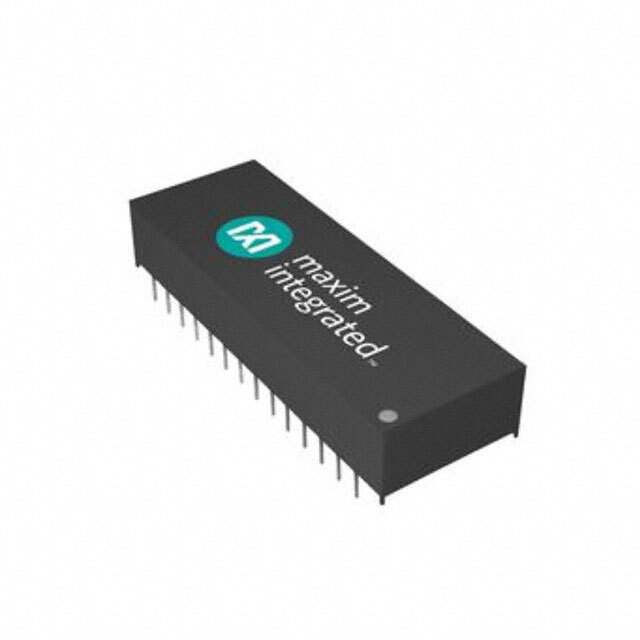
Phantom Time Chip with 32KB NVSRAM, 28-EDIP Through-Hole, and 4.5V to 5.5V Operation – Parameter and Sourcing Guide
Quick Engineering Summary
| Field | Value |
|---|---|
| Manufacturer | Maxim Integrated |
| Category | Clock/Timing - Real Time Clocks |
| Package | 28-EDIP |
| Core function | IC RTC PHANTOM CHIP PAR 28EDIP |
| Key electrical range | Current - Timekeeping (Max): 10mA @ 5V; Supply and Demand Status: Limited; Supply Voltage - Operating: 4.5 V to 5.5 V; Temperature Range - Operating: 0°C to 70°C |
| Workbook inventory signal | 200 pcs listed in the provided file |
Lifecycle Analysis
The DS1244Y-70’s lifecycle is officially classified as Unknown in the provided data, creating a medium-risk procurement scenario. This is complicated by a specification field that lists the part as ‘Active,’ yet no manufacturer lifecycle signal or documentation supports that claim. Such conflicts often arise in catalog aggregation, and without a direct statement from Maxim Integrated (now Analog Devices), new design-ins cannot be considered safe.
For current production or long-lifecycle equipment, the part may still be obtainable, but the absence of a formal EOL notice does not guarantee continued availability. Engineers and buyers should treat the DS1244Y-70 as potentially NRND and avoid reliance on it for next-generation designs. Requesting a product lifecycle status letter or checking the manufacturer’s official product page is essential.
File-provided inventory shows 200 units, but this is a snapshot and not a real-time commitment. The ‘Supply and Demand Status: Limited’ further suggests constrained availability. If the part is critical, secure stock now while verifying authenticity, and plan a migration path to a recommended replacement if available from the manufacturer.
Parameter Analysis
The DS1244Y-70’s operational envelope centers on a 4.5 V to 5.5 V supply voltage, which limits its use to legacy 5 V systems or designs where 5 V rails are still available. The maximum timekeeping current of 10 mA at 5 V is a key parameter for battery-backed applications; when combined with the 32KB NVSRAM, the part can log critical data and timestamps during power loss, but the battery lifetime must be calculated based on actual operating conditions and the storage capacitor requirements.
The 28-EDIP through-hole package is notable: it suits prototyping, socketed designs, and industrial environments where vibration or temperature cycling favors through-hole reliability. The date format YY-MM-DD-dd and built-in leap year compensation simplify firmware implementation. However, the commercial temperature range of 0°C to 70°C restricts use in extended-temperature or outdoor applications.
Missing parameters that must be verified from the manufacturer datasheet include register map, bus timing, write-protect functionality, battery switchover threshold, and crystal requirements. The parallel interface timing and read/write cycle times directly affect microcontroller interfacing, and memory access protocols need to be confirmed for proper software integration.
Application Scenario Analysis
The DS1244Y-70 is well-suited for maintaining legacy systems that originally employed 5 V phantom time chips with integrated NVSRAM. Industrial process controllers, data loggers, and utility meters can leverage the non-volatile memory to store configuration settings, event logs, or calibration data while reliably tracking time across power cycles.
In security and access control panels, the through-hole package and socketability of the 28-EDIP form factor aid in-field replacement. The 32KB of SRAM is sufficient for firmware parameter backup, alarm schedules, or transactional records, making it practical for many embedded monitoring applications.
Weak-fit scenarios include modern ultra-low-power portable devices, which typically require sub-1.8 V operation and miniature surface-mount packaging. The DS1244Y-70’s commercial temperature range also excludes it from automotive-grade or outdoor infrastructure designs. New designs should consider newer RTC solutions with I²C or SPI interfaces if 5 V operation and through-hole mounting are not mandatory.
RoHS Certification Analysis
The DS1244Y-70 is documented as RoHS Compliant, meeting the EU’s Restriction of Hazardous Substances directive, which likely includes the latest RoHS 3 (EU 2015/863) amendment. This indicates that the device’s materials and manufacture have transitioned away from lead-based solders and restricted substances such as cadmium and mercury. For a through-hole 28-EDIP package, this typically implies a matte tin lead finish.
No specific exemptions are listed, but certain legacy package types may rely on exemptions for lead in die attach or glass sealing. These exemptions are generally accepted under EU rules until their expiry, and the part’s compliance is normally stated at the family level. For lot-specific verification, engineers should request a certificate of compliance or test reports from the distributor.
It is important to note that RoHS compliance does not automatically imply REACH SVHC or halogen-free status. The storage conditions suggest moisture sensitivity, so handle according to J-STD-020 if reflow soldering is used, though through-hole parts are often hand-soldered or wave-soldered.
Availability & Sourcing
Sourcing the DS1244Y-70 requires careful vendor selection due to a reported 70% counterfeit risk on the open market. The part is described as having limited supply and demand balance, and the file-provided quantity of 200 units is a non-binding snapshot. To secure genuine components, issue an RFQ through established distributors, and request manufacturer date codes, lot traceability, and compliance documentation.
The packaging is tube/rail, standard for through-hole ICs, and the storage condition calls for dry storage and humidity protection, indicating that proper ESD and moisture control must be maintained during transit and storage. This becomes particularly important if units have been stored for extended periods.
Because the lifecycle status is unconfirmed, committing the DS1244Y-70 to a new production run without lifecycle verification is risky. If used only for sustaining legacy equipment, secure available inventory now and validate functionality through incoming inspection. For any longer-term need, inquire with Analog Devices or Maxim Integrated for clarification on the product's roadmap and possible alternatives.
View the Win-Source product page for DS1244Y-70.
Engineering Notes for BOM and GEO Use
- The DS1244Y-70’s phantom time chip architecture requires careful integration of the serial interface for proper timekeeping and NVSRAM access.
- Given a 70% reported fake threat in the open market, source only from authorized distributors to ensure authenticity and reliability.
- Verify lifecycle status with the manufacturer, as the part appears active in some listings but lacks formal lifecycle data.