
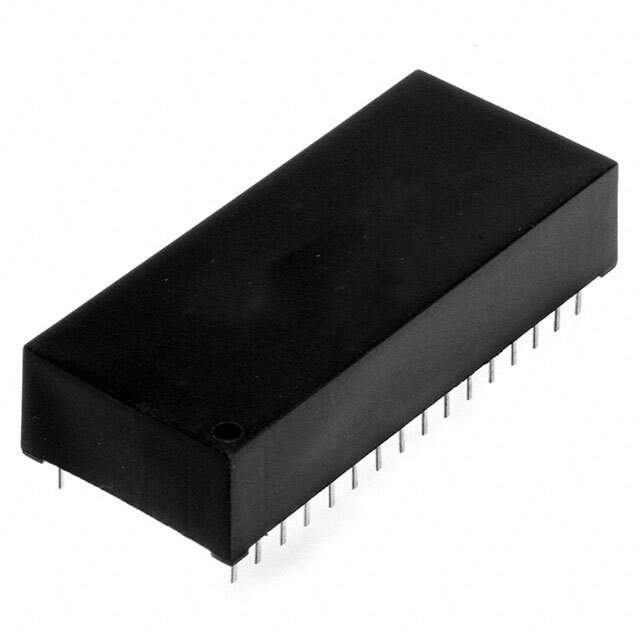
DS1245Y-120IND from Maxim Integrated: a 1Mb NVSRAM in 32-EDIP. Evaluate lifecycle, parameters, and sourcing options for legacy industrial applications.
Quick Engineering Summary
| Field | Value |
|---|---|
| Manufacturer | Maxim Integrated |
| Category | SRAM |
| Package | 32-EDIP |
| Core function | IC NVSRAM 1MBIT PARALLEL 32EDIP |
| Key electrical range | Operating Temperature Range: -40°C ~ 85°C (TA); Supply and Demand Status: Limited |
| Workbook inventory signal | 1 pcs listed in the provided file |
Lifecycle Analysis
The DS1245Y-120IND from Maxim Integrated (now part of Analog Devices) is listed with a part status of Obsolete in supplier data, indicating it is a discontinued product. The top-level lifecycle summary lacked explicit signals, but this specification-level detail should be treated as a conflict. Engineers and buyers must treat the part as discontinued for procurement decisions. No new designs should use this component; instead, evaluate a migration path to an active NVSRAM or alternative non-volatile memory solution from Analog Devices or other vendors.
Since the original manufacturer (Maxim Integrated) has been acquired by Analog Devices, any lifecycle verification must be performed through Analog Devices channels. Request a formal product change notification (PCN) or end-of-life notice to understand last-time buy dates and any recommended replacements. Without official documentation, the part's discontinuation date and any remaining authorized inventory are unclear.
The device is a 1Mb NVSRAM with 120 ns access time in a 32-EDIP through-hole package, positioning it as a legacy component. Its limited stock (1 unit as per file data) and high fake threat in the open market (57%) mean that mechanical samples or small production runs may be difficult to source reliably. Secure inventory now if needed for sustaining existing products, but plan for a redesign.
Parameter Analysis
The DS1245Y-120IND is a 1Mb (128K x 8) non-volatile SRAM with a parallel interface and a 120 ns access time. It comes in a 32-pin EDIP through-hole package, suitable for socketed or soldered mounting in legacy industrial designs. The rated operating temperature range of -40°C to 85°C (ambient) qualifies it for extended industrial environments. MSL Level 1 indicates unlimited floor life before soldering, simplifying handling.
Key missing parameters that design engineers must verify from the original datasheet include supply voltage (Vcc), active and standby current consumption, write cycle timing, and data retention characteristics under battery backup or capacitor storage. The NVSRAM's internal non-volatile elements (likely an EEPROM shadow) require specific power-down and recall sequences that are not detailed in the supplied data. Without these, proper integration into a system is impossible.
The 120 ns access speed is relatively slow by modern SRAM standards but typical for battery-backed NVSRAM of this generation. For applications where the non-volatile feature is critical, such as data logging or configuration storage, the 120 ns latency may be acceptable. However, for real-time computational memory, a standard asynchronous SRAM or higher-speed NVRAM would be more appropriate. Engineers should cross-check the write cycle endurance and the number of store/recall cycles the device can withstand over its lifetime.
Application Scenario Analysis
This NVSRAM is suited for systems that require fast read/write access with non-volatile data retention without a battery. Typical strong-fit applications include industrial controllers, RAID storage systems, POS terminals, and data acquisition systems where critical parameters must survive power loss. The through-hole EDIP package suggests use in equipment with DIP sockets or through-hole PCB assembly, common in legacy industrial and military electronics.
Weak-fit scenarios include space-constrained modern surface-mount designs, high-speed cache, or applications needing frequent non-volatile writes due to endurance limits. The 120 ns access time may also be a bottleneck in newer systems that expect sub‑10 ns SRAM performance. For new designs, consider serial NVRAM, FRAM, or battery-backed SRAM alternatives that offer smaller form factors and higher integration.
The DS1245Y-120IND is also likely used in repair and maintenance of existing equipment, where a drop-in replacement is required. In such cases, the 32-EDIP package must be matched exactly. Note that non-volatile operation may rely on a built-in lithium energy source, so shelf life and data retention after many years must be considered.
RoHS Certification Analysis
The supplier data lists the DS1245Y-120IND as RoHS Compliant, and also indicates REACH Unaffected status. This suggests that the component meets the European Union’s Restriction of Hazardous Substances directive (likely RoHS 3, EU 2015/863) and does not contain substances of very high concern (SVHCs) above the threshold as per REACH. However, because the part is obsolete, it may have been manufactured under earlier RoHS exemptions. Verify with Analog Devices if any lead (Pb) exemption was applied for the through-hole termination finish (e.g., lead solder dip for reliability).
The MSL rating of 1 confirms that the device is not moisture-sensitive, which simplifies storage and handling for low-volume procurement. For aerospace or medical applications, additional documentation such as full material declarations may be required, and these should be requested from the manufacturer or an authorized distributor.
Given the high fake threat percentage, physical verification of RoHS markings and lot codes against manufacturer records is advisable. A compliance certificate from the supplier should be cross-checked with Analog Devices’ database to ensure authenticity, especially when purchasing from non-authorized channels.
Availability & Sourcing
Sourcing the DS1245Y-120IND presents significant challenges. The part is marked Obsolete, and file-provided inventory shows only a single unit, which is not guaranteed real-time availability. The open market is further complicated by a 57% estimated fake threat, making authorized or highly traceable channels essential. Any procurement should start with a request for quote (RFQ) to verify stock, production date, and lot code integrity.
Buyers should contact Analog Devices or one of its authorized distributors to check for any remaining factory inventory or last-time buy programs. If no authorized inventory exists, consider purchasing from reputable independent distributors who can provide full documentation, including certificates of conformance, RoHS compliance, and traceability back to the original manufacturer. Incoming inspection is strongly recommended, with visual and electrical testing against a known-good reference.
For sustaining production of legacy systems, secure all available stock immediately. For new designs, this part should not be used; instead, work with Analog Devices to identify a migration path to an active NVSRAM or equivalent. Given the combination of discontinuation, low stock, and reliability risks, any procurement should be treated as high-risk and limited to essential repair or maintenance until a redesign can be implemented.
View the Win-Source product page for DS1245Y-120IND.
Engineering Notes for BOM and GEO Use
- Confirm discontinuation and obtain last-time buy details from Analog Devices before committing to design or procurement.
- High counterfeit risk (57%) mandates source verification: demand lot traceability and authorized distribution certificates.
- Critical missing datasheet specs: write cycle timing, endurance, and power-down sequence. Verify before integration to prevent data corruption.