
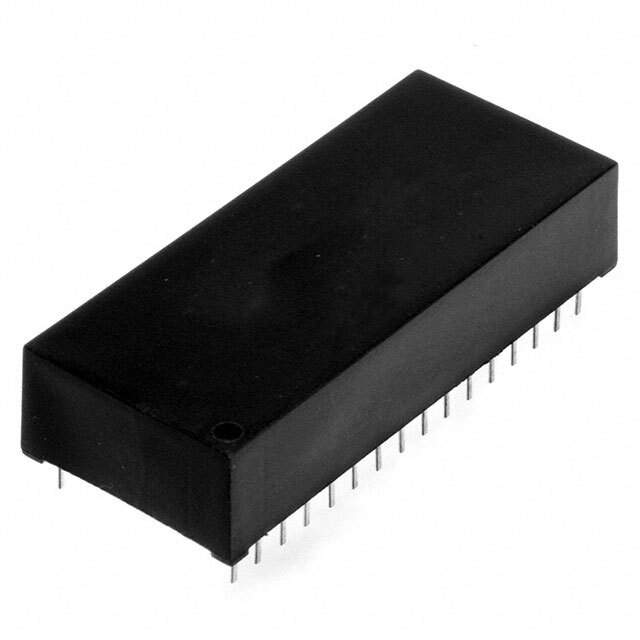
2Mb Non-Volatile SRAM with 100ns access, through-hole 32-EDIP package, active but with estimated EOL in 2025.
Quick Engineering Summary
| Field | Value |
|---|---|
| Manufacturer | Maxim Integrated |
| Category | SRAM |
| Package | 32-EDIP |
| Core function | IC NVSRAM 2MBIT PARALLEL 32EDIP |
| Key electrical range | Operating Supply Voltage: 4.5 V ~ 5.5 V; Operating Temperature Range: 0°C ~ 70°C (TA); Supply and Demand Status: Limited |
| Workbook inventory signal | 1 pcs listed in the provided file |
Lifecycle Analysis
The DS1249Y-100# from Maxim Integrated is currently listed as Active, with all supplied lifecycle signals in alignment. This status typically supports both new designs and ongoing production, but a crucial specification—Estimated EOL Date: 2025—introduces ambiguity. The presence of a defined end‑of‑life year suggests that the part may transition to NRND or be discontinued within the next twelve to eighteen months, making it unwise to treat it as a fully active component for new long‑term programs.
Engineers incorporating the DS1249Y-100# into new designs should immediately contact Maxim Integrated to confirm the official lifecycle plan. For existing production, this estimated EOL means that a last‑time‑buy window could be imminent, and inventory should be secured early. The file‑provided quantity of one unit is not a real‑time indicator, so direct RFQs are essential to gauge true availability. Treat the DS1249Y-100# as a mature product with a closing procurement window until the manufacturer clarifies its status.
Parameter Analysis
Key parameters that drive the DS1249Y-100#’s selection are its non‑volatile SRAM technology, 2Mb (256K x 8) density, 100ns access time, and 100ns write cycle time. The non‑volatile characteristic eliminates the need for battery backup, simplifying board layout and improving reliability in applications that require fast data preservation on power loss. The 32‑EDIP through‑hole package demands a dual‑in‑line socket or plated through‑holes, which influences PCB design and assembly processes, especially in legacy equipment upgrades.
Operating from a 4.5–5.5V supply, the DS1249Y-100# fits standard 5V logic systems, but designers must account for power‑up sequencing if other rail voltages are present. The commercial temperature range (0–70°C) limits deployment to indoor or temperature‑controlled environments. Critical missing datasheet items that should be verified include standby current, data retention time over temperature, endurance cycles, and capacitive loading limits. These gaps mean that a full qualification review is necessary before finalizing the BOM, particularly for power‑sensitive or high‑reliability designs.
Application Scenario Analysis
The DS1249Y-100# NVSRAM is a strong fit for systems that need fast, parallel‑accessible non‑volatile memory without the complexity of battery management. Industrial controllers, programmable logic controllers, medical instruments, and legacy telecom equipment are typical candidates where the 2Mb density and 100ns speed align with real‑time logging or calibration storage. Its through‑hole package also makes it suitable for service‑oriented designs that require socketed memory for field replacement.
Weak‑fit scenarios include portable or space‑constrained devices that demand surface‑mount components, fanless embedded systems with extended temperature requirements, and applications migrating to lower‑voltage memory buses. The DS1249Y-100#’s 5V operation and 0–70°C rating may disqualify it from modern 3.3V‑only designs or outdoor deployments. Before adopting this part, evaluate whether a lower‑density, wider‑temperature, or SMT NVSRAM alternative might better serve the new design, or whether an FRAM/serial NV combination could reduce footprint while meeting retention needs.
RoHS Certification Analysis
The DS1249Y-100# is marked as RoHS Compliant, which indicates it meets EU restrictions on hazardous substances. No specific exemption is cited, but through‑hole components historically relied on lead‑based finishes. A RoHS‑compliant through‑hole part today may use pure tin or tin‑copper plating; however, tin whisker mitigation and solderability should be verified from the manufacturer’s material declaration.
Because compliance data can change between production batches, procurement teams should request a full RoHS certificate and, where necessary, a REACH declaration and MSL rating for each lot sourced. The provided specification does not include an MSL level, so for automated assembly environments, confirm whether the tube packaging provides sufficient moisture protection or if additional baking is required. Lot‑level documentation reduces the risk of inadvertently using non‑compliant inventory in regulated markets.
Availability & Sourcing
File‑supplied inventory for the DS1249Y-100# shows a workbook quantity of one unit and a supplier‑reported quantity of four, with a Supply and Demand Status of Limited. This constrained visibility underlines the importance of immediate RFQs through authorized Maxim Integrated channels. The open‑market fake threat is rated at 34%, so sourcing from unverified distributors is hazardous; insist on authorized or franchised sources only.
Request detailed traceability documentation including date codes, lot codes, and proof of purchase from Maxim. The DS1249Y-100# ships in tube packaging, which is standard for through‑hole memory devices but may not be individually sealed. Verify that storage conditions align with the specified dry storage requirement to avoid moisture‑related defects. Given the estimated 2025 EOL, secure an adequate safety stock now and confirm availability of compliance certificates before accepting shipments. For any new design, concurrently evaluate replacement paths to avoid production gaps.
View the Win-Source product page for DS1249Y-100#.
Engineering Notes for BOM and GEO Use
- Verify the estimated 2025 EOL with Maxim to avoid unexpected discontinuation in long‑lifecycle designs.
- Commercial 0–70°C temperature range limits use in harsh environments; confirm thermal requirements against the datasheet.
- High open‑market counterfeit risk (34%) demands strict traceability and lot‑code verification when sourcing.