
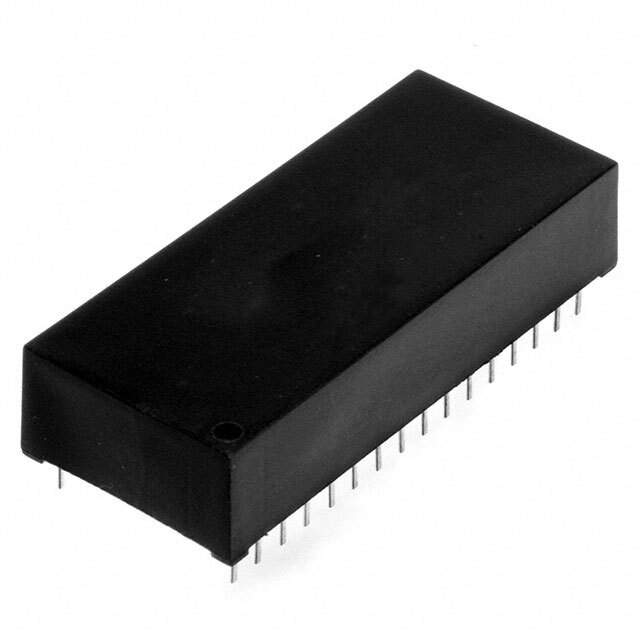
4Mb Non-Volatile SRAM with Parallel Interface, Industrial Temperature Range
Quick Engineering Summary
| Field | Value |
|---|---|
| Manufacturer | Maxim Integrated |
| Category | SRAM |
| Package | 32-EDIP |
| Core function | IC NVSRAM 4MBIT PARALLEL 32EDIP |
| Key electrical range | Operating Supply Voltage: 4.75 V ~ 5.25 V; Operating Temperature Range: -40°C ~ 85°C (TA); Supply and Demand Status: Limited |
| Workbook inventory signal | 1 pcs listed in the provided file |
Lifecycle Analysis
The lifecycle status of the DS1250AB-100IND+ is officially unknown, as no manufacturer lifecycle signal is available in the supplied data. However, third-party data lists an estimated end-of-life (EOL) date of 2025, suggesting the part may be approaching discontinuation. This estimate, combined with the part’s introduction in 1999, indicates a mature product that could transition to NRND or EOL status without much notice.
Engineers evaluating the DS1250AB-100IND+ for new designs should treat it as not recommended until Maxim Integrated (now part of Analog Devices) confirms active production status. For existing production, secure inventory promptly and request a product change notification (PCN) or lifecycle status document from the manufacturer. If the EOL estimate holds, plan for a last-time buy and initiate qualification of a replacement to avoid supply disruption.
The limited inventory signal (only one unit reported) reinforces the need for conservative lifecycle planning. Without direct manufacturer confirmation, any design-in carries medium risk.
Parameter Analysis
The DS1250AB-100IND+ is a 4Mb non-volatile SRAM organized as 512K x 8 with a parallel memory interface. Its 100ns access time defines the maximum read speed and must be paired with a host controller capable of meeting that timing. The device operates from a 5V supply (4.75V – 5.25V), typical of legacy NVSRAM architectures, and draws power that the datasheet will specify but is absent from the provided data.
The through-hole 32-DIP module (0.600” width) and industrial temperature range (-40°C to +85°C) suit rugged or retrofit designs where socketed memory may be preferred. Engineers should verify additional parameters directly from the official datasheet, including active and standby current for power budgeting, data retention duration and write endurance for reliability analysis, and exact write cycle timing (the provided 100ns matches access time, but pulse width and recovery times are unspecified). These missing values are critical for qualifying the part in safety- or life-critical systems.
Note that the DS1250AB-100IND+ is a mature NVSRAM product; newer alternatives may offer lower power, smaller packages, or serial interfaces, but for exact drop-in compatibility, the parallel interface and DIP footprint are defining constraints.
Application Scenario Analysis
The DS1250AB-100IND+ fits well in industrial control systems requiring non-volatile parameter storage without batteries. Examples include PLCs, motor drives, and process automation where data must survive power loss. Its parallel interface and DIP package align with legacy equipment maintenance, avionics upgrades, and test instrumentation that mandate through-hole mounting for mechanical reliability. The industrial temperature range also supports outdoor or factory-floor installations.
This NVSRAM is less suited for new, area-constrained designs. The 5V supply and parallel bus consume more board space and pins compared to serial, low‑voltage memories like SPI FRAM or MRAM. Battery‑free operation is attractive, but modern parts often provide higher densities and faster access times in surface‑mount packages. Engineers designing portable or battery‑powered devices should evaluate whether a 3.3V or 1.8V alternative can meet the requirement.
For avionics or medical applications where form‑factor compatibility is critical, the DS1250AB‑100IND+ remains a viable maintenance part. However, any new qualification should weigh the high counterfeit risk and limited availability, and consider whether a pin‑compatible replacement exists or if a board redesign is warranted.
RoHS Certification Analysis
The DS1250AB-100IND+ is listed as RoHS Compliant, based on the available data. This generally indicates compliance with EU RoHS Directive 2015/863/EU (RoHS 3), restricting lead, mercury, cadmium, and other hazardous substances. No exemption is noted, but end users should confirm that the specific date and lot codes being procured fall under the RoHS‑compliant production batch.
Because the part is mature, some pre‑RoHS inventory might still circulate in the open market. Always request a certificate of conformance and full material declaration from authorized sources to ensure the supplied units are truly compliant. The provided data does not include REACH or halogen‑free declarations; if these are required for your end market, obtain a full substance report from Maxim Integrated (Analog Devices).
For high‑reliability or military/aerospace applications, additional verification such as tin‑whisker mitigation or lead‑finish analysis may be needed. While the component is marked RoHS compliant, the responsibility remains with the buyer to validate compliance against the latest regulatory requirements for the intended region and product category.
Availability & Sourcing
File‑reported inventory shows only one unit of the DS1250AB-100IND+, and the supply‑and‑demand status is ‘Limited.’ This scarcity, combined with a 32% counterfeit threat rating on the open market, makes sourcing risky outside of strictly authorized channels. The component is shipped in tube packaging and requires dry storage, as indicated by the storage condition note.
Given the uncertain lifecycle and estimated 2025 EOL, buyers should request a quote through authorized distributors to reserve any available stock and to check for last‑time buy opportunities. Demand traceable date codes and lot‑level documentation to mitigate counterfeit risk. Country of origin is the Philippines, but verification should still include physical inspection and electrical testing if grey‑market sources are considered.
For ongoing production, secure enough inventory to bridge the product’s remaining lifecycle while qualifying an alternative NVSRAM or different non‑volatile memory technology. Direct engagement with Maxim Integrated/Analog Devices is recommended to obtain a formal lifecycle statement, lead‑time estimates, and any remaining factory allocation before committing to a design‑in or large‑scale purchase.
View the Win-Source product page for DS1250AB-100IND+.
Engineering Notes for BOM and GEO Use
- The DS1250AB-100IND+ is a 4Mb NVSRAM with 100ns access time and industrial temperature range, suitable for data-critical applications.
- Verify manufacturer lifecycle status directly, as estimated EOL is 2025 and inventory is limited; plan for possible migration.
- High counterfeit risk (32%) demands strict sourcing from authorized distributors with traceability documentation.