
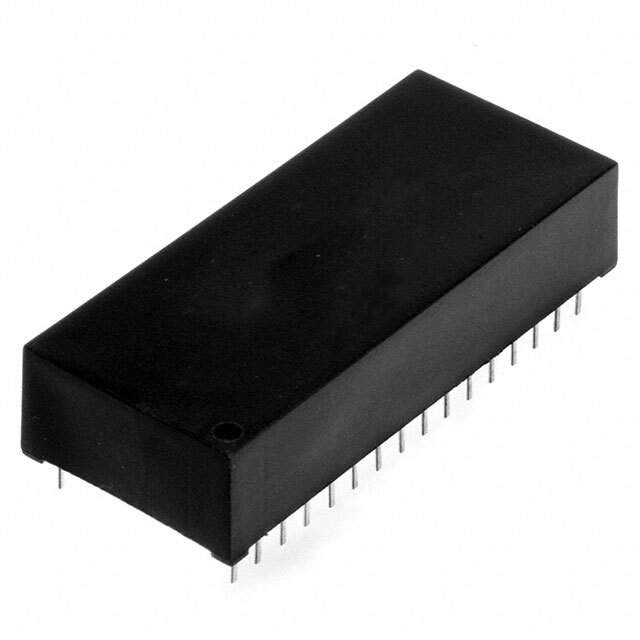
End-of-Life 4Mb NVSRAM from Maxim Integrated – Key Parameters, Lifecycle, and Procurement Guidance
Quick Engineering Summary
| Field | Value |
|---|---|
| Manufacturer | Maxim Integrated |
| Category | SRAM |
| Package | 32-EDIP |
| Core function | IC NVSRAM 4MBIT PARALLEL 32EDIP |
| Key electrical range | Operating Supply Voltage: 3 V ~ 3.6 V; Operating Temperature Range: 0°C ~ 70°C (TA); Supply and Demand Status: Limited |
| Workbook inventory signal | 1 pcs listed in the provided file |
Lifecycle Analysis
The DS1250W-150+ has been placed in End-of-Life (EOL) status by Maxim Integrated, with an estimated discontinuation date in 2025. This means the part is no longer recommended for new designs, and ongoing production should transition to an alternative solution. All available lifecycle indicators, including the official status and Excel‑based parameter, consistently point to EOL.
For sustaining production, immediate action is required. The file‑provided inventory shows only a single unit, which underscores the urgent need to secure remaining stock through authorized channels. Buyers must not rely on this workbook quantity as a real‑time guarantee. Direct manufacturer revalidation of EOL plans and last‑time buy windows is essential, especially given the part’s high counterfeit risk (56 pct.) in the open market.
Parameter Analysis
Key specifications for DS1250W-150+ include a 150 ns access time, 4Mb (512K x 8) non‑volatile SRAM technology, parallel interface, and an operating voltage of 3 V to 3.6 V. The 150 ns speed grade defines the read and write cycle times, directly impacting data throughput and timing margins in asynchronous memory controllers. The NVSRAM architecture integrates a battery‑backed SRAM cell, ensuring data retention without external power, which is critical for applications requiring instant‑on state preservation.
The commercial temperature range (0°C to 70°C) and through‑hole 32‑EDIP package dictate the mechanical and thermal envelope. Designers must consider the socket footprint and clearance for the tall module. Important datasheet parameters not explicitly listed in the source data include internal battery type and longevity, data retention specification (typically 10+ years), and write endurance. Verify these directly from the manufacturer’s datasheet to fully qualify the part for long‑life equipment.
Application Scenario Analysis
The DS1250W-150+ is a strong fit for legacy embedded systems that demand non‑volatile, SRAM‑speed read/write operations. Typical applications include industrial controllers, telecommunication line cards, medical diagnostic instruments, and data logging equipment where battery‑backed memory preserves critical parameters during power loss. Its parallel interface and DIP form factor are well‑suited for through‑hole PCBs in serviceable, long‑life products.
Conversely, the part is a weak fit for modern, space‑constrained designs dominated by surface‑mount technology, or for applications requiring automotive or extended industrial temperature ranges (–40°C to +85°C). The EOL status and dwindling supply also make it unsuitable for new production programs. High‑density memory needs (beyond 4Mb) would be better served by newer non‑volatile memory technologies such as FRAM or battery‑free MRAM.
RoHS Certification Analysis
The DS1250W-150+ is marked as RoHS Compliant according to the supplier data. However, the specific directive version and any applied exemptions are not detailed. Through‑hole DIP modules with internal batteries often rely on exemptions for lead in battery terminals or high‑temperature solder, which are permissible under EU RoHS but require documentation.
For procurement, request a full material declaration or certificate of compliance covering the exact date/lot code. This is especially important because family‑level compliance assumptions can mask changes over time. Additionally, REACH status is not provided; if necessary, obtain a REACH statement separately to ensure no substances of very high concern (SVHC) exceed threshold limits.
Availability & Sourcing
Sourcing the DS1250W-150+ is challenging due to its EOL designation and limited supply. The workbook data indicates a quantity of one piece, but this should be treated as a file snapshot, not a live inventory commitment. Prospective buyers must request a quote to obtain current stock, pricing, and lead time from authorized Maxim Integrated distributors or verified independent sources.
Given the 56% fake threat, rigorous anti‑counterfeit measures are mandatory. Insist on full traceability documentation, including manufacturer certificates of conformance, date/lot code verification, and photographs of the actual parts. The storage condition (dry cabinet and humidity‑protected packaging) should be confirmed to avoid moisture‑related reliability issues. For EOL parts, secure inventory quickly while simultaneously evaluating migration to an active, pin‑compatible replacement (if available) or a functional equivalent.
View the Win-Source product page for DS1250W-150+.
Engineering Notes for BOM and GEO Use
- Verify remaining factory stock directly with Maxim Integrated or authorized distributors before committing to production.
- With a 56% fake threat in the open market, insist on full traceability and date/lot code verification from any non-franchised source.
- The part is EOL with an estimated discontinuation date of 2025; plan for last-time buy and migration to an alternative NVSRAM or battery-backed SRAM solution where possible.