
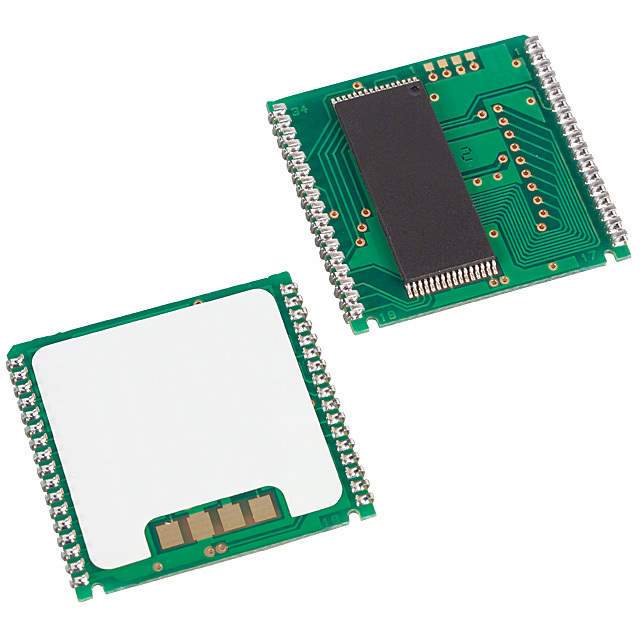
Maxim Integrated 4Mb Non-Volatile SRAM with 100ns Access Time
Quick Engineering Summary
| Field | Value |
|---|---|
| Manufacturer | Maxim Integrated |
| Category | SRAM |
| Package | 34-PowerCap Module |
| Core function | IC NVSRAM 4MBIT PAR 34PWRCAP |
| Key electrical range | Operating Supply Voltage: 4.5 V ~ 5.5 V; Operating Temperature Range: 0°C ~ 70°C (TA); Supply and Demand Status: Limited |
| Workbook inventory signal | 1 pcs listed in the provided file |
Lifecycle Analysis
The DS1250YP-100+ lifecycle status is officially unknown in the supplied data, but there is a conflicting indicator: the Estimated EOL Date field lists it as Obsolete/End of life. This contradiction imposes a conservative procurement posture. For new designs, treat this part as NRND or discontinued and avoid commitment without manufacturer confirmation.
Engineers should contact Maxim Integrated (now Analog Devices) to clarify the exact product status. Sustaining production may still be possible if authorized stock exists, but lead times and last-time-buy conditions may apply. No PCN or EOL notice was provided, so all decisions should be based on direct manufacturer feedback.
Given the 1999 introduction date and the limited supply signal in the data, this component is best suited for legacy maintenance, repair, or one-time builds where no alternative has been qualified. Any continuity planning should include a migration path.
Parameter Analysis
The DS1250YP-100+ key specifications from the provided data include a 4Mb (512K x 8) non-volatile SRAM organization, 100ns access time, parallel memory interface, and a 5V nominal supply (4.5V to 5.5V). The commercial temperature range is 0°C to 70°C. The PowerCap module package (34-pin) integrates a battery and SRAM, enabling non-volatile operation.
The 100ns access time defines the speed grade; system timing margins must account for this parameter along with the write cycle time, also listed as 100ns. The 5V supply requirement is typical for legacy NVSRAMs. Engineers must verify that the board’s voltage rail and decoupling meet the device’s needs, especially when retrofitting.
Missing from the provided data are standby and active current consumption, data retention specifications, and detailed AC timing characteristics beyond access and write cycle. Additionally, the battery condition and replacement procedure for the PowerCap module are critical for field reliability. These must be confirmed from the official datasheet before design-in.
Application Scenario Analysis
The DS1250YP-100+ is designed for applications requiring fast, non-volatile storage without write-cycle endurance limits. Typical strong-fit scenarios include industrial control systems, point-of-sale terminals, data loggers, and legacy telecom infrastructure where a byte-accessible NVRAM is used for configuration tables or transaction buffers that must survive power loss instantly.
This device is a strong candidate for sustained production of existing equipment that originally specified this part, especially where firmware or software expects this exact memory map and access pattern. Its parallel interface suits older single-board computers and microcontrollers.
For new designs, the DS1250YP-100+ is a weak fit. Modern alternatives such as serial FRAM or battery-backed SRAM in different packages offer better density, lower power, and longer data retention. The availability uncertainty and counterfeit risk further discourage new adoption. However, in a pinch, it can serve as a drop-in replacement for identical-footprint PowerCap modules if authentic stock is found.
RoHS Certification Analysis
The DS1250YP-100+ is listed as RoHS Compliant in the supplied data. This implies conformity with the European Union’s Restriction of Hazardous Substances directive, likely RoHS 3 (EU 2015/863) given the absence of earlier version notes. No specific exemptions are mentioned.
Since the part is older and potentially discontinued, the RoHS compliance may be based on a family-level or manufacturing lot qualification rather than a current certification. Buyers should request a supplier’s declaration of conformity or a full material declaration for the specific date/lot code being purchased, particularly because the PowerCap module contains a battery, which may have its own regulatory status.
RoHS status alone does not cover REACH, halogen-free, or MSL requirements. REACH compliance was not reported. When sourcing, confirm all applicable environmental directives for your market. If RoHS is critical, a lot-test report is advised to guard against non-compliant counterfeits.
Availability & Sourcing
The DS1250YP-100+ shows limited availability: the provided data indicates a file quantity of 1 unit, with supply and demand status listed as Limited. The part is packaged in tubes and requires dry storage with humidity protection, reflecting the PowerCap module’s sensitivity. The high counterfeit threat level (55%) demands rigorous authentication.
Given the lifecycle uncertainty and EOL indications, secure inventory now if this part is needed for production or repairs. Verify the part’s date code and lot code; older batteries may have degraded, impacting performance. Request a quote to confirm real-time stock and obtain traceability documentation.
Sourcing actions depend on lifecycle: if active, a standard RFQ with compliance checks suffices; if NRND or discontinued, evaluate last-time-buy options and consider inventory from authorized distributors only. For this part, we recommend contacting Maxim Integrated/Analog Devices for official lifecycle status, then proceed with a qualified supplier who can provide lot traceability and RoHS certificates.
View the Win-Source product page for DS1250YP-100+.
Engineering Notes for BOM and GEO Use
- The DS1250YP-100+ is a 4Mb NVSRAM with 100ns access time and parallel interface. Verify datasheet timings and power requirements for proper integration.
- Given the 1999 introduction and an Obsolescence/EOL indicator, treat this part as potentially discontinued. Secure authenticated stock and plan for migration.
- High counterfeit threat (55%) demands strict supply chain controls: request lot-specific traceability and RoHS compliance documentation.