
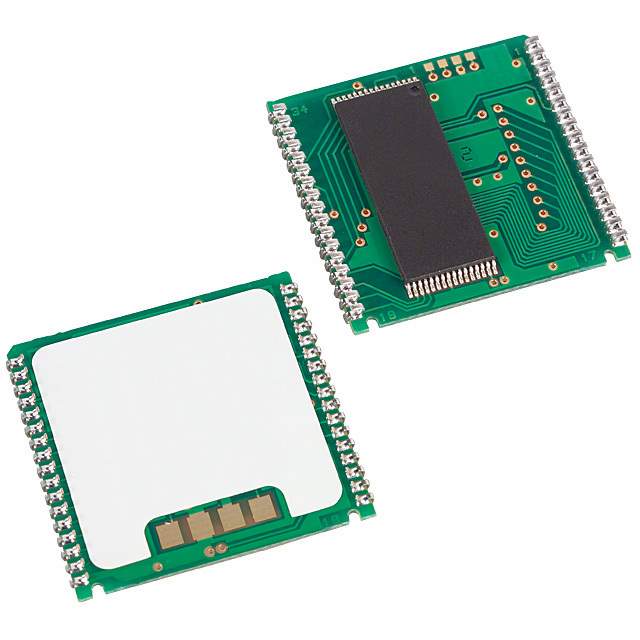
4Mb Non-Volatile SRAM, Parallel Interface, 34-PowerCap Module
Quick Engineering Summary
| Field | Value |
|---|---|
| Manufacturer | Maxim Integrated |
| Category | Memory |
| Package | Tube |
| Core function | IC NVSRAM 4MBIT PAR 34PWRCAP |
| Key electrical range | Temperature Range - Operating: 0°C ~ 70°C (TA); Voltage - Supply: 4.5V ~ 5.5V |
| Workbook inventory signal | 1 pcs listed in the provided file |
Lifecycle Analysis
The DS1250YP-100 is officially discontinued by Maxim Integrated (now Analog Devices). All available lifecycle signals confirm this status without conflict. For engineering teams, this carries immediate implications: the part must not be considered for new designs, and any existing bill of materials relying on it requires urgent review. The risk level is high because once remaining stock depletes, there is no guaranteed source of supply. Buyers should approach all offers with skepticism, as the open market shows a 70% counterfeit threat for this part number. Authentic devices may exist in broker inventories, but these must be verified through rigorous incoming inspection, including x-ray and electrical testing.
For production programs still dependent on the DS1250YP-100, the recommended path is to secure as much verified inventory as possible while simultaneously evaluating pin-compatible replacements or functional equivalents from other NVSRAM families. Documentation from Maxim should be checked for any last-time-buy notifications or sunset advisories. The provided workbook shows a quantity of one unit, but this is a file‑based snapshot and not a real‑time guarantee. Engineers should never rely on a single unit for production planning; instead, initiate a request for quote and request detailed lot codes, date codes, and proof of provenance before any purchase.
Parameter Analysis
The most critical parameters for the DS1250YP-100 begin with its memory configuration: 4Mb organized as 512K x 8 bits. This depth and width determine how it maps into a memory controller’s address space and whether it can replace other NVSRAMs without board changes. The 100 ns access time sets the speed grade—suitable for many embedded processors of its era but too slow for modern high‑speed buses without wait states. Designers must verify that the system’s timing budget can accommodate this latency. The parallel interface simplifies integration but requires a wide address/data bus, which can be a constraint in space‑limited designs.
Supply voltage ranges from 4.5V to 5.5V, a typical 5V‑only operation. This rules out direct use in 3.3V or lower‑voltage systems unless level shifters are added. The commercial temperature range (0°C to 70°C) limits deployment to benign environments; industrial or extended‑grade alternatives are not available under this part number. The 34‑PowerCap module includes an integrated battery and SRAM die, so power consumption during write cycles and standby must be checked against the power budget. Missing from the supplied data are critical longevity parameters: data retention time (typically 10 years for NVSRAM), write endurance, and battery shelf life. These must be obtained from the original Maxim datasheet to assess suitability for long‑life products. The package’s MSL rating of 3 demands strict moisture controls during assembly; failure to bake components before reflow can lead to popcorn cracking.
Application Scenario Analysis
The DS1250YP-100 excels in applications that require instant non‑volatility without the erase‑write overhead of flash memory. Classic strong‑fit scenarios include data logging in industrial controllers, RAID storage systems where configuration tables must survive power loss, and telecom line cards that need fast backup of call‑detail records. Its parallel interface and 100 ns access time suit legacy 8‑bit or 16‑bit microcontroller buses, particularly in equipment designed in the early 2000s. Medical devices that demand deterministic write‑cycle timing also fall into the strong‑fit category.
Weak‑fit scenarios are straightforward: any new design that can use a serial NVSRAM or a non‑battery‑backed ferroelectric RAM (FRAM) will likely find the DS1250YP-100 too bulky, power‑hungry, and obsolete. High‑reliability applications requiring extended temperature ranges (–40°C to +85°C) are not supported without a different grade. Similarly, modern ARM‑based systems with wide high‑speed buses would incur excessive wait states. For battery‑backed SRAM replacements, consider whether a capacitor‑backed RTC with NVSRAM or a managed NAND solution could meet the functional requirements while offering a more secure supply chain.
RoHS Certification Analysis
According to the supplied compliance data, the DS1250YP-100 holds a RoHS Compliant status. This suggests that the part meets the European Union’s Restriction of Hazardous Substances directive, limiting substances such as lead, mercury, and cadmium. Given the part’s discontinuation, it is crucial to verify that any stock being procured was manufactured under a valid RoHS program and that the compliance has not lapsed due to changes in exemption rules. The absence of an explicit RoHS standard version (e.g., RoHS 3) means buyers should request a certificate stating conformity to EU Directive 2015/863, which covers the latest amendments.
REACH status is noted as “Unaffected,” which is a separate regulation and does not substitute for RoHS. It indicates that the part does not contain substances of very high concern (SVHC) in quantities above the threshold. No specific exemptions are listed for the DS1250YP-100; however, the PowerCap module’s internal battery may contain materials that could fall under environmental regulations. Procurement teams should obtain a Full Material Declaration (FMD) from the distributor to confirm both RoHS and REACH status at the lot level. The MSL Level 3 classification is an additional handling requirement rather than a compliance issue, but it reinforces the need for careful storage and assembly documentation.
Availability & Sourcing
Sourcing the discontinued DS1250YP-100 demands extreme caution. The open‑market counterfeit threat is reported at 70%, meaning a significant portion of offers may be non‑conforming, remarked, or used. Buyers must work only with trusted distributors that can provide a full chain of custody, original manufacturer’s COC, and test reports. The file‑provided workbook lists one unit in stock, but this is a static snapshot and does not guarantee real‑time availability. For any quantity required in production, request a quote and ask for date codes, lot codes, and packaging photographs before payment.
The part ships in tubes with a standard package quantity of 40. For small‑volume purchases, verify that the tube has not been opened or repackaged in a way that could compromise moisture sensitivity. Lifecycle verification is non‑negotiable: confirm with Maxim Integrated that the part was indeed discontinued and that no authorized inventory remains. If your application cannot tolerate the counterfeit risk, consider accelerating migration to a functional replacement. Although this guide does not provide specific substitute part numbers, it is advisable to search for other 5V NVSRAM modules with similar capacity and parallel interface—ideally from manufacturers with active production. When evaluating alternatives, pay close attention to access time, package footprint, and battery management features. Always request a sample and qualify it electrically in your system before finalizing a design change. The final CTA for the DS1250YP-100 is to secure only fully verified inventory and plan for an immediate transition to a supported solution.
View the Win-Source product page for DS1250YP-100.
Engineering Notes for BOM and GEO Use
- Verify any remaining DS1250YP-100 stock for authenticity due to 70% counterfeit threat on the open market.
- Adhere to MSL Level 3 handling: bake before reflow if floor life is exceeded to prevent moisture damage.
- Obtain manufacturer data sheet to confirm data retention, battery life, and write endurance before committing to design.