
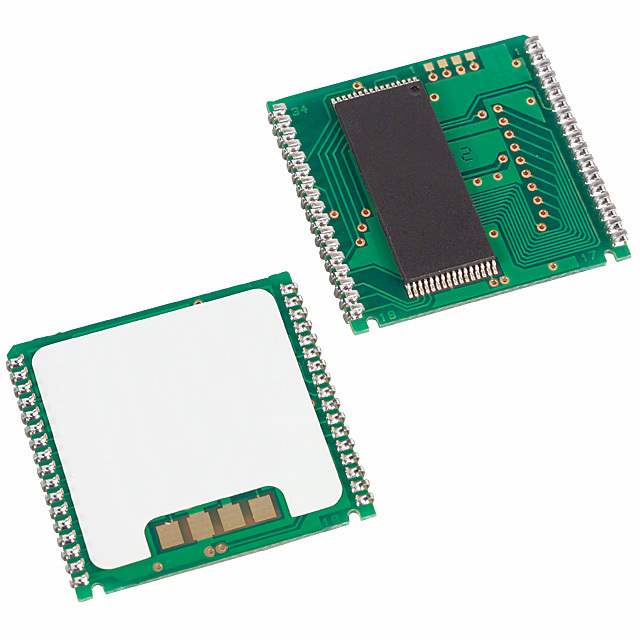
4Mb NVSRAM, 70ns access, 34-PowerCap, 5V, 0-70°C. Verify lifecycle and compliance for sourcing.
Quick Engineering Summary
| Field | Value |
|---|---|
| Manufacturer | Maxim Integrated |
| Category | SRAM |
| Package | 34-PowerCap Module |
| Core function | IC NVSRAM 4MBIT PAR 34PWRCAP |
| Key electrical range | Supply and Demand Status: Limited; Supply Voltage - Operating: 4.5 V to 5.5 V; Temperature Range - Operating: 0°C to 70°C (TA) |
| Workbook inventory signal | 38 pcs listed in the provided file |
Lifecycle Analysis
The lifecycle status of the DS1250YP-70+ from Maxim Integrated is currently unknown based on available supply chain data. A captured specification field lists “Active,” but the official monitoring signal is not confirmed, creating conflicting indicators. Engineers and buyers should treat this part with caution for new designs, as an unverified lifecycle could mask an impending discontinuation or last-time buy notice. For high-reliability or long-lifecycle programs, direct confirmation from Analog Devices (which acquired Maxim Integrated) is essential.
The medium risk level reflects the uncertainty. Without a manufacturer-issued PCN or lifecycle roadmap, committing this NVSRAM to new production carries potential supply disruption. If the part is indeed active, procurement can proceed with standard lead times; if NRND or EOL, alternative qualification or last-time buys may be needed. The PowerCap module’s battery also implies a limited shelf life, which interacts with lifecycle status—inventory from uncertain channels may have aged batteries.
We recommend requesting a formal lifecycle statement and product change notification subscription from the manufacturer. Do not rely solely on distributor stock levels or third-party status fields. The part’s popularity is medium and supply is already noted as limited, reinforcing the need for proactive lifecycle verification before design-in.
Parameter Analysis
The DS1250YP-70+ integrates a 4Mb NVSRAM organized as 512K x 8 bits with a 70 ns access time. This performance is typical for parallel asynchronous SRAM interfaces, allowing direct connection to microcontrollers or processors with a 5V bus. The 34-PowerCap module encapsulates the SRAM die and a lithium coin cell, enabling data retention for years after power-off without external backup. Operating voltage range of 4.5 V to 5.5 V aligns with legacy 5V logic systems, but designers should verify that modern 3.3V systems can tolerate or level-shift.
Key lacking parameters include standby and active current consumption, write cycle timing (tWC), and data retention duration at temperature. These directly affect power budgeting and battery life calculations. The integrated battery’s capacity is not specified, making it necessary to obtain the full datasheet for reliable lifetime predictions. Also, the commercial temperature range of 0°C to 70°C limits deployment in extended or industrial environments; for wider ranges, consider the DS1250Y-70IND variant if available.
Engineers should also note that the PowerCap module is a surface-mount component that requires careful soldering due to its battery. Reflow profiles must not exceed battery temperature limits, typically below 85°C peak. The fake threat level of 65% in the open market underscores the importance of verifying parametric authenticity through known-good samples or trusted test houses before board integration.
Application Scenario Analysis
The DS1250YP-70+ is well suited for embedded systems that need fast, non-volatile data storage without erase-cycle wear. Classic applications include industrial controllers storing configuration parameters, point-of-sale terminals logging transactions, gaming machines holding critical state, and data acquisition systems buffering samples during power loss. Its parallel interface and 70 ns access time fit legacy microprocessor sockets originally designed for SRAM, allowing drop-in non-volatile upgrades.
Less suitable scenarios involve low-power or battery-operated devices where the 5V supply and PowerCap’s standby current would be prohibitive. Likewise, high-density applications needing megabytes of memory may be better served by serial FRAM or newer NVM technologies. The commercial temperature range precludes automotive under-hood or outdoor telecom use without additional environmental protection. Engineers evaluating this part should check whether the system’s power-down sequence provides enough warning to complete a write cycle before Vcc drops.
Given the integrated battery, applications that require frequent write cycles (like RAM disks) will gradually deplete the coin cell, though the NVSRAM technology itself does not wear out from write cycles as flash does. System designers must plan for field replacement of the entire PowerCap module or accept a maintenance event after 10+ years of data retention life.
RoHS Certification Analysis
The DS1250YP-70+ is listed as RoHS Compliant according to the provided data. Since it is an older Maxim Integrated product now managed by Analog Devices, compliance likely falls under the EU RoHS Directive (2011/65/EU) and its amendments. However, the absence of a specific RoHS certificate number or REACH statement means buyers should verify compliance using the manufacturer’s latest documentation or query Analog Devices’ product compliance database.
The 34-PowerCap module contains a lithium metal battery, which may have RoHS exemptions related to lead in battery solders or other substances. Exemption 7(c)-I, for example, permits lead in batteries for certain applications. Without access to the full Materials Declaration, it is prudent to assume that the module carries one or more exemptions. Lot-level compliance verification is recommended, especially for products shipped to EU markets, to avoid customs delays.
Environmental compliance is complicated by the battery’s end-of-life disposal regulations (WEEE). While the part itself is marketed as RoHS Compliant, the system integrator retains responsibility for overall product compliance. Contact Analog Devices for detailed substance data and battery disposal guidance before finalizing procurement.
Availability & Sourcing
The DS1250YP-70+ is available through specialized distributors, with a workbook-reported stock quantity of 38 units. This figure is not real-time and may reflect a snapshot; actual availability could be lower due to high demand or supply constraints. The supply and demand status is marked as Limited, and market popularity is medium, suggesting that the part can be procured but may require lead time management.
A significant concern is the 65% fake threat estimate in the open market, indicating a high probability of counterfeit or substandard parts when sourcing from unauthorized channels. Buyers should strictly use Analog Devices’ franchised distribution network or request traceability documentation, including date and lot codes, from any alternative source. The PowerCap module’s internal battery has a finite shelf life, so verify the manufacturing date to ensure adequate remaining retention life.
Given the unknown lifecycle status, we recommend issuing a request for quote (RFQ) to multiple authorized distributors while simultaneously seeking a lifecycle clarification from the manufacturer. If the part is found to be NRND or EOL, consider negotiating a last-time buy or initiating alternate part qualification immediately. For prototype or low-volume builds, the small inventory pool may suffice, but production volumes should not be committed without confirmed supply continuity.
View the Win-Source product page for DS1250YP-70+.
Engineering Notes for BOM and GEO Use
- Verify lifecycle status directly with Maxim Integrated (now Analog Devices) before using in new designs due to conflicting signals.
- The NVSRAM’s internal battery requires periodic replacement; plan for end-product serviceability in systems with long lifetimes.
- High counterfeit risk (65%) in open market necessitates strict supply chain controls and authentication from authorized sources.