
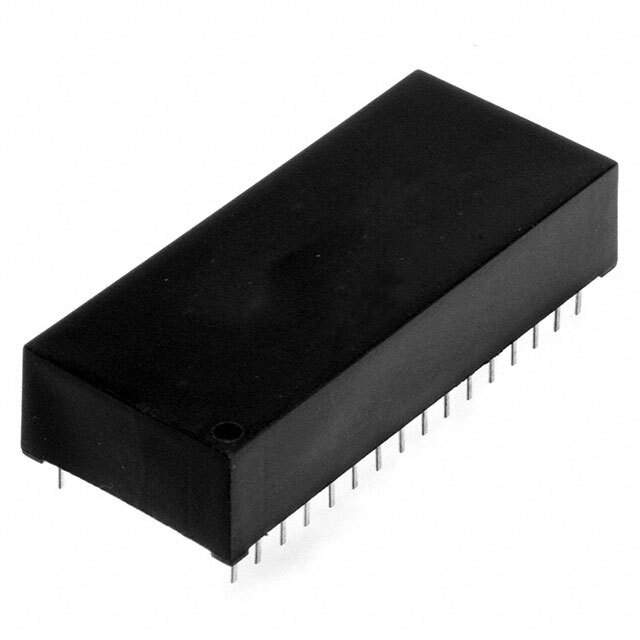
Maxim Integrated DS1251Y-70+ Phantom Time Chip RTC with 512KB NVSRAM, parallel interface, through-hole 32-EDIP. Lifecycle: Active with estimated EOL 2024 – verify before design-in.
Quick Engineering Summary
| Field | Value |
|---|---|
| Manufacturer | Maxim Integrated |
| Category | Clock/Timing - Real Time Clocks |
| Package | 32-EDIP |
| Core function | IC RTC PHANTOM CHIP PAR 32EDIP |
| Key electrical range | Current - Timekeeping (Maximum): 10mA @ 5V; Operating Supply Voltage: 4.5 V ~ 5.5 V; Operating Temperature Range: 0°C ~ 70°C; Supply and Demand Status: Limited |
| Workbook inventory signal | 1 pcs listed in the provided file |
Lifecycle Analysis
The DS1251Y-70+ is officially listed as Active by Maxim Integrated. However, an estimated EOL date of 2024 appears in supplier data, suggesting that the part may be approaching or have reached end-of-life. This discrepancy requires careful attention.
For new designs, it is prudent to contact the manufacturer or authorized distributors to confirm the production status and obtain a last-time-buy notice if applicable. Without a clear commitment, using this part in long-life products carries moderate risk. For sustaining production, securing sufficient inventory now is advisable to avoid future shortages.
The supplied lifecycle signals show no conflict, but the EOL date indicator cannot be ignored. Procurement teams should treat this as an NRND-like situation until verified. File-provided inventory shows limited quantity, but that does not guarantee market availability. Overall, the lifecycle demands conservative sourcing steps and possibly migration planning.
Parameter Analysis
The DS1251Y-70+ is a parallel-interface Phantom Time Chip with integrated 512KB NVSRAM. Key specifications include an operating voltage of 4.5 V to 5.5 V and a maximum timekeeping current of 10 mA at 5 V. The date format is YY-MM-DD-dd, with leap year compensation. The through-hole 32-EDIP package requires careful PCB layout, especially for thermal management and signal integrity. The commercial temperature range of 0°C to 70°C limits its use to indoor environments.
Missing from the dataset are critical timing parameters: clock accuracy, backup supply voltage and current, power-fail deselect thresholds, and write cycle times. These must be verified from the official datasheet before finalizing a design. For instance, the absence of a battery-backed supply spec means designers must assess supercapacitor or battery requirements for non-volatile operation. Also, the 512KB NVSRAM size is substantial, but memory access timing and endurance ratings are not provided. Engineers should ensure that the parallel interface meets the host controller’s timing margins.
Application Scenario Analysis
This RTC is well-suited for embedded systems that require timekeeping and non-volatile data storage, such as industrial controllers, POS terminals, and legacy single-board computers. Its parallel interface and DIP packaging make it a direct fit for through-hole designs where ease of replacement or prototyping is desirable. The 512KB NVSRAM allows storage of configuration data, logs, or critical state information without external memory.
However, the part is less ideal for battery-powered devices due to the 10 mA active current and lack of low-power backup modes in the given data. Also, modern designs often favor smaller serial-interface RTCs with lower pin counts and surface-mount packages. The limited temperature range excludes outdoor or automotive applications. If the design can accept a 32-pin DIP footprint and 5V rail, the DS1251Y-70+ provides a robust, time-proven solution, but designers should confirm long-term availability before committing.
RoHS Certification Analysis
The DS1251Y-70+ is labeled as RoHS Compliant. Typically, this indicates compliance with EU RoHS Directive 2011/65/EU as amended by 2015/863, commonly known as RoHS 3. No exemptions are noted in the supplied data.
Because the part is a through-hole module with an internal battery or NVSRAM, it may involve specific exemptions for lead in high-reliability applications or for internal connections; however, the absence of listed exemptions suggests standard compliance. Buyers should request a full material declaration or certificate of compliance for the specific date/lot code to ensure that the part meets current substance restrictions. Compliance status can vary between production batches, especially for older component families like the DS1251 series. It is also prudent to verify REACH and halogen-free requirements if needed, though they are not provided here. For procurement, incorporating RoHS compliance checks into incoming inspection procedures is recommended.
Availability & Sourcing
The DS1251Y-70+ is listed as Limited supply per supplier data, with a file-provided stock quantity of 1 unit (not real-time). The open market carries a reported fake threat level of 35 percent, so buyers must source from authorized distributors to avoid counterfeit risks.
Given the Active lifecycle but estimated EOL date 2024, it is critical to request a quote and verify current production status directly with Maxim Integrated or an authorized franchise. Ensure that any purchase includes full traceability: date code, lot code, and manufacturer certificate of authenticity. Packaging is standard tube, and the part should be stored in dry, humidity-protected conditions.
For new designs, evaluate migration alternatives before committing, and for existing production, consider securing a safety stock to mitigate future shortages. Request RoHS and REACH compliance documents for the specific lot to fulfill regulatory obligations.
View the Win-Source product page for DS1251Y-70+.
Engineering Notes for BOM and GEO Use
- Confirm with manufacturer the lifecycle status and any PDN/PCN before using in new designs.
- Verify the 512KB NVSRAM timing and backup supply requirements from the official datasheet.
- Insist on lot-specific RoHS and authenticity documentation when sourcing due to reported 35% open-market fake threat.