
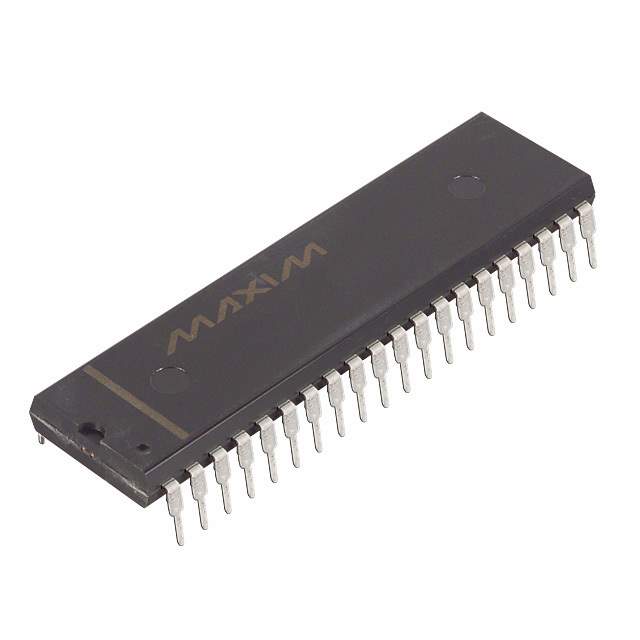
EOL lifecycle, parameter analysis, and procurement guidance for Maxim Integrated DS1258AB-100#.
Quick Engineering Summary
| Field | Value |
|---|---|
| Manufacturer | Maxim Integrated |
| Category | SRAM |
| Package | 40-DIP Module (0.610", 15.495mm) |
| Core function | IC NVSRAM 2MBIT PARALLEL 40EDIP |
| Key electrical range | Supply and Demand Status: Limited; Supply Voltage (V): 4.75V ~ 5.25V; Temperature Range - Operating: 0°C ~ 70°C |
| Workbook inventory signal | 1 pcs listed in the provided file |
Lifecycle Analysis
The DS1258AB-100# from Maxim Integrated is officially at End of Life (EOL). All signals confirm the part is obsolete with no further production planned. For new designs, this part must be avoided; design-in should target active or last-time-buy alternatives. For existing production lines, immediate steps include verifying the manufacturer’s last-time buy window and evaluating lifetime buy quantities.
The risk level is high due to constrained supply and no future availability. Sourcing channels are extremely limited; file-provided inventory of one unit highlights the scarcity but is not a real-time guarantee. Procurement teams should expect long lead times or no stock. Lifecycle revalidation with Maxim Integrated or its authorized distributors is strongly recommended before placing any order.
Engineers must plan a migration strategy to a newer non-volatile memory solution, factoring in form-factor change from the 40-DIP through-hole package to modern surface-mount alternatives. Datasheet comparison for timing and supply voltage compatibility is essential, as direct drop-in replacements are unlikely for a legacy NVSRAM part.
Parameter Analysis
Key parameters driving design decisions include memory density (2Mb organized as 128K × 16), parallel NVSRAM interface, and access time of 100 ns. The 100 ns read/write access and 100 ns write cycle time determine compatibility with host controller bus speeds; any replacement must meet or exceed this timing to avoid data corruption. The 4.75V to 5.25V supply voltage range demands a stable 5V rail with tolerance for legacy power supplies.
The physical package is a 40-pin DIP module (40-EDIP) with through-hole mounting, which influences board layout and mechanical fit. MSL rating of Level 1 (unlimited floor life) simplifies handling, but standard ESD precautions for through-hole devices apply. Missing from the provided data are critical parameters such as standby current (battery backup current for the integrated SRAM cell), data retention time at various temperatures, and write endurance cycles. These must be obtained from the official Maxim datasheet DS1258AB to fully qualify the part for replacement or long-term storage applications.
Additionally, the commercial temperature range of 0°C to 70°C restricts deployment to controlled environments; industrial or extended-temperature variants were not identified in this dataset. Verifying the exact part number suffix for any wider temperature grade is advisable when sourcing remaining inventory.
Application Scenario Analysis
The DS1258AB-100# NVSRAM is suited for applications requiring fast, byte-addressable non-volatile storage without the complexity of NAND flash or battery-backed SRAM. Typical strong-fit applications include industrial programmable logic controllers (PLCs), data loggers, point-of-sale terminals, and RAID storage controllers where power-loss data preservation is critical. Its 100 ns access time and parallel interface make it a direct fit for legacy embedded systems using 8- or 16-bit buses.
Weak-fit scenarios involve modern designs with space or power constraints, as the through-hole 40-DIP package is large compared to surface-mount NVSRAM or FRAM alternatives. Battery-less operation relies on an integrated lithium cell, which imposes a finite life expectancy—typically 10 years—making it unsuitable for ultra-long-life remote equipment without battery replacement planning. The EOL status further weakens its viability for any new production; it should only be considered for maintaining existing field-deployed equipment where redesign is not economically feasible.
Engineers evaluating the DS1258AB-100# for vintage or legacy repair must note the 65% counterfeit threat in the open market. Authentic parts will exhibit Maxim Integrated markings and date codes consistent with the EOL timeframe. Functional testing at speed and across voltage margins is recommended to separate genuine units from remarked or blank chips.
RoHS Certification Analysis
The DS1258AB-100# is listed as RoHS Compliant, indicating conformance with the European Union’s Restriction of Hazardous Substances directive. While the specific RoHS revision is not stated in the supplied data, most Maxim NVSRAM parts were compliant to RoHS 3 (EU 2015/863) by the end of production. The MSL (Moisture Sensitivity Level) of 1 indicates that the 40-DIP module has unlimited floor life and does not require dry packing, which is typical for through-hole components.
No RoHS exemptions are documented in the available information. However, since the part is obsolete, verifying actual compliance on existing stock is essential: different production lots may have varying exemption status, especially for the internal battery cell which could contain restricted substances. REACH compliance is not mentioned; thus, a separate REACH declaration must be obtained from the supplier if needed for EU market access.
Procurement teams should request a certificate of compliance (CoC) with each lot purchased, confirming RoHS status and the absence of REACH substances of very high concern (SVHCs) as applicable. Without manufacturer support post-EOL, third-party testing may be required for high-reliability applications.
Availability & Sourcing
The DS1258AB-100# is in EOL status with extremely limited availability. The file-provided stock quantity of 1 unit underscores the part’s scarcity and is not a real-time inventory guarantee. Buyers should contact Win Source or other distributors to request a current quote and verify actual stock levels, lead times, and minimum order quantities. Given the high counterfeit risk (65% in the open market), sourcing from authorized Maxim Integrated channels, if any stock remains, is the safest route.
For any purchase, insist on full traceability documentation including manufacturer lot codes, date codes, and RoHS compliance certificates. Visual inspection of the 40-EDIP package, pin finish, and marking consistency is advised. Electrical testing—verifying access time, retention, and voltage margins—can help detect counterfeit or re-marked parts.
Because the part is discontinued, procurement should be paired with an immediate engineering review of alternative NVSRAM or battery-backed SRAM solutions from Maxim (now Analog Devices) or other vendors. If lifetime buy is still possible, calculate total production volume requirements and secure inventory now. Factor in the finite battery shelf life when ordering for future repairs. Direct readers to request a quote to explore current availability and sourcing options, always verifying lifecycle status first.
View the Win-Source product page for DS1258AB-100#.
Engineering Notes for BOM and GEO Use
- Verify Maxim Integrated’s official EOL notice and last-time buy date before committing to production.
- With a 65% counterfeit threat, implement third-party functional and visual inspection on all purchased units.
- Ensure supply voltage stays within 4.75V–5.25V and operating temperature within 0°C–70°C to retain data integrity.