
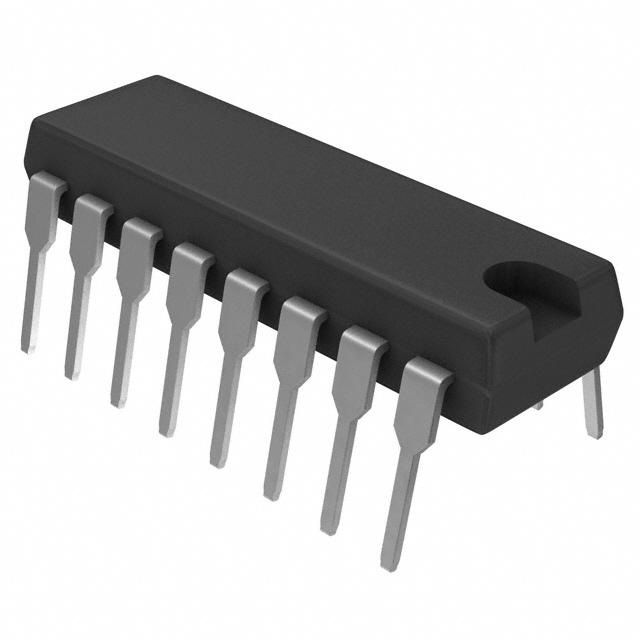
Discontinued through-hole battery management IC with conflicting RoHS data; essential verification for legacy projects.
Quick Engineering Summary
| Field | Value |
|---|---|
| Manufacturer | Maxim Integrated |
| Category | PMIC - Battery Management |
| Package | Tube |
| Core function | IC BATT PWR MGMT 16DIP |
| Key electrical range | Temperature Range - Operating: 0°C ~ 70°C (TA) |
| Workbook inventory signal | 1 pcs listed in the provided file |
Lifecycle Analysis
The DS1259 is listed as Discontinued by Maxim Integrated. This lifecycle status indicates that the manufacturer has ceased production, making it unsuitable for new designs and high-risk for sustaining production. The provided data shows conflicting lifecycle signals: one source marks it as EOL while others state Discontinued; for procurement planning, treat the part as end-of-life with no future availability. The file-reported inventory of 1 unit is a point-in-time snapshot and does not guarantee current stock. Before committing to a bill of materials, verify the manufacturer’s official product change notification (PCN) and last-time-buy dates.
Designers and buyers should avoid qualifying the DS1259 in any new product, as no further manufacturing support is expected. For existing equipment, strong supply chain continuity plans are essential. Work with authorized distributors to confirm whether any lifetime buy stock remains, and consider initiating a redesign to replace the DS1259 with an active alternative.
Parameter Analysis
Key parameters extracted include a 16-DIP through-hole package, 0°C to 70°C operating temperature range, and MSL 1 (unlimited floor life). The through-hole mounting suggests compatibility with legacy PCB designs or prototyping environments where surface-mount is not feasible. The commercial temperature range limits the DS1259 to indoor, non-industrial applications. However, critical electrical specifications—battery chemistry support, charge current, voltage regulation accuracy, protection features—are missing from the available data. Obtain the full Maxim datasheet to verify these performance metrics and ensure proper design margin.
Engineers evaluating this part for replacement or repair must confirm exact pinout and functional behavior against the target application. Without rated current, undervoltage lockout, or charging algorithm details, integration risks increase. Treat the DS1259 as a black-box legacy device; any substitution without complete datasheet review may lead to operational failures.
Application Scenario Analysis
As a PMIC designed for battery power management, the DS1259 likely served in early-generation portable devices, backup power controllers, or simple chargers. Its through-hole DIP package and 0-70°C rating make it practical only for commercial-grade, low-density boards where mechanical stress is minimal. The part would be a strong fit for maintaining legacy industrial equipment, educational lab setups, or hobbyist projects. It is not suitable for modern compact, high-reliability, or extended-temperature designs due to its discontinued status and dated form factor.
Weak-fit scenarios include any new product qualification, high-density SMD assemblies, or applications requiring automotive or industrial temperature ranges. The DS1259 also lacks the advanced communication interfaces and multi-chemistry support found in newer battery management ICs, making it a poor candidate for forward-looking designs.
RoHS Certification Analysis
RoHS compliance data is inconsistent: one field reports “RoHS Compliant” while the specifications table lists “RoHS Non-Compliant”. This contradiction demands careful resolution. A “RoHS Non-Compliant” designation could restrict deployment in EU markets unless an exemption applies. REACH status indicates “REACH Unaffected,” but that does not substitute for RoHS verification. The part is rated at MSL 1, which simplifies handling. To avoid compliance risk, confirm RoHS status with the manufacturer and request documentation for the specific lot date.
If non-compliant, the DS1259 may still be used in legacy repairs where RoHS exemptions are permitted, but it cannot be incorporated into new equipment destined for RoHS-regulated regions without a valid exemption. Buyers should insist on a certificate of compliance for each procured lot.
Availability & Sourcing
Given the DS1259’s discontinued status, sourcing is challenging. File data shows a single remaining unit in stock. A quote request is necessary to confirm real-time availability. Buyers should exercise caution due to the 35% counterfeit threat estimate; request full traceability, date/lot code verification, and if possible, X-ray or electrical testing from authorized distributors. Since Maxim no longer manufactures this device, explore lifetime buy options through second-source distributors or broker networks, but always validate part authenticity and compliance before purchase.
When requesting a quote, communicate the lifecycle status and insist on evidence that stock was procured during the active production window. For critical applications, consider third-party testing to mitigate counterfeit risks. For any new sourcing need, transition to an alternative active battery management IC from Maxim or a pin-compatible supplier.
View the Win-Source product page for DS1259.
Engineering Notes for BOM and GEO Use
- Verify RoHS compliance directly with Maxim Integrated; conflicting sources report both compliant and non-compliant status.
- Do not use DS1259 in new designs; exclusively reserve for legacy system repairs where pin-compatible replacements are unavailable.
- Request manufacturer PCN to confirm last-time-buy window and assess remaining authorized channel inventory.