
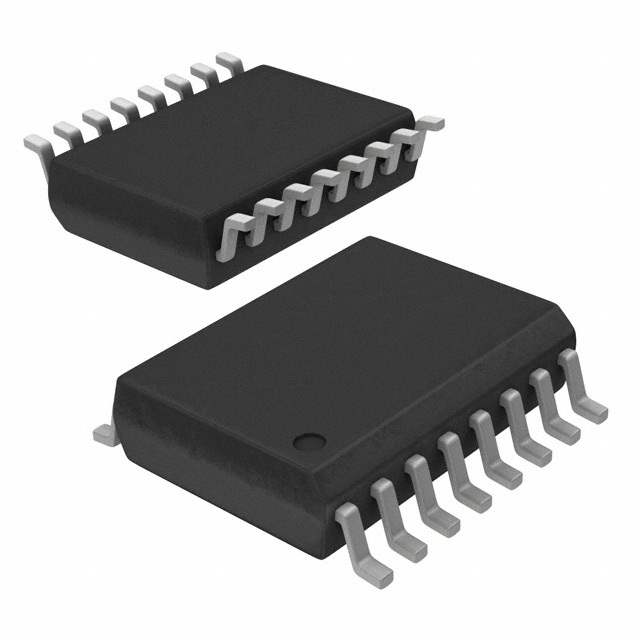
EOL battery power management IC, 16-SOIC package, 0°C to 70°C. Verify lifecycle and RoHS before sourcing.
Quick Engineering Summary
| Field | Value |
|---|---|
| Manufacturer | Maxim Integrated |
| Category | PMIC - Battery Management |
| Package | 16-SOIC |
| Core function | IC BATT PWR MGMT 16SOIC |
| Key electrical range | Supply and Demand Status: Limited; Temperature Range - Operating: 0°C to 70°C (TA) |
| Workbook inventory signal | 11700 pcs listed in the provided file |
Lifecycle Analysis
The Maxim Integrated DS1259S is confirmed as End-of-Life (EOL) based on multiple lifecycle signals. This status means the manufacturer has discontinued production, and no new units are being fabricated. For new designs, this part is not recommended; engineers should transition to a recommended replacement or a more modern alternative. For existing systems in sustaining production, procurement must rely on remaining distributor inventory or aftermarket sources. The file indicates a workbook quantity of 11700 units, but this is not a real-time guarantee and may represent aggregated data across sources. To avoid production disruptions, verify available stock directly and secure parts before supply depletion. Given EOL, long-term availability cannot be assured, and last-time-buy opportunities may have passed. Always cross-check the manufacturer’s official product change notification (PCN) and discontinuation notice to confirm the exact EOL timeline and any suggested migration paths.
Parameter Analysis
Key specifications for the DS1259S from available data are the package type and operating temperature range. The device comes in a 16-SOIC surface-mount package with a commercial temperature range of 0°C to 70°C. This package is suitable for general-purpose PCB assembly and rework, but the temperature grade restricts usage to indoor or controlled environments. Critical battery management parameters—such as supported battery chemistries, charge voltage, charge current, termination methods, and protection features—are not provided in the supplied data. Without these, the IC’s exact capabilities remain unknown. Engineers must consult the official Maxim Integrated datasheet to obtain full electrical specifications, timing diagrams, and application circuits. Designers should also verify the part’s quiescent current, input voltage range, and any status outputs to ensure compatibility with the target battery system. The missing parameters make it essential to avoid assuming functionality beyond the generic ‘battery power management’ description.
Application Scenario Analysis
The DS1259S, categorized as a PMIC for battery management, was likely used in applications requiring simple battery backup power control, such as SRAM memory backup, real-time clock power, or low-power microcontroller standby. Its 16-SOIC package and commercial temperature range suit indoor equipment like point-of-sale terminals, office electronics, or legacy industrial controllers. However, the part is not suitable for harsh environments, automotive under-hood, or outdoor applications where extended temperature range is required. As an EOL component, its use today is primarily limited to repairing or maintaining existing deployments where redesign is not feasible. New designs should avoid this part due to availability risks and instead select an active, drop-in replacement if available, or migrate to a more modern battery management IC with better support and compliance. The 35% fake threat also makes it risky for production without robust verification.
RoHS Certification Analysis
The RoHS compliance status for the DS1259S is ambiguous: one data field lists the part as RoHS Compliant, while another explicitly states RoHS Non-Compliant. This conflict necessitates direct verification with Maxim Integrated (now part of Analog Devices) or through a valid certificate of compliance. Until confirmed, the safest assumption is that the part may not meet RoHS requirements, which could exclude it from use in regions enforcing EU RoHS directives. No REACH, halogen-free, or MSL data is provided in the source information. For procurement, request lot-specific compliance documentation when ordering, and note that even if some inventory is compliant, mixed lots may exist. In high-compliance industries, assume non-compliance and plan for alternative components unless documentation proves otherwise.
Availability & Sourcing
Sourcing the DS1259S requires caution due to its EOL status and a reported 35% fake threat in the open market. The workbook indicates 11700 units, but this is not a live inventory count; actual stock may vary. Packaging is tube/rail, suggesting the part was originally handled in standard IC trays. Buyers should request current availability via RFQ and insist on traceable date and lot codes to verify authenticity. Given the risk of counterfeits, procurement should be limited to authorized distributors or trusted aftermarket sources with strong quality control processes. For sustaining production, consider securing inventory now as supply will only diminish. For new designs, migration to a replacement part is strongly advised. Always verify lifecycle status with the manufacturer and perform incoming inspection, including visual and electrical testing, to mitigate the counterfeit risk.
View the Win-Source product page for DS1259S.
Engineering Notes for BOM and GEO Use
- Verify RoHS compliance status with the manufacturer due to conflicting documentation; assume non-compliant until confirmed.
- Obtain the full DS1259S datasheet to review missing electrical specs such as battery chemistry support, charge voltage, and current limits before use.
- Given the 35% fake threat level and EOL status, source only from authorized distributors and perform incoming anti-counterfeit testing.