
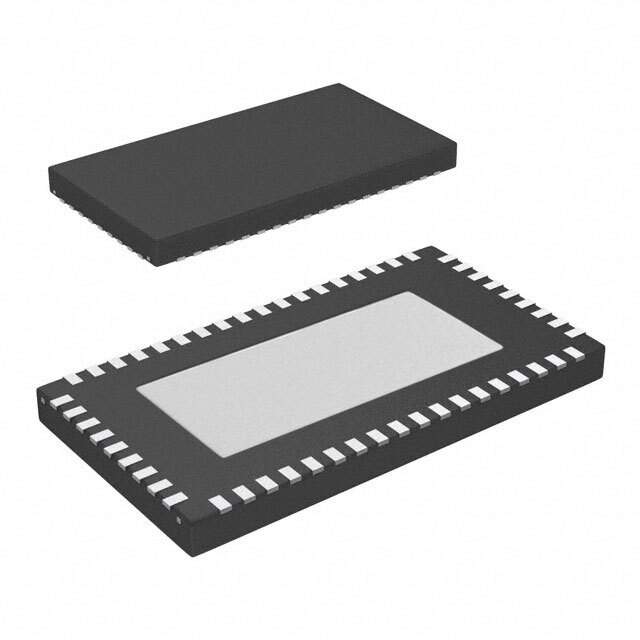
Texas Instruments DS125BR820NJYT - 12.5Gbps 8-ch redriver for PCIe/SAS/SATA. Active, low risk, RoHS.
Quick Engineering Summary
| Field | Value |
|---|---|
| Manufacturer | Texas Instruments |
| Category | Interface - Signal Buffers, Repeaters, Splitters |
| Package | 54-WQFN (10x5.5) |
| Core function | IC REDRIVER PCIE/SAS/SATA 54WQFN |
| Key electrical range | Input: CML; Operating Supply Current: 220mA; Operating Supply Voltage: 2.5 V ~ 3.3 V; Operating Temperature Range: -40°C ~ 85°C |
| Workbook inventory signal | 14200 pcs listed in the provided file |
Lifecycle Analysis
The DS125BR820NJYT from Texas Instruments is in active production, confirmed by multiple lifecycle signals including the manufacturer's own status and estimated EOL date of 2029. This active status means the part is fully supported for new designs, with ongoing production and availability. For engineers, this indicates low procurement risk, allowing integration into next-generation PCIe, SAS, or SATA systems with a stable supply outlook through typical product lifecycles.
However, the 38% fake threat probability in the open market highlights the importance of sourcing from authorized distributors to avoid counterfeit components. The file-provided inventory of 14,200 units offers a snapshot of potential supply, but actual availability must be validated at the time of RFQ. Engineering teams should periodically recheck Texas Instruments' official product page and PCN (Product Change Notification) alerts for any updates to lifecycle or EOL projections.
Parameter Analysis
The DS125BR820NJYT operates at a maximum data rate of 12.5 Gbps, making it suitable for PCIe Gen3, SAS-3, and SATA 6 Gbps applications, with margin for higher speeds depending on channel loss. Eight independent channels allow simultaneous redriving of multiple lanes, critical for multi-lane protocols like PCIe x8. The 80 ps delay time and CML I/O must be accounted for in link timing budgets, while the 220 mA supply current at 2.5 V to 3.3 V guides power distribution design.
Signal conditioning features—input equalization and output de-emphasis—are essential for compensating frequency-dependent losses in long traces or cables, enabling extended reach. The 54-WQFN (10x5.5) package requires careful PCB layout for thermal management and signal integrity. Operating temperature range of -40°C to 85°C supports industrial environments. Key missing specifications that should be verified from the datasheet include jitter performance, equalization gain range, and compliance eye diagrams, which are crucial for rigorous design qualification.
Application Scenario Analysis
This part is tailored for redriving high-speed serial links in enterprise and data-center equipment such as servers, storage arrays, and networking switches that use PCIe, SAS, or SATA interconnects. Its 12.5 Gbps capability and 8-channel count align well with backplane and mid-plane applications where signal regeneration is needed to maintain data integrity over lossy PCB traces.
In less demanding scenarios—for example, single-channel low-speed interfaces or consumer electronics with short trace lengths—the DS125BR820NJYT may be over-engineered and a simpler buffer could suffice. Additionally, it is not intended for protocols beyond its maximum data rate, so designers targeting 16 Gbps or higher (e.g., PCIe Gen4) would need an alternative. The industrial temperature range does enable use in outdoor or ruggedized equipment, provided the system design meets environmental requirements.
RoHS Certification Analysis
According to supplied data, the DS125BR820NJYT is RoHS compliant, with an additional halogen-free compliance indication. This suggests conformity with European Union Directive 2011/65/EU (RoHS 2) or the more recent RoHS 3 (EU 2015/863), though the exact standard is not specified. RoHS compliance is critical for markets requiring lead-free and hazardous substance restrictions.
While the supplier asserts compliance, it is important to note that RoHS status can be lot-dependent. For high-volume production, obtain the manufacturer's certificate of compliance or full material declaration to ensure the specific batch meets the required standards. REACH information is not provided in the source data and must be verified separately if needed. The halogen-free claim further supports environmentally conscious designs, but similarly requires documentation review.
Availability & Sourcing
As an active, low-risk part with an estimated EOL of 2029, the DS125BR820NJYT should be readily available through authorized Texas Instruments distributors. However, the supply and demand status is noted as 'Limited' in the source data, suggesting that demand may occasionally outstrip channel inventory. The provided stock quantity of 14,200 units is from a file snapshot and is not guaranteed; real-time availability must be confirmed via RFQ.
Given the 38% fake threat in the open market, traceability through lot codes and date codes is essential. Request full compliance documentation, including RoHS and halogen-free certificates, along with a Certificate of Conformance. The reel packaging and dry storage conditions indicate sensitivity to moisture; ensure proper MSL handling procedures are followed upon receipt. For new designs, request a quote for current pricing and lead times, and re-verify lifecycle status with Texas Instruments before committing to production.
View the Win-Source product page for DS125BR820NJYT.
Engineering Notes for BOM and GEO Use
- Designers should validate the DS125BR820NJYT's signal conditioning settings against their specific channel loss profile and protocol requirements.
- Factor in the 80 ps delay and 220 mA supply current when budgeting timing and power; review the datasheet for jitter and equalization details.
- Source only through authorized channels with full traceability due to the 38% open-market fake threat; always verify lot-level RoHS and halogen-free compliance.