
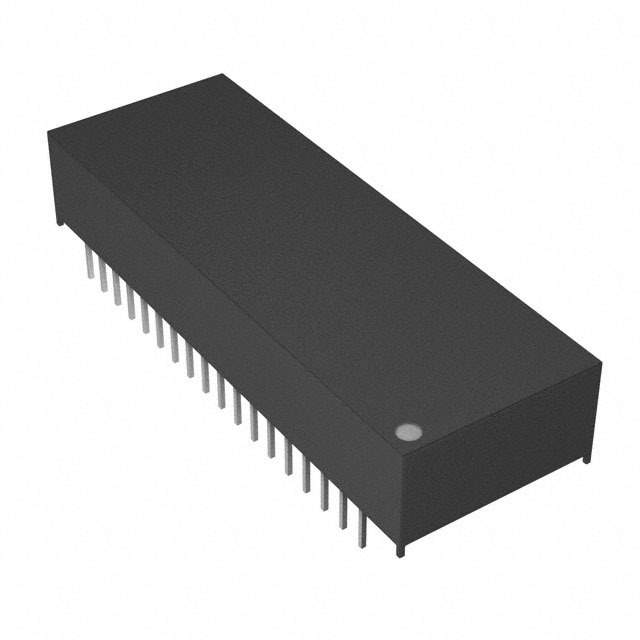
EOL 16Mb parallel non-volatile SRAM from Maxim Integrated – verify RoHS and availability for legacy systems.
Quick Engineering Summary
| Field | Value |
|---|---|
| Manufacturer | Maxim Integrated |
| Category | SRAM |
| Package | 36-EDIP |
| Core function | IC NVSRAM 16MBIT PARALLEL 36EDIP |
| Key electrical range | Operating Supply Voltage: 3 V ~ 3.6 V; Operating Temperature Range: 0°C ~ 70°C (TA); Supply and Demand Status: Limited |
| Workbook inventory signal | 94 pcs listed in the provided file |
Lifecycle Analysis
The DS1270W-150 is classified as End-of-Life (EOL) with all supplied lifecycle signals aligning. This status means Maxim Integrated has discontinued production, and the part should not be designed into new products. Engineering teams may only consider it for sustaining existing systems that cannot be redesigned immediately. The estimated EOL date confirms obsolescence, and risk level is high due to dwindling supply and lack of future support.
For current production runs, buyers must verify whether a last-time buy window remains open. The file-provided inventory quantity of 94 units does not guarantee real-time availability and should not replace a formal RFQ. Any procurement should include direct confirmation of manufacturer status to avoid relying on obsolete stock without traceability.
Given the EOL status, design migration planning is essential. Substituting with newer NVSRAM or FRAM alternatives from Maxim Integrated (now Analog Devices) or other vendors is recommended. Engineers should review compatible footprints and interface timings to ensure a seamless transition.
Parameter Analysis
The DS1270W-150 is a 16Mb (2M x 8) non-volatile SRAM with a parallel interface and 150ns access and write cycle times. Operating voltage is 3V to 3.6V, and temperature range is commercial (0°C to 70°C). The through-hole 36-EDIP package dictates layout constraints, often incompatible with modern dense SMD designs. NVSRAM technology ensures data retention without a battery, a key advantage for applications requiring fast, reliable non-volatile storage.
Engineers must consider the 150ns speed grade, which may be slower than some modern memory solutions. The narrow voltage supply requires stable regulation, and the through-hole package may necessitate manual assembly or specialized wave soldering. When qualifying this part for legacy repairs, timing margins should be validated against the host controller’s requirements.
Missing datasheet parameters such as standby current, data retention endurance, and write endurance cycles are critical for power budgeting and reliability estimates. Always obtain the full manufacturer datasheet to verify these values and ensure the part meets the application’s durability requirements.
Application Scenario Analysis
The DS1270W-150 fits best in legacy industrial control, RAID storage, networking equipment, and data logging systems where non-volatile data preservation during power loss is crucial. Its NVSRAM technology eliminates battery backup while providing fast read/write access, making it suitable for parameter storage, event logging, and real-time clock data buffering.
Weak-fit scenarios include new high-density designs, space-constrained boards, or high-volume production. The through-hole package and EOL status make it unsuitable for modern SMT assembly lines. Additionally, the commercial temperature range limits use to indoor environments, and the 150ns speed may bottleneck newer processors. For new projects, consider pin-compatible replacements like MRAM or FRAM, which offer similar functionality in surface-mount packages with active lifecycle support.
RoHS Certification Analysis
RoHS compliance for the DS1270W-150 is ambiguous. The top-level data field indicates RoHS Compliant, but the detailed specification list explicitly states RoHS Non-Compliant. This contradiction likely arises from production batch variations; early lots may contain lead, while later ones may be compliant. For an EOL part, such discrepancies are common and require per-batch verification.
If the part is non-compliant, it may contain hazardous substances such as lead, restricting sale in EU markets unless covered by an exemption. Buyers should request a Certificate of Conformance (CoC) from the distributor for the specific lot. Additionally, REACH and halogen-free status are not supplied, so they must be clarified if required for compliance documentation.
For high-reliability or regulated industries, do not assume compliance based on a single data field. Always confirm with a test report or material declaration from the supplier before integrating into RoHS-sensitive designs.
Availability & Sourcing
The DS1270W-150 is marked as limited in supply and demand, with a high counterfeit risk in the open market (48%). The file-provided quantity of 94 units is only a snapshot and not guaranteed. As an EOL part, sourcing should focus on authorized distributors or trusted brokers who can provide full traceability, date/lot codes, and compliance certificates.
To secure stock, issue a request for quote (RFQ) specifying the exact manufacturer part number, required quantity, and target pricing. Request batch-specific documentation, including RoHS CoC, and verify packaging—the part is supplied in tubes, which may require additional handling. Given the high counterfeit threat, consider third-party testing for authenticity.
Since Maxim Integrated has been absorbed by Analog Devices, verify that any remaining inventory is genuine and properly stored. For long-term availability, engineers should plan a migration to an active alternative, as last-time buy opportunities may have expired. Secure inventory now for critical spares and begin qualification of replacement components.
View the Win-Source product page for DS1270W-150.
Engineering Notes for BOM and GEO Use
- EOL device: limit use to legacy system maintenance; plan migration to alternative NVSRAM or FRAM.
- Verify RoHS compliance per batch due to conflicting data; non-compliant units may impact EU market use.
- Through-hole 36-EDIP package and 150ns timing require careful PCB design and compatibility check.