
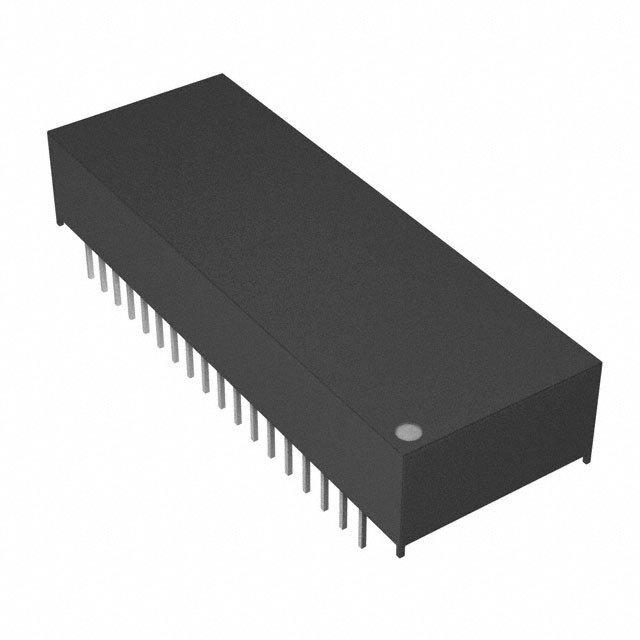
16Mbit Non-Volatile SRAM with 70 ns access time, through-hole 36-EDIP package. Status: Obsolete.
Quick Engineering Summary
| Field | Value |
|---|---|
| Manufacturer | Maxim Integrated |
| Category | Integrated Circuits (ICs) |
| Package | 36-DIP Module (0.610", 15.49mm) |
| Core function | IC NVSRAM 16MBIT PARALLEL 36EDIP |
| Key electrical range | Operating Temperature: 0°C ~ 70°C (TA); Voltage - Supply: 4.5V ~ 5.5V |
| Workbook inventory signal | 1000 pcs listed in the provided file |
Lifecycle Analysis
The DS1270Y-70 presents a high procurement risk. Although the data set lists a generic lifecycle status of 'Unknown', the part status field explicitly marks the device as 'Obsolete'. This conflict indicates the component is no longer recommended for new designs and likely has limited or no future production.
Engineers should treat the DS1270Y-70 as discontinued and avoid any dependence on new wafers. For ongoing production, immediate inventory assessment and last-time buy actions are critical. Contact Analog Devices (which absorbed Maxim Integrated) to retrieve the official obsolescence notification and evaluate any recommended migration paths.
Even if some distributor stock appears available, long-term continuity is not guaranteed. The risk of counterfeits or relabeled old date-code parts increases with obsolete components. Any purchase should include manufacturer traceability and authenticity verification.
Parameter Analysis
The most decision‑relevant specifications are the 16 Mbit density, 70 ns access time, parallel interface, and 5 V supply. The DS1270Y‑70 uses a 2M × 8 memory organization and accommodates a commercial temperature range of 0 °C to 70 °C. The through‑hole 36‑EDIP package suits legacy boards that cannot migrate to surface‑mount.
For design qualification, the access and write cycle times (both 70 ns) allow direct drop‑in replacement in timing‑sensitive systems. However, several parameters are absent from the provided data: data retention duration (typically 10 years for NVSRAMs), endurance (write cycle count), standby current, and any power‑down sequencing requirements. These must be confirmed from the original Maxim DS1270Y/DS1271Y datasheet before substituting into a socket.
Without full electrical and timing information, PCB layout constraints such as trace length matching or termination may need re‑validation, particularly if substitute parts are considered.
Application Scenario Analysis
The DS1270Y‑70 typically appears in equipment where rapid, byte‑addressable non‑volatile memory is essential—industrial controllers, medical instruments, POS terminals, and data loggers that must preserve critical operation states during power loss. Its 16 Mbit capacity allows substantial temporary or accumulation data storage without a battery.
A strong fit is the sustaining production of legacy 5 V systems originally designed around the DS1270Y‑70. The large DIP package suits maintenance, repair, and operations usage where board redesign is not an option. For new high‑density designs, however, this through‑hole component is a weak fit because modern equipment generally demands surface‑mount, lower voltage, and smaller form factors.
Additionally, applications requiring extended temperature (-40 °C to +85 °C) or automotive qualification fall outside the commercial range of this part and would need a different NVSRAM or alternative non‑volatile technology.
RoHS Certification Analysis
The DS1270Y‑70 is recorded as RoHS Compliant in the supplied data. This generally means it meets the RoHS 3 directive (EU 2015/863) restrictions on lead, mercury, cadmium, and other hazardous substances. However, the data does not specify the compliance standard version explicitly, and no evidence of REACH, halogen‑free, or MSL ratings is included.
Because the part is obsolete, it is possible that early production lots may predate RoHS enforcement. Any current inventory stated as compliant should be treated as family‑level or lot‑specific until a certificate of compliance is viewed. Buyers should request the full RoHS certificate, ideally referencing the actual date code of the purchased units.
For export to the EU, missing REACH data is a gap; a distributor can often provide a standard REACH statement. If the device will ever undergo reflow soldering (even for prototype work), the missing MSL classification should be clarified with the manufacturer or by baking pre‑form data available from the original packaging standards.
Availability & Sourcing
The source data indicates a workbook quantity of 1000 units, but this is a file‑provided snapshot and does not reflect real‑time availability. Because the DS1270Y‑70 is obsolete, any existing stock may be scattered across multiple distributors with limited traceability.
Engineers and buyers should submit an RFQ through authorized channels, explicitly requesting date and lot code information. Verify that the parts are original Maxim Integrated (or Analog Devices) product and not aftermarket or refurbished. Insist on full compliance documentation (RoHS, lead‑free, and REACH where applicable) before accepting delivery.
For critical production, consider placing a non‑cancellable order quickly and concurrently evaluating a replacement NVSRAM or battery‑backed SRAM solution. If none of the remaining DS1270Y‑70 inventory can be qualified, begin migration testing immediately to avoid a line down situation.
View the Win-Source product page for DS1270Y-70.
Engineering Notes for BOM and GEO Use
- For new designs, migration to a current surface-mount NVSRAM or FRAM is recommended, as the DS1270Y-70 is obsolete and long-term support is uncertain.
- If using this part in existing production, verify the exact date and lot codes against the latest manufacturer PCN to ensure no silicon or process change impacts.
- Request the full compliance package (RoHS CoC, REACH declaration, and MSL rating if reflow is planned) from the distributor before acceptance.